
In Hinduism, human life is believed to comprise four stages. These are called "ashramas" and every person should ideally go through each of these stages: Brahmacharya" or the Student Stage,, "Grihastha" or the Householder Stage, "Vanaprastha" or the Hermit Stage, "Sannyasa" or the Wandering Ascetic Stage
This system of ashramas is believed to have been prevalent since the 5th century B.C.E. in Hindu society, and described in the classic Sanskrit texts called the Asrama Upanishad, the Vaikhanasa Dharmasutra, and the later Dharmashastra.
Historians report that these stages of life were always viewed more as 'ideals' than as a common practice. According to one scholar, even in its very beginnings, after the first ashrama, a young adult could choose which of the other ashramas he would wish to pursue for the rest of his life. Today, it is not expected that a Hindu should go through the four stages, but the concept still stands as an important "pillar" of Hindu socio-religious tradition.
After the close study of Indian tradition I took the female characters to be the principal subject of depictions, illustrating this beautiful concept. The viewers can observe the transformation of the different characters from the small girl to the profound piercing eyes of the widow with the cat. The overlapping the concept of Shakti, as the eternal feminine is the popular philosophical principle of the majority of the ancient traditions. Shakti also refers to the manifestations of this energy, namely goddesses. The theme of shakti probably grew out of a conflict and eventual compromise between a powerful matriarchal culture that existed in India before the Aryan migrations (2500 B.C.E.) and the male-dominated society of the Aryans. The Mother Goddess of the Indus Valley people never really gave place to a dominant male. The Earth Mother continues to be worshipped in India as the power that nurtures the seed and brings it to fruition. This basic reverence of an agricultural people affirms that man is really dependent on woman for she gives life, food and strength. Mother Goddesses were worshipped at all times in India, but between the days of the Harappa Culture (2500-1500 B.C.E.) and the Gupta period (c. 300-500) the cults of goddesses attracted little attention from the learned and influential, and only emerged from obscurity to a position of real importance in the Middle Ages, when feminine divinities, theoretically connected with the gods as their spouses, were once more worshipped by the upper classes…by the Gupta Period the wives of the gods, whose existence had always been recognized, but who had been shadowy figures in earlier theology, began to be worshipped in special temples[1]).
[1] L. Basham, Wonder That Was India. Revised Edition [London: Sidgwick & Jackson, 1967], 313
1. Brahmacharya: The Celibate Student
Brahmacharya is a period of formal education lasting until around age 25, during which, the student leaves home to stay with a guru and attain both spiritual and practical knowledge. The student has two duties: to learn the skills of his life and to practice unwavering devotion to his teachers. During this period, he is called a Brahmachari as he prepares for his future profession, as well as for his family, and social and religious life ahead. Series of the painting opens with the canvas named: “Surya and Chandrika”
Two little sisters, look through the open doors of their house ready to close it back if there is an unknows danger comes from the street. The outfits are symbolically chosen according the traditional idea of colors attributed to the moon and the sun. These stage of Brahmacharya: “celibate student”, the story continue with four works dedicated to this stage.
1. “Surya and Chandrika”
(Soleil et Lune)
Cotton-linen mix canvas acrylic and oil painting 90cm x 52cm, June - July 2018
(same materials and size for all canvces)


2. “Lakshmi Narayani”
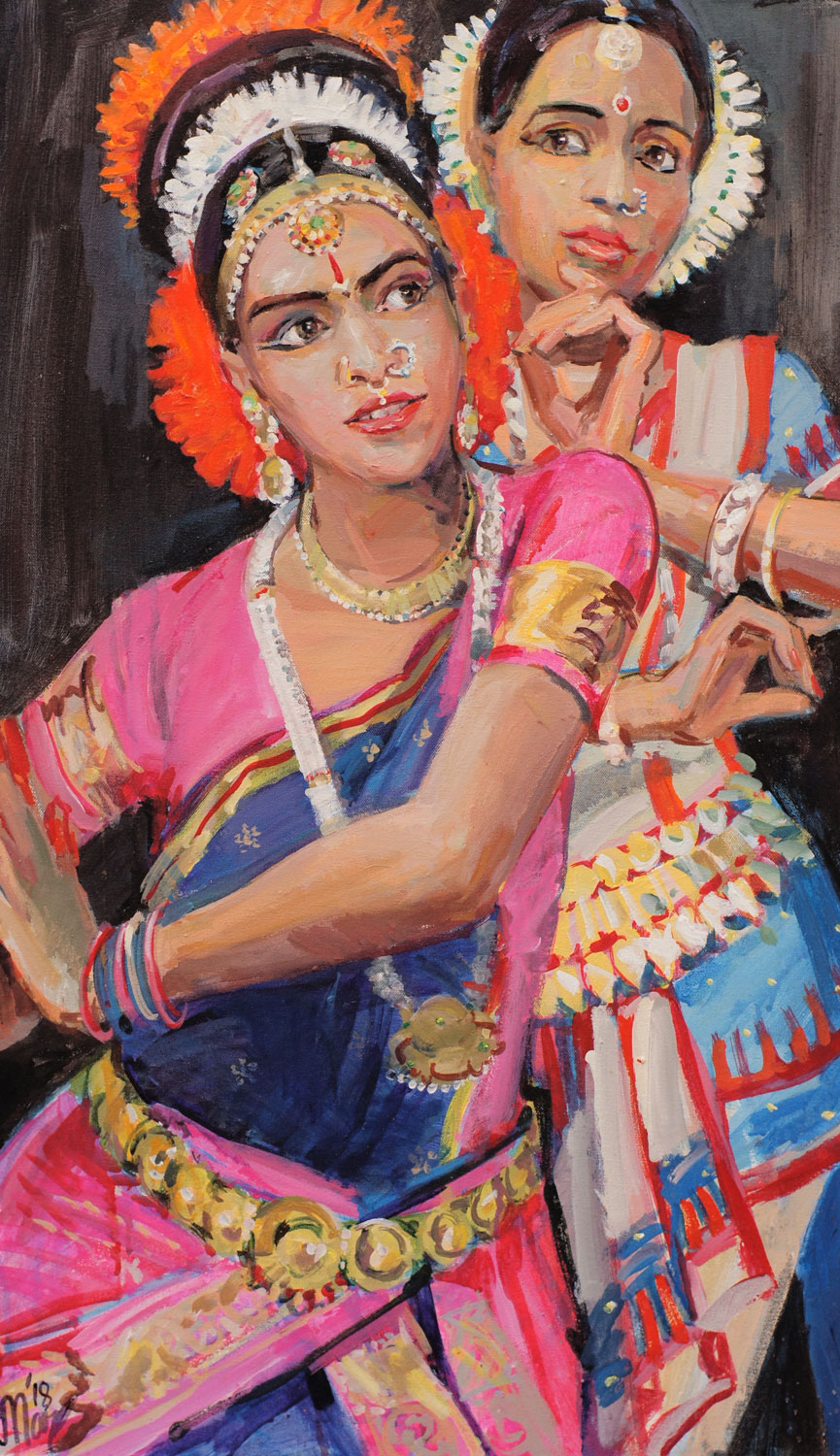
3. “Odissi dancers from Bhubaneswar”
“Danseuses d'Odissi de Bhubaneswar”
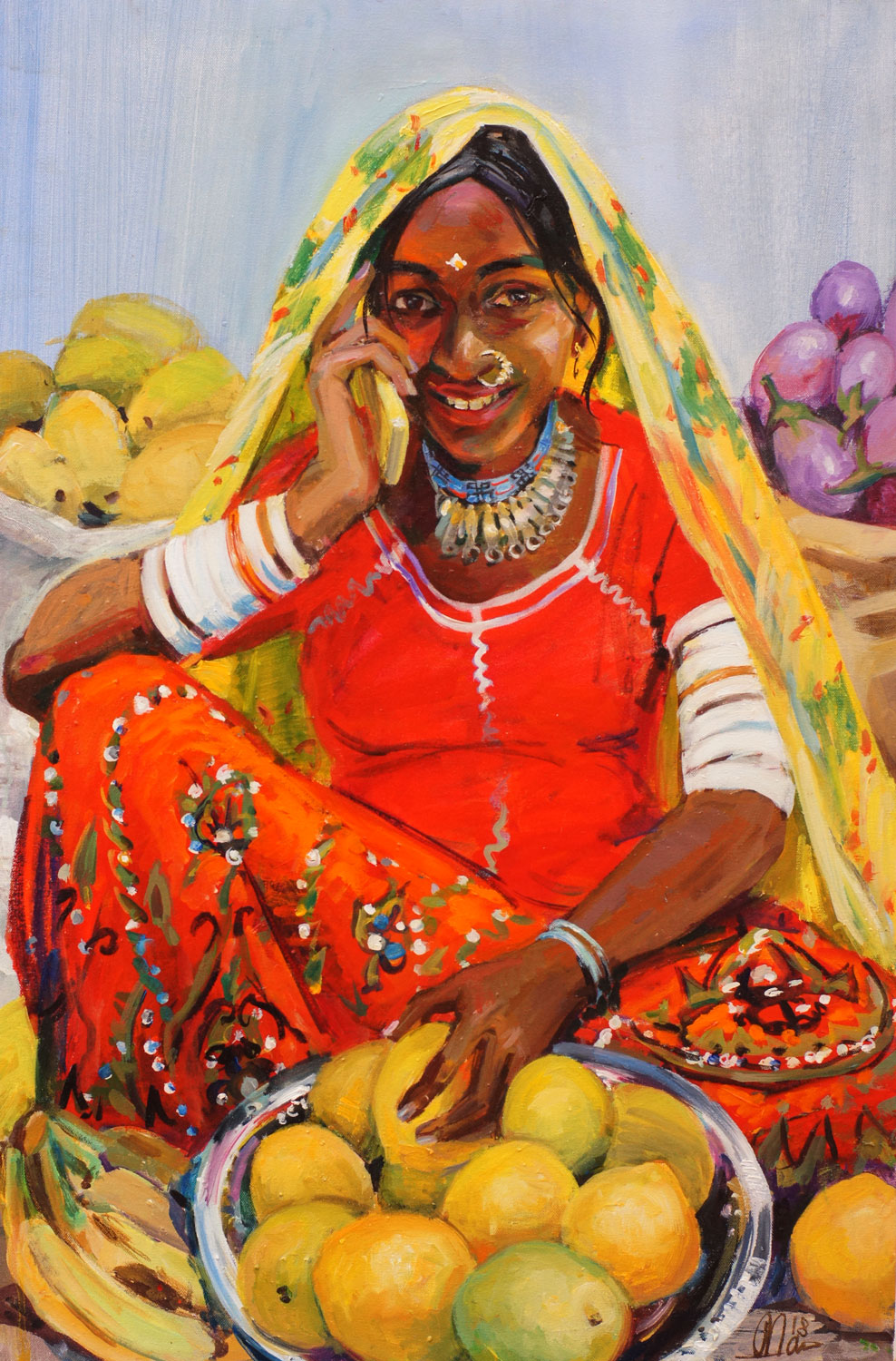
4. “Seri seri, amma” Goubert market at noon.
(« oui,oui, maman ») Marché Goubert à midi
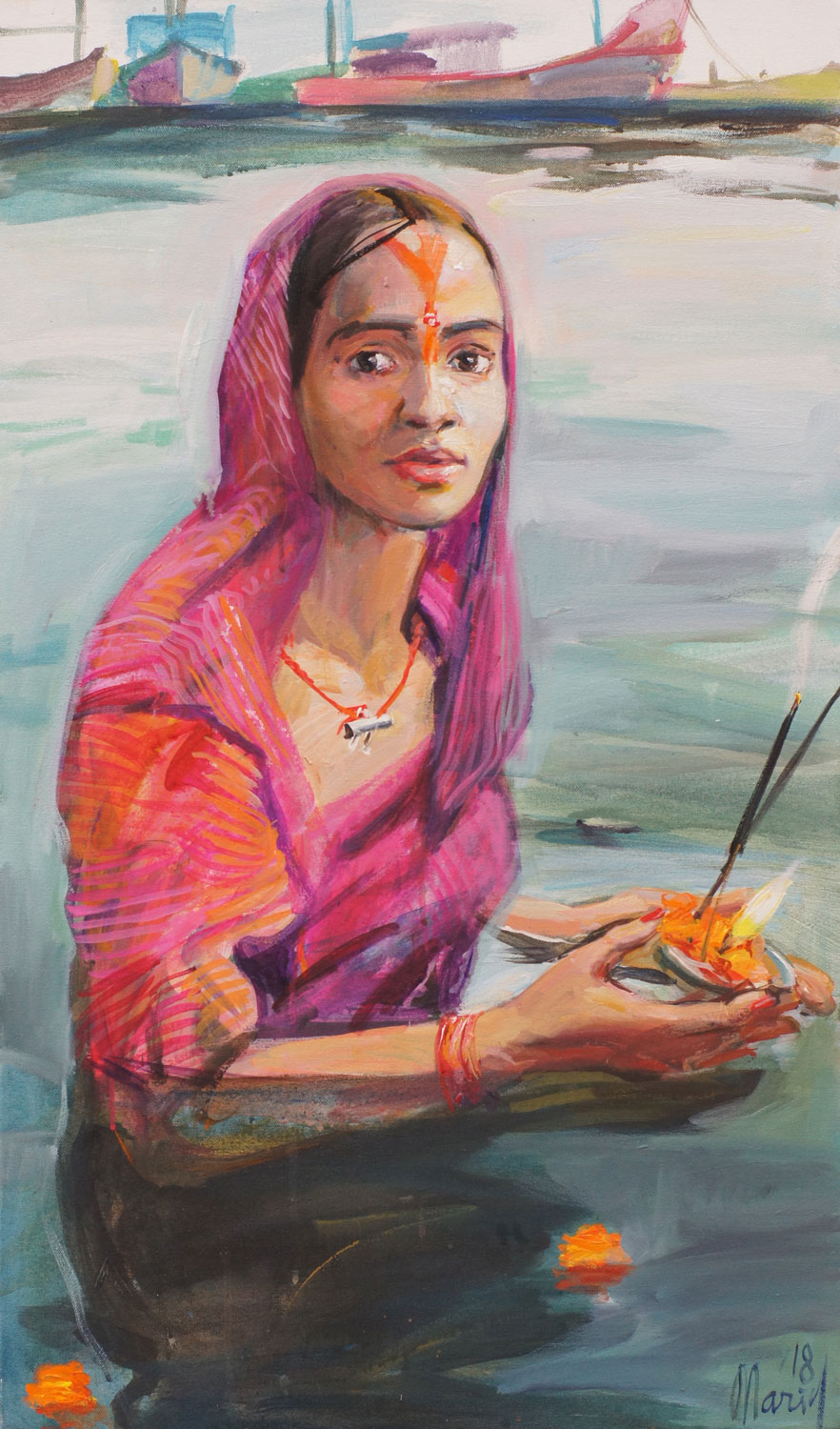
5. ”Chhath Pooja”
2. Grihastha: The Householder
This Second Ashrama begins at marraige when one must undertake the responsibility for earning a living and supporting a family. At this stage, Hindus first practice dharma, but also pursue wealth or material gratification (artha) as a necessity. “Dharmashastras” sacreed textes-metioned the arranged mariages a part of drahma
This ashrama lasts until around the age of 50. According to the Laws of Manu, when a person's skin wrinkles and his hair turns gray, he should leave his home and go out into the forest. However, most Hindus are so much in love with this second ashrama that the Grihastha stage lasts whole lifetime!
We meet one of the girls on the painting titled Mangala Sutra, where the future husband ties the traditional necklace around the neck of his fiancé. On the following paintings we observe her motherhood, grand motherhood with the granddaughters and finally on the last work she sits on the porch of the doorway with her cat representing Vanaprastha: The Hermit in Retreat, and the kin spectator can recognize the same doorway as on the first portraits.
The female virtues variously regarded as essentially feminine recognized in the images of the daughters, spouses, mothers, grandmothers. The essential characteristics can be summarized as: modesty, gracefulness, purity, delicacy, civility, compliancy, reticence, chastity, affability, politeness, compassion, forgiveness and support.
Each canvas symbolically represents these vertues. The artist invites the observer to share her admiration of the of every stage of women life. Women being the subject and the depictions shown by the female artist combine the additional value of the “inside” glance into the psychology of the characters.
3. Vanaprastha: The Hermit in Retreat
The Vanaprastha stage is one of gradual withdrawal. The person's duty as a householder comes to an end: He/ She has become a grandfather/ grandmother, his/her children are grown up and have established lives of their own. At this age, he/she should renounce all physical, material, and sexual pleasures, retire from his social and professional life and leave his home for a forest hut where he can spend his time in prayers.
The hermit is allowed to take his spouse along with him but maintains little contact with the rest of the family. The role of the third ashrama is to be consulted as elders by the community at large, teaching dharma to those who visit. This kind of life is indeed very harsh and cruel for an aged person. No wonder, this third ashrama is now nearly obsolete.
The Hindu tradition also considers women the vessels of shakti. This identification with shakti acknowledges women as the vessels of both creative and destructive power. Like many modern cultures, Hindu culture has a hard time reconciling the biological compulsion of these two powerful forces. Some feminists and scholars criticize this identification because they believe it has led society to label women either as saints or sinners, with little room in between. They argue that women, like benevolent goddesses, are expected to exhibit forgiveness, compassion, and tolerance of others’ transgressions. If they conform to this role, patriarchal society accepts them; if they do not, and attempt to exhibit independence and assertiveness, they are considered destructive, disrupting community and family social structures. However, others argue that the idea of shakti can be used to empower Indian women to resist patriarchy. The debate continues. ( Jean Johnson.)

7. Rajasthani train
Le train de Rajasthan
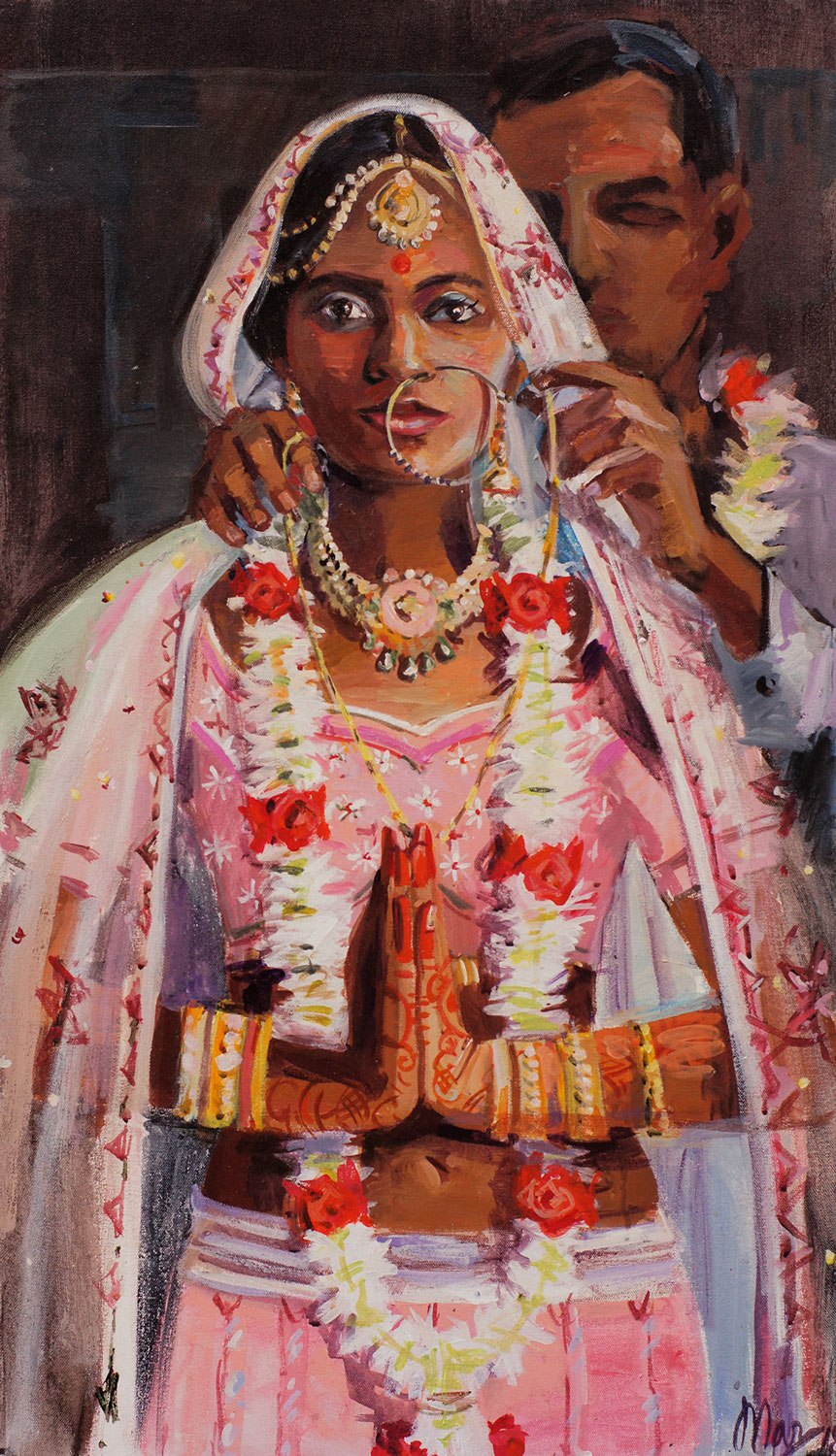
6. “Mangala Sutra ” (maangalyam)
“La Mariée“
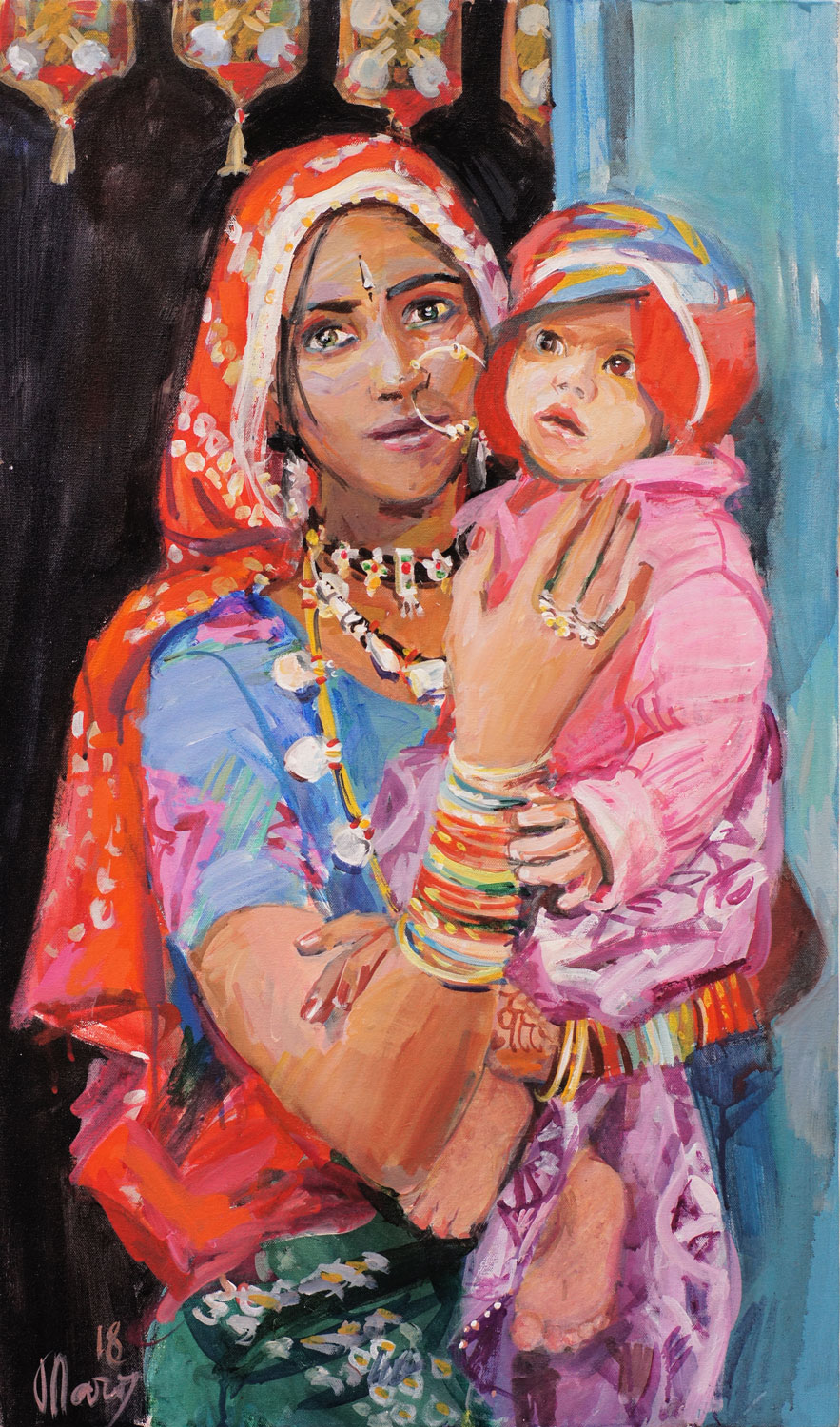
8. “Mother of Perpetual Help”
“Notre-Dame du Perpétuel-Secours”

9. Aunties of Villapuram
Tantines de Villapuram
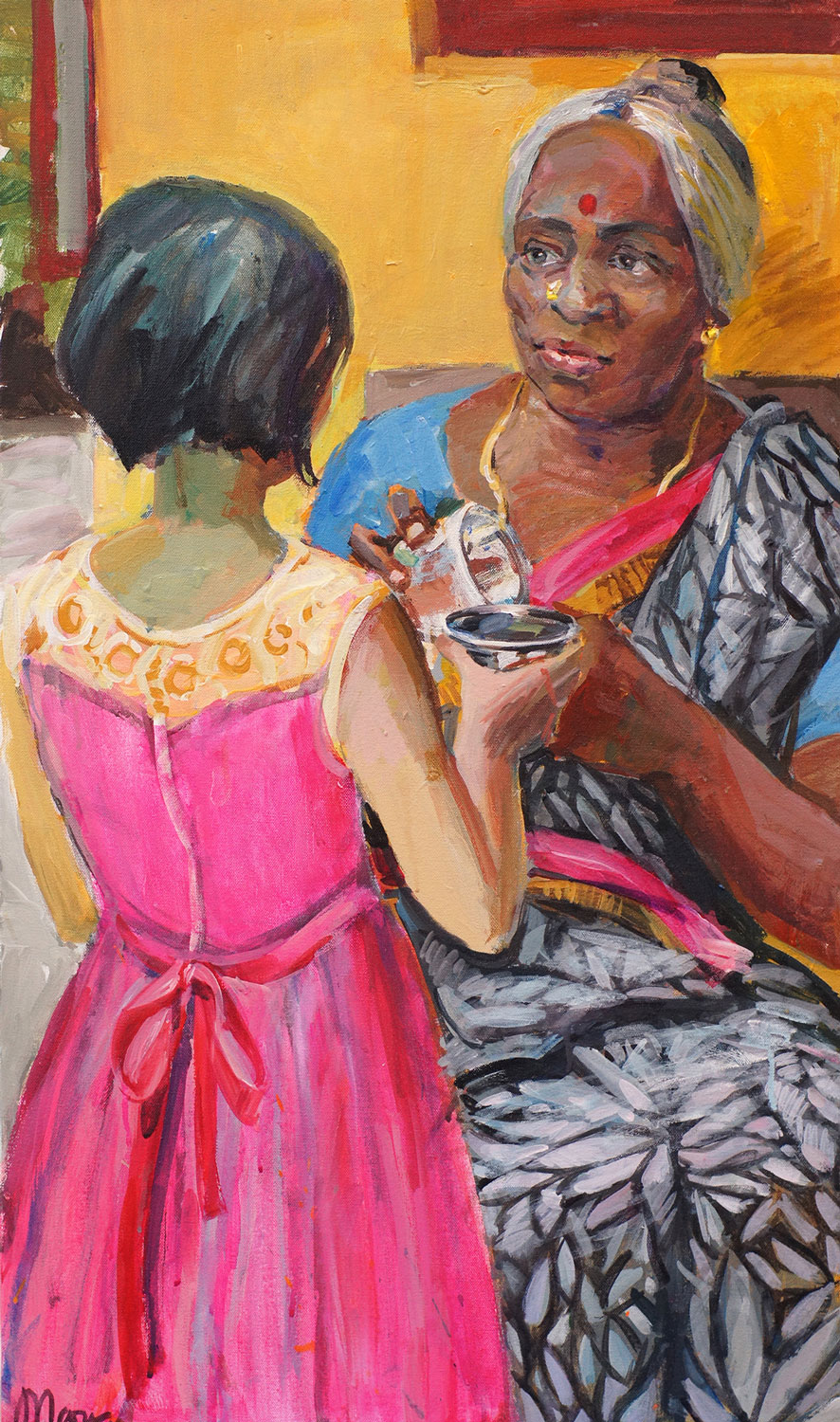
10. “Masala chai, patti”
“ Masala chai, mamie ”
4. Sannyasa: The Wandering Recluse
Ashrama 4 is one of renunciation and the realization of dharma. At this stage, a person is supposed to be totally devoted to God. He is a sannyasi, he has no home, no other attachment; he has renounced all desires, fears, hopes, duties, and responsibilities. He is virtually merged with God, all his worldly ties are broken, and his sole concern becomes attaining moksha or release from the circle of birth and death. (Suffice it to say, very few Hindus can go up to this stage of becoming a complete ascetic.) When he dies, the funeral ceremonies (Pretakarma) are performed by his heir.
Shakti also refers to the manifestations of this energy, namely goddesses. Some goddesses embody the destructive aspects of shakti, such as death, degeneration, and illness, while other goddesses embody the creative and auspicious powers of shakti, such as nature, the elements, music, art, dance, and prosperity. Shakti may be personified as the gentle and benevolent Uma, consort of Shiva, or Kali, the terrifying force destroying evil, or Durga, the warrior who conquers forces that threaten the stability of the universe. Goddess worshippers often view their deity as the all-powerful Supreme Being, second not even to a male god. There are enduring goddess traditions all over India, especially in West Bengal and south India. Goddesses symbolizing various aspects of power very often predominate in village culture. Village men, women, and children, when they pray for immediate needs, address a female, not a male. David Kinsley writes:
Texts or contexts exalting the Mahadevi [Great Goddess], however, usually affirm sakti to be a power, or the power, underlying ultimate reality, or to be ultimate reality itself. Instead of being understood as one of two poles or as one dimension of a bipolar conception of the divine, sakti as it applies to the Mahadevi is often identified with the essence of reality (Ibid., 135).

11. “Widow with her cat”
“La Veuve indienne avec son chat”
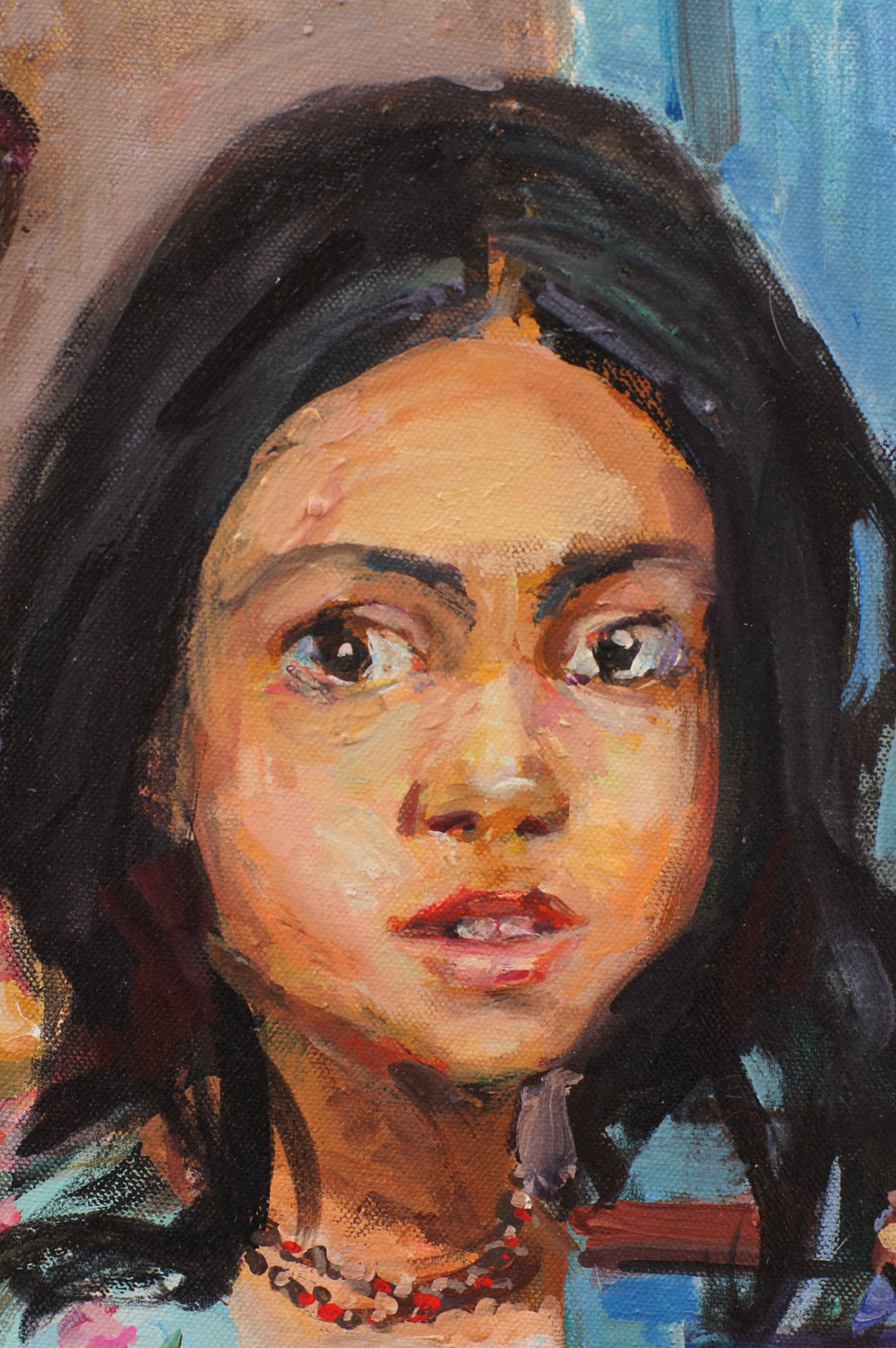
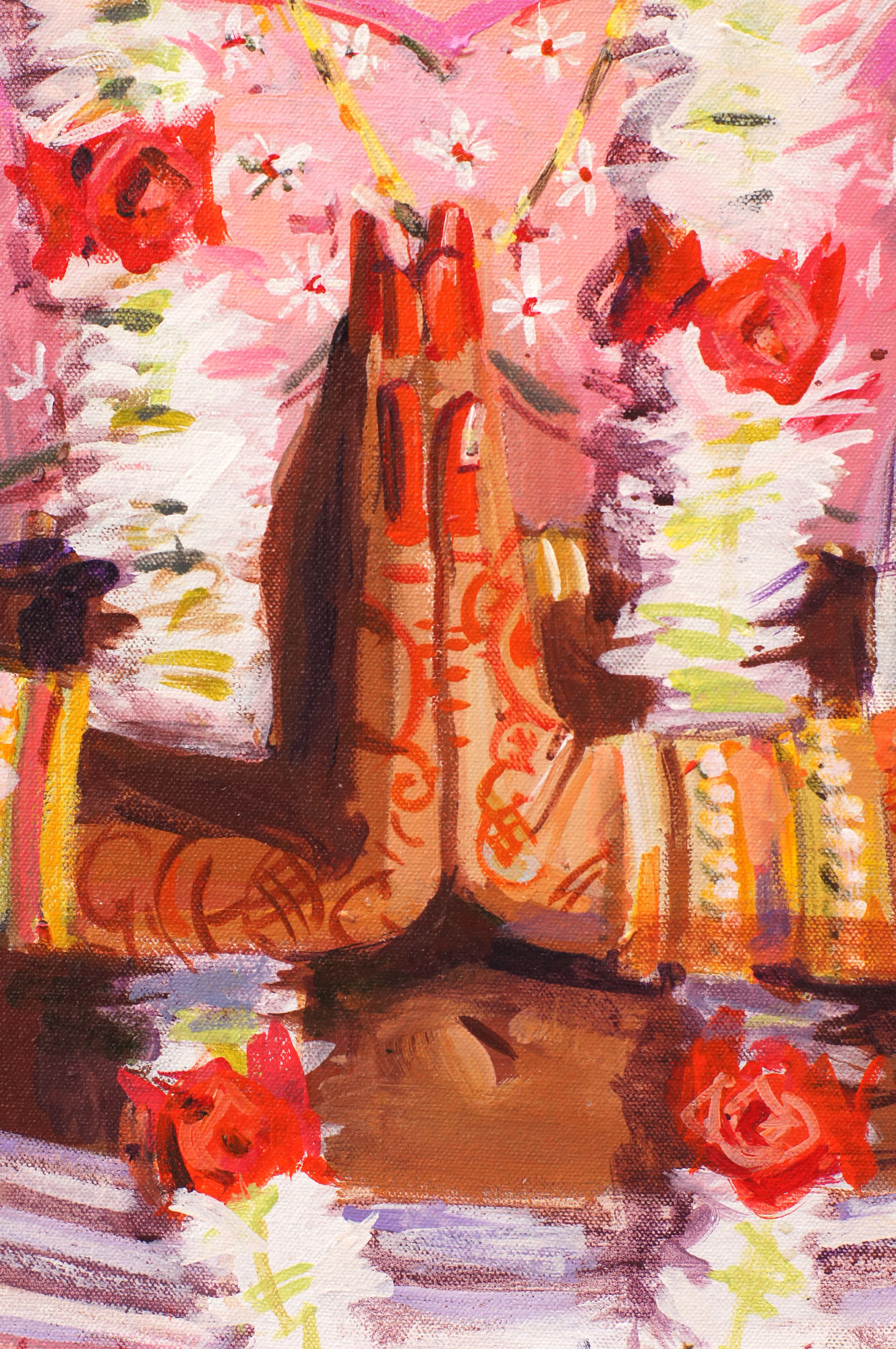
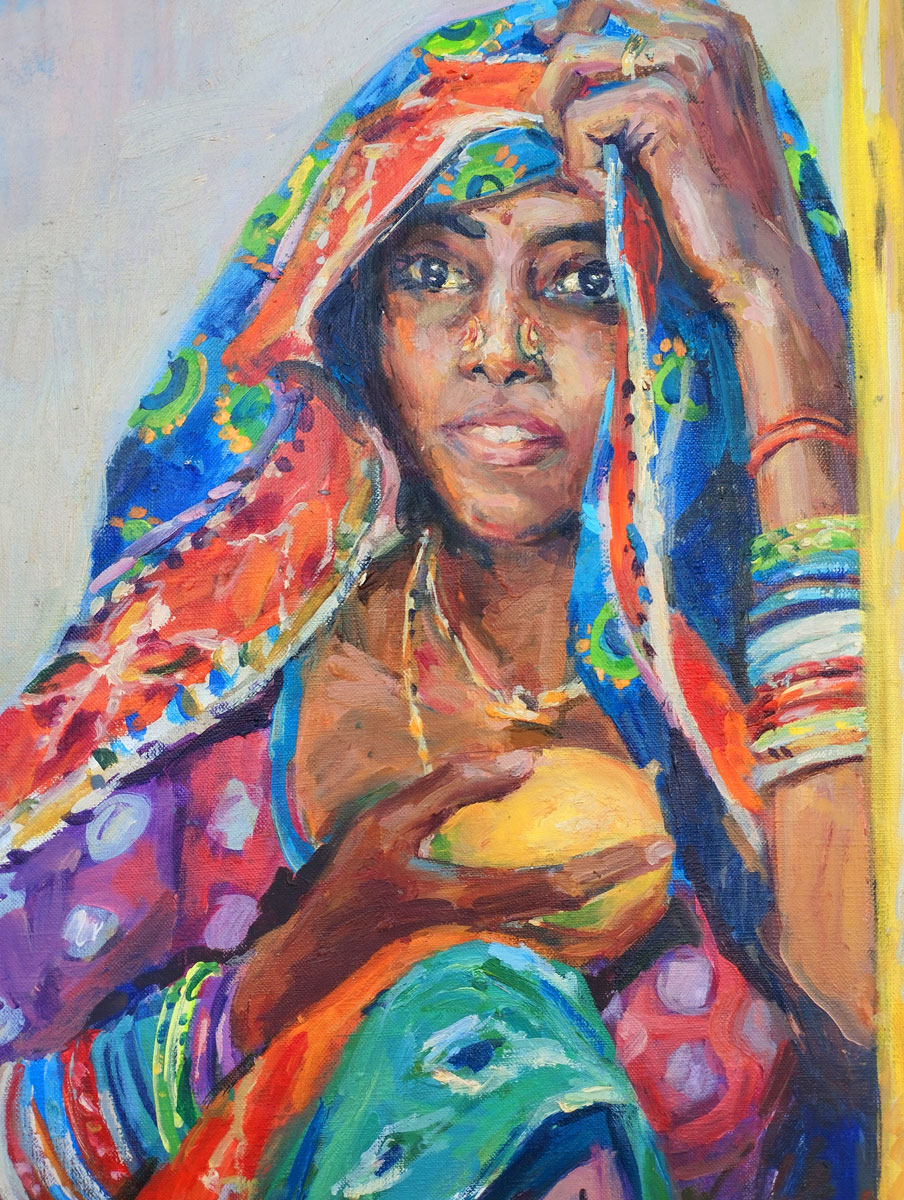

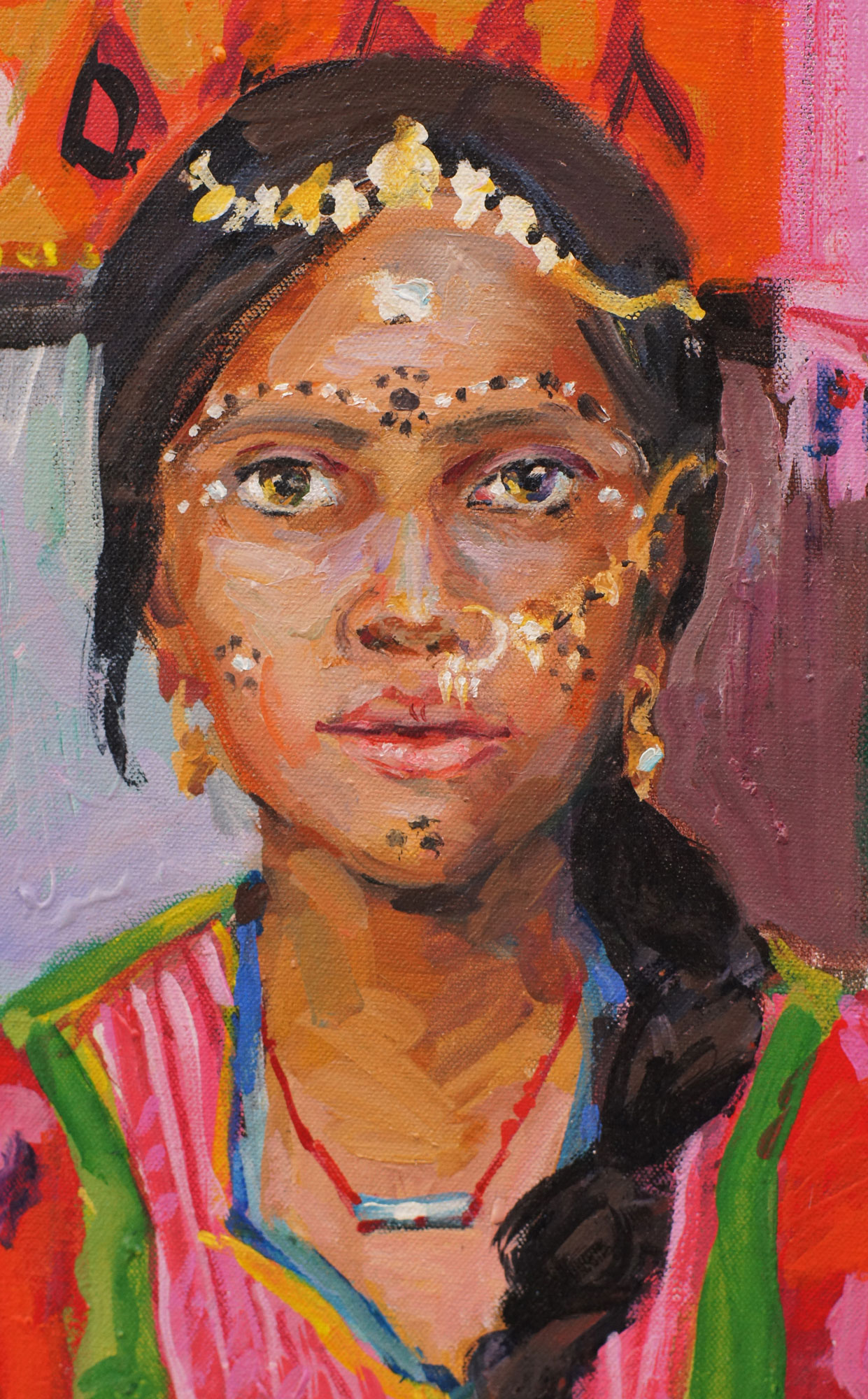
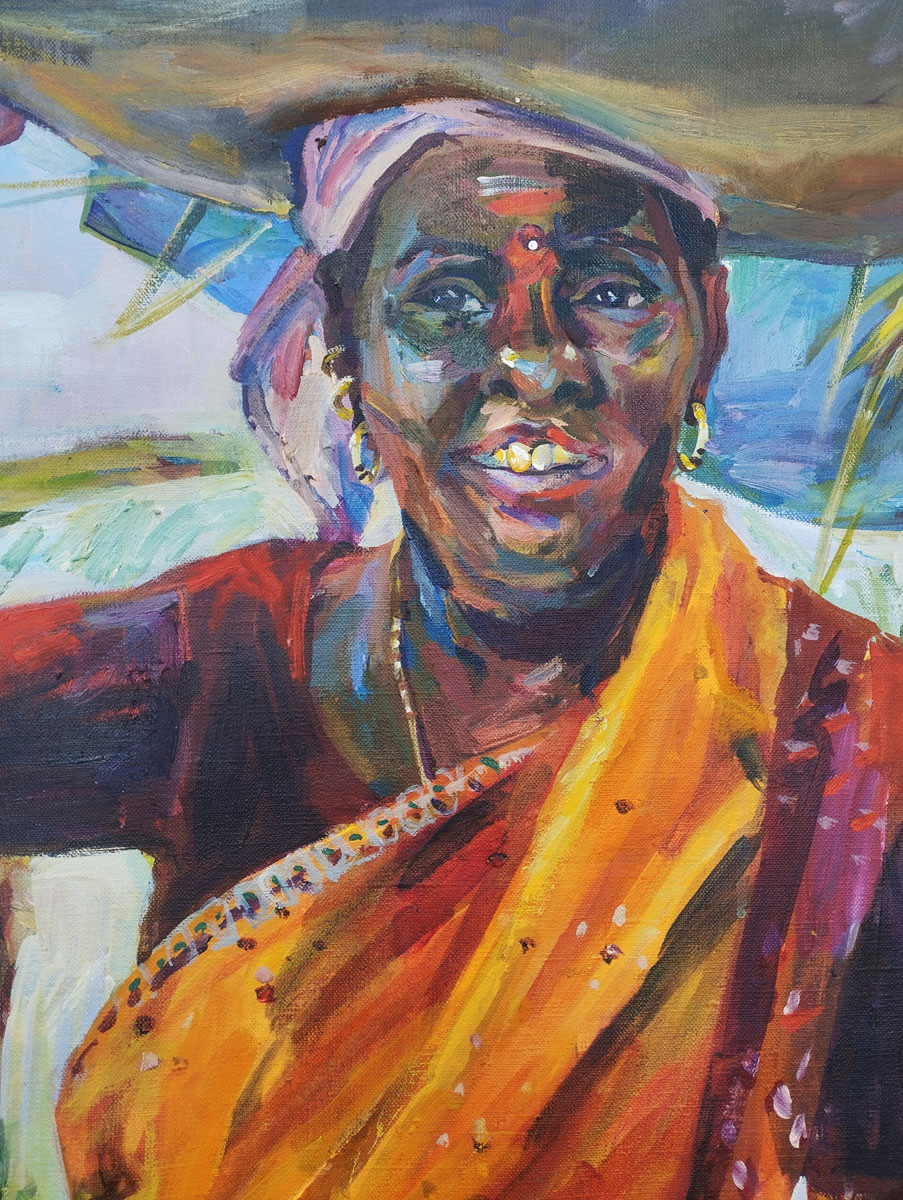

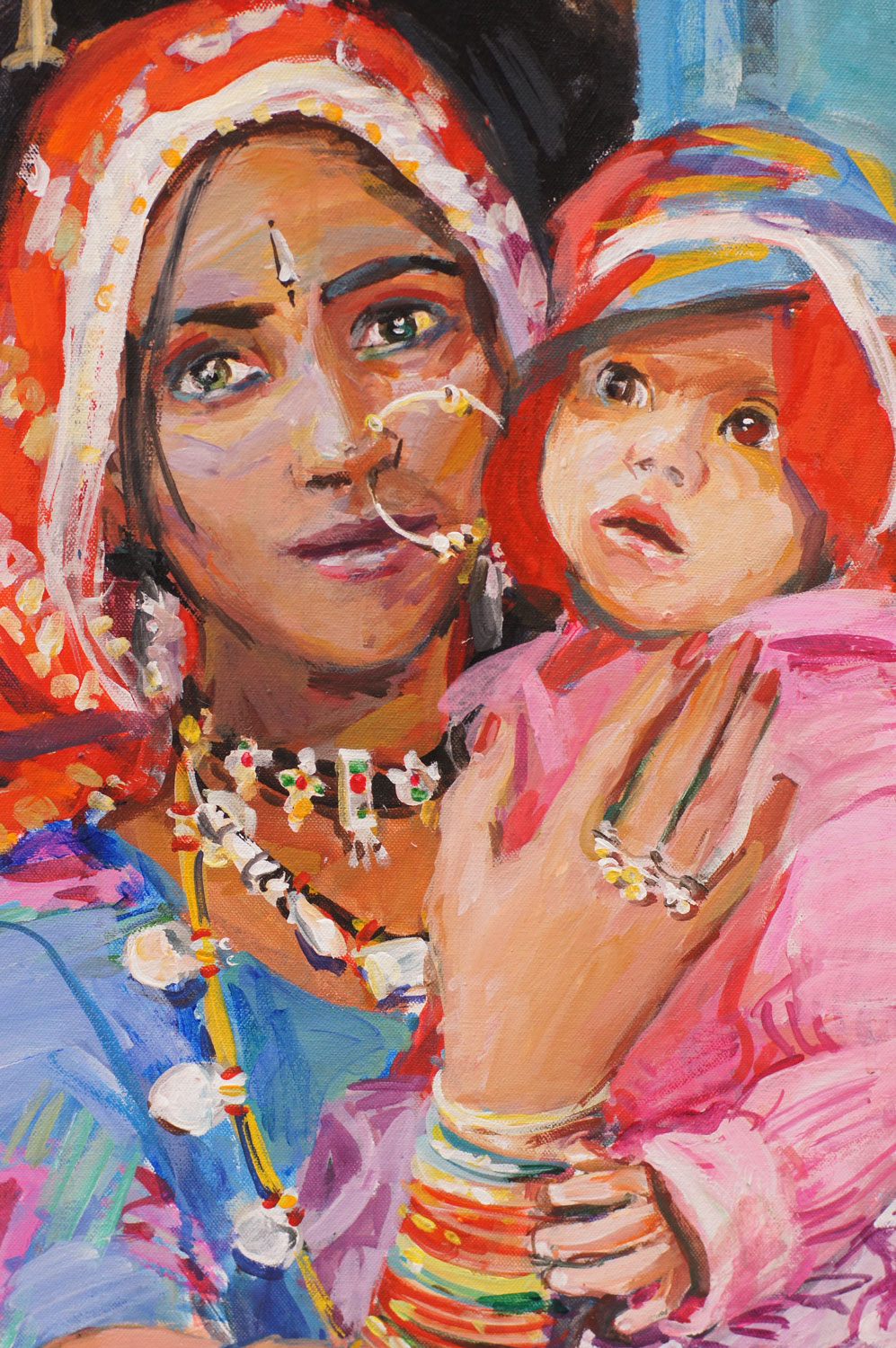
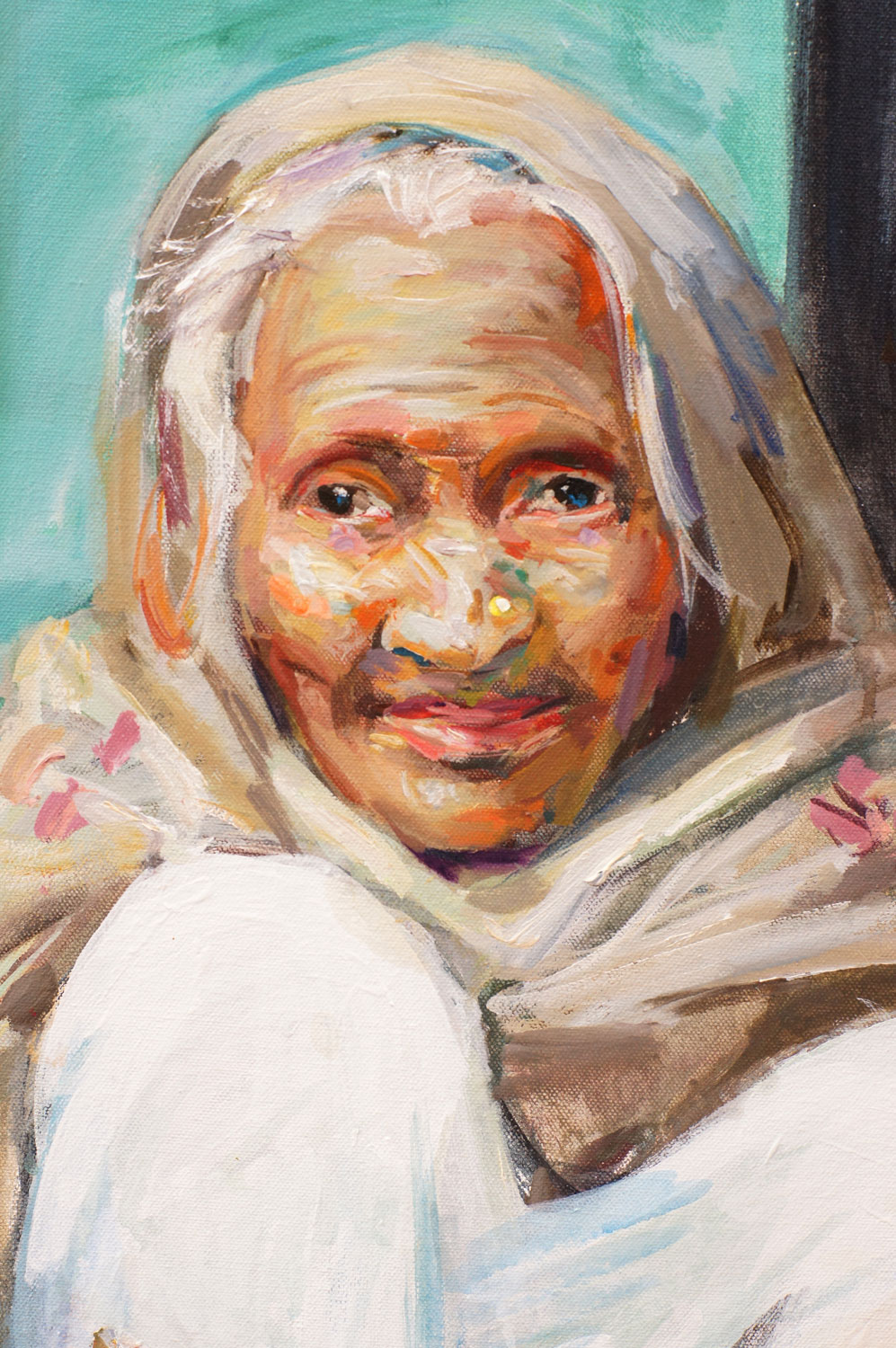
* Details pictures depend on your screen size and screen resolution, on original paintings characters size are on 1:1 scale to the human size