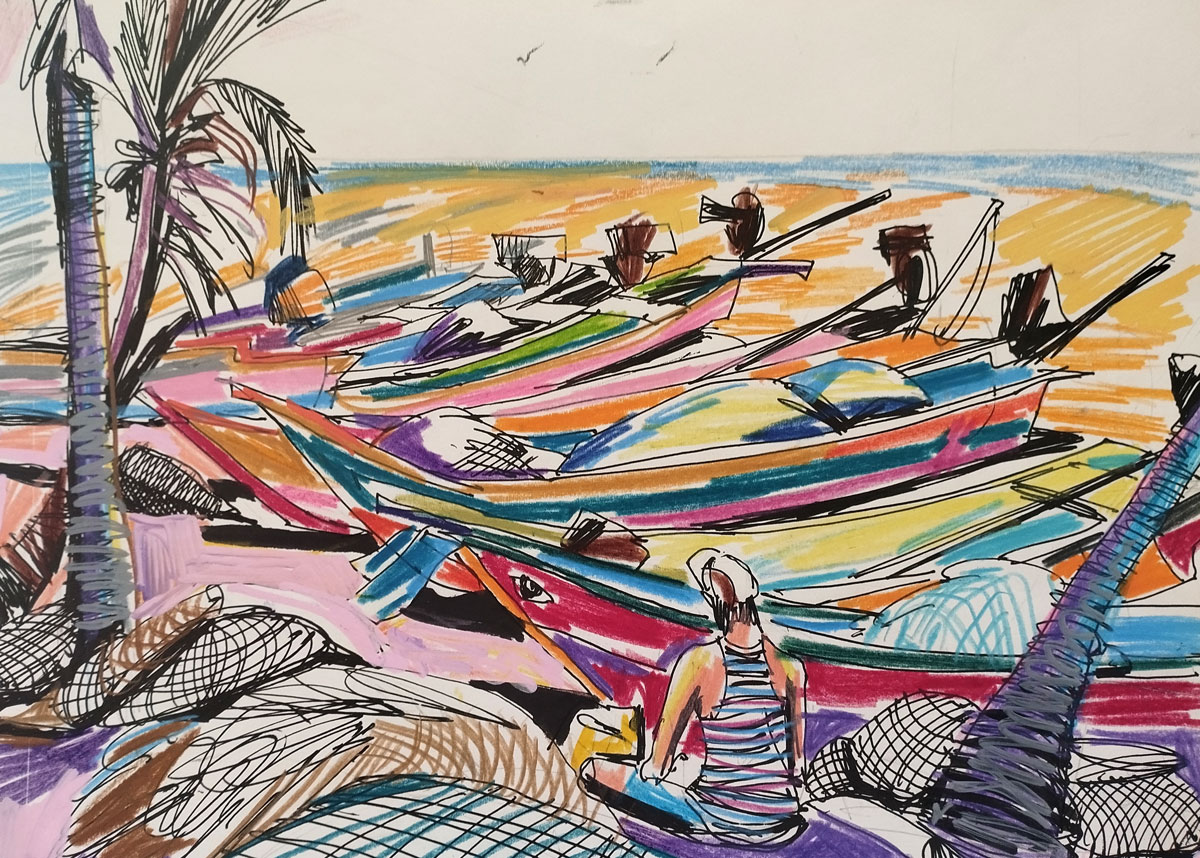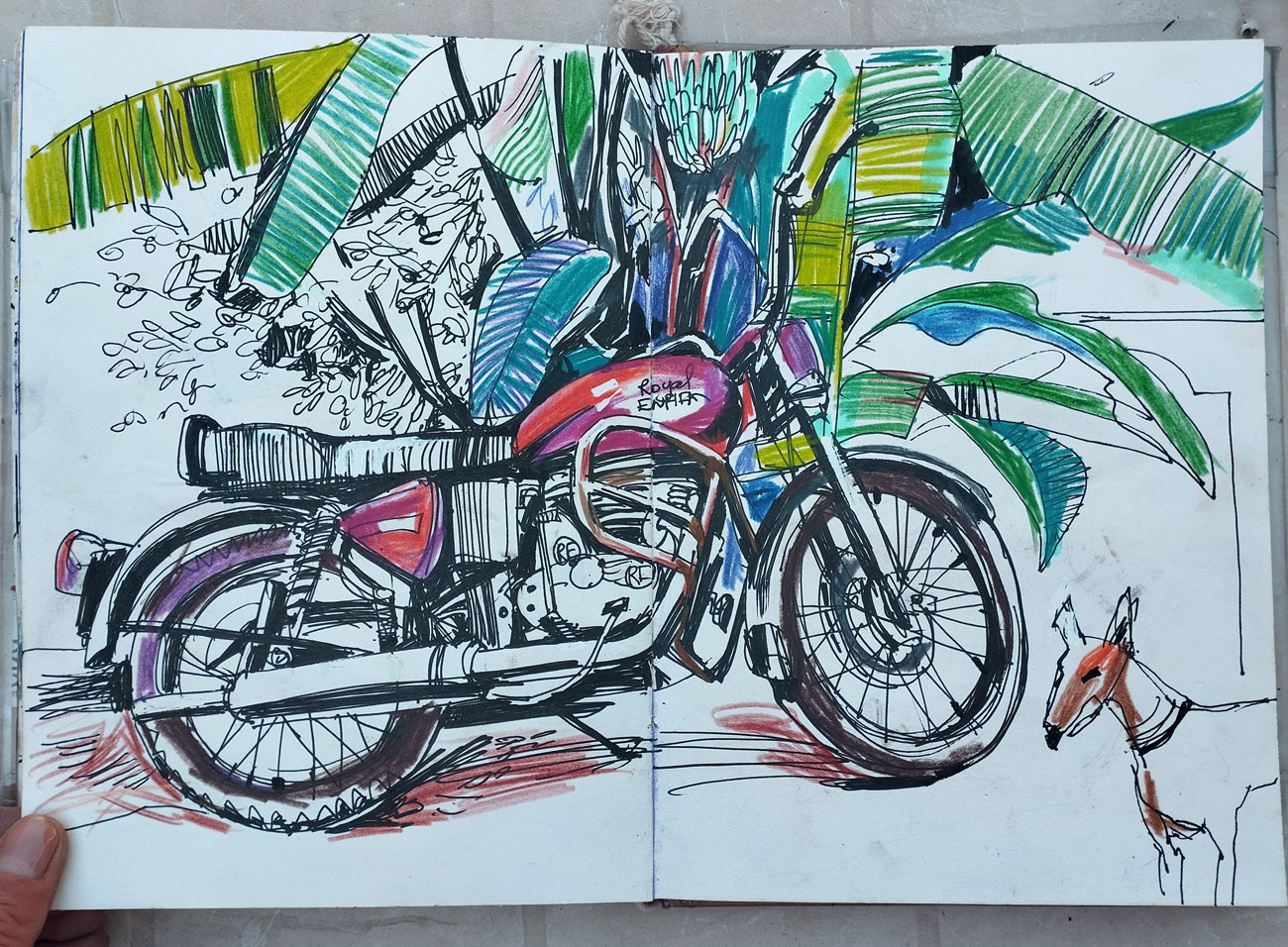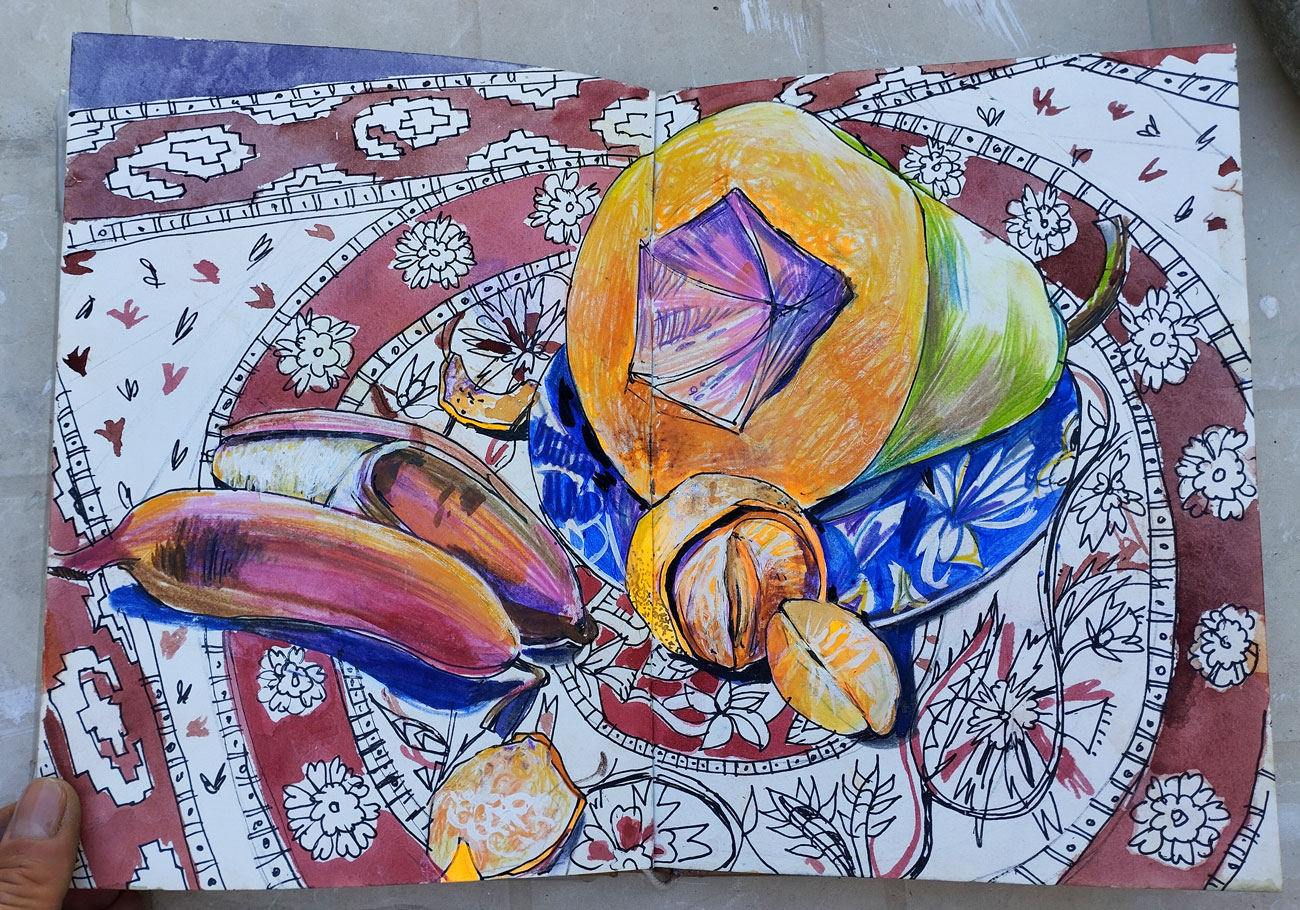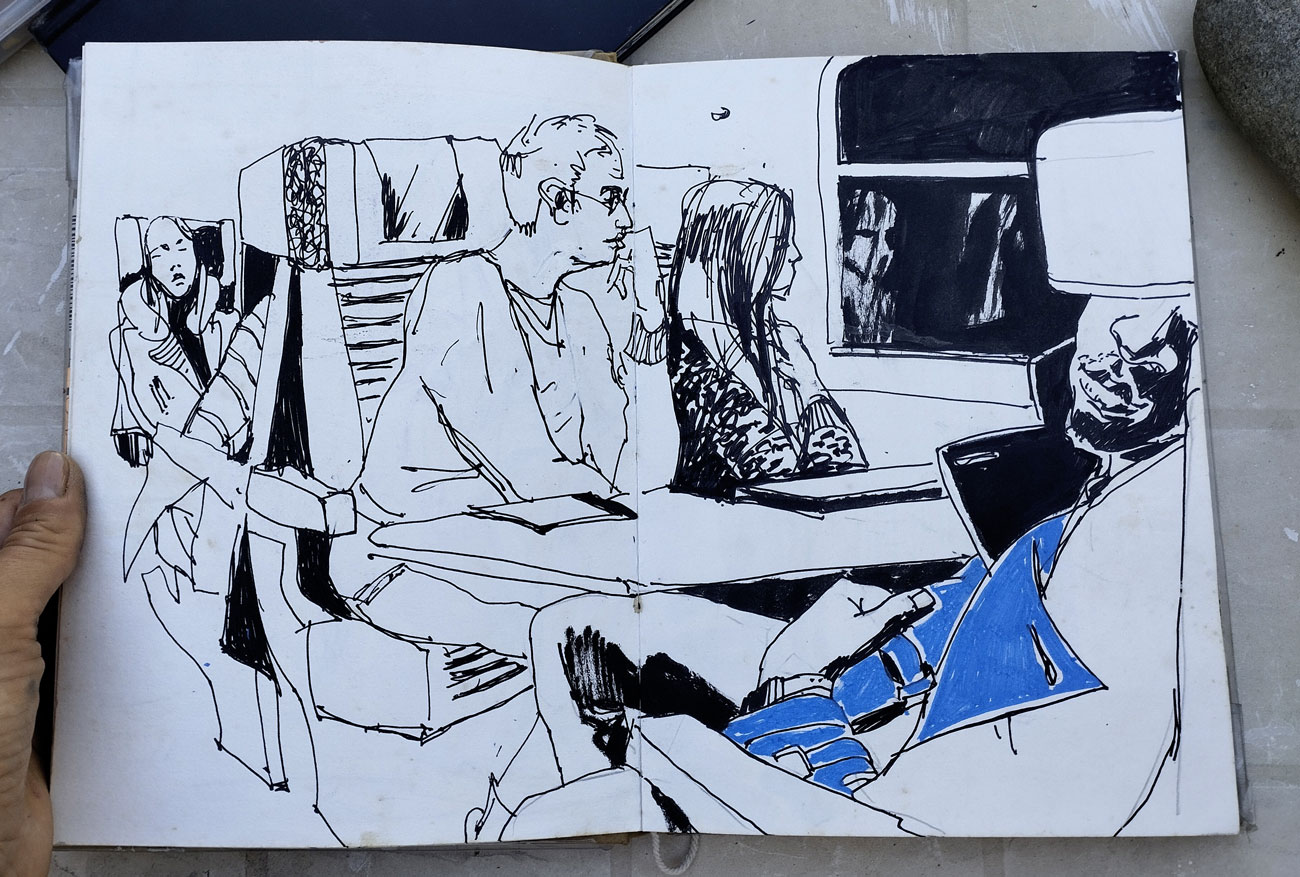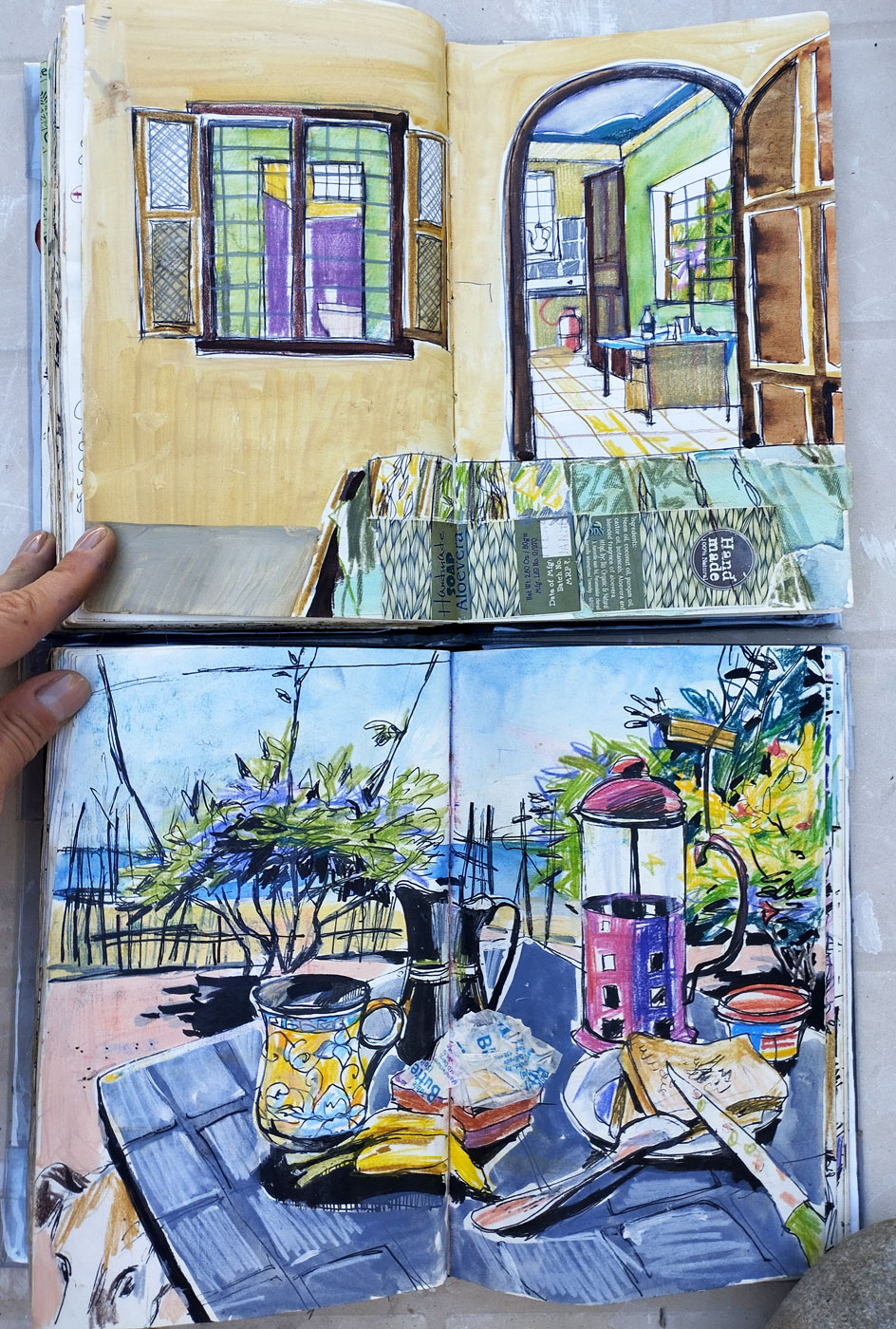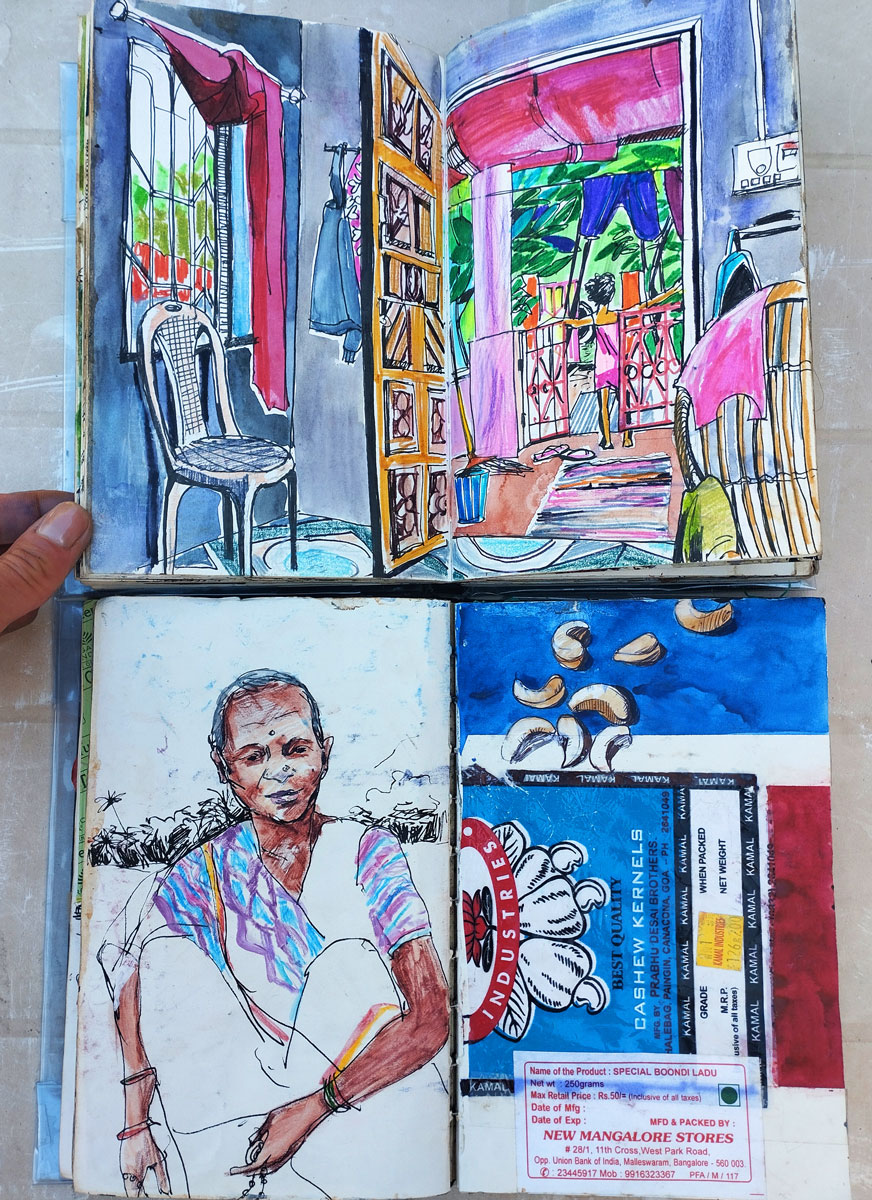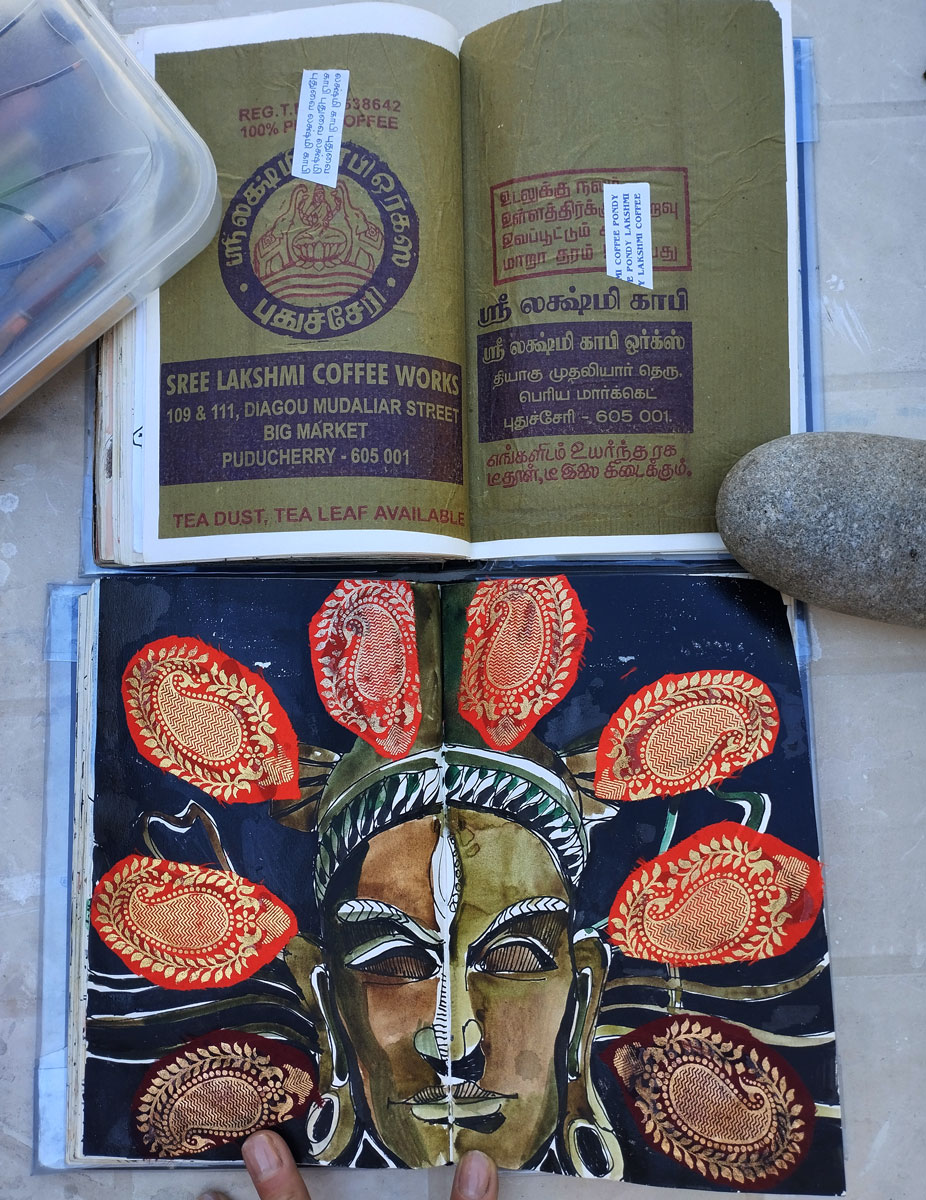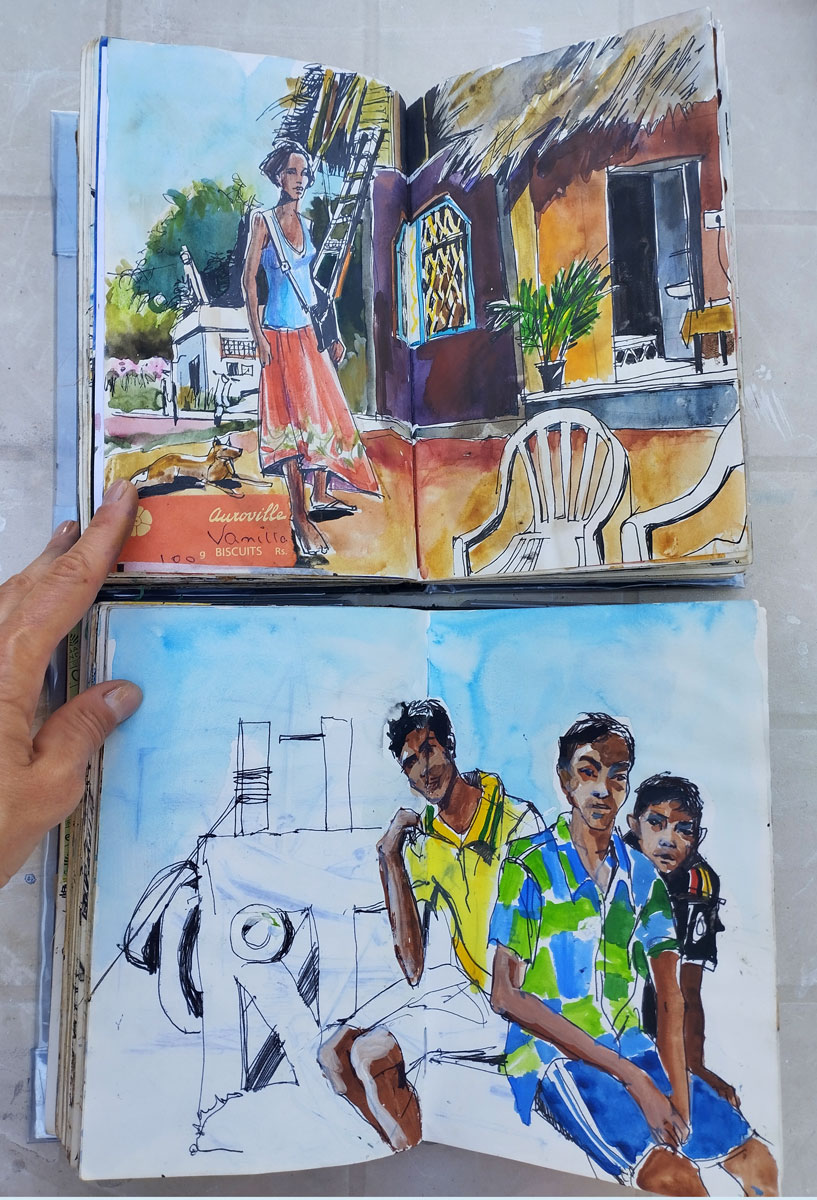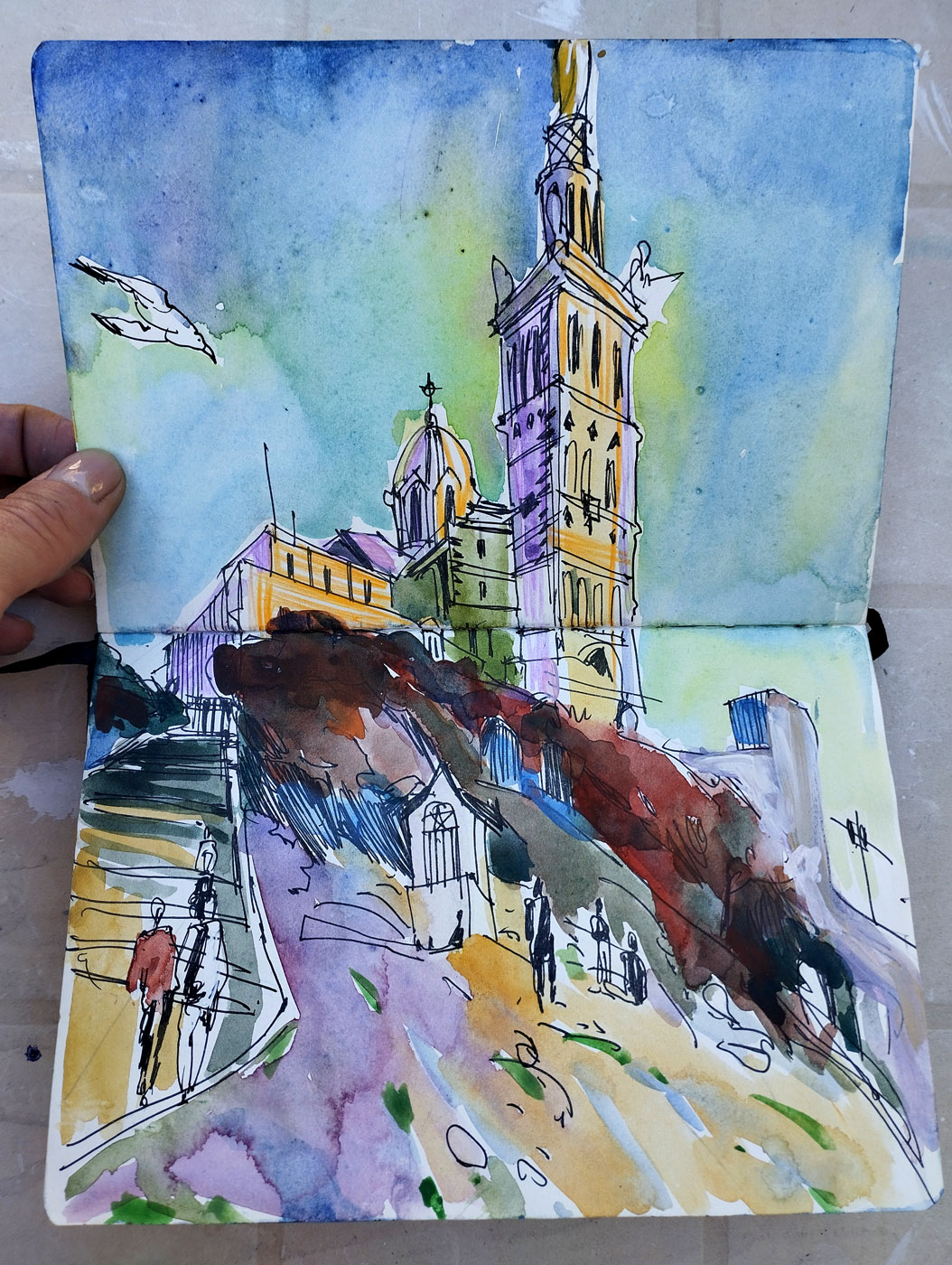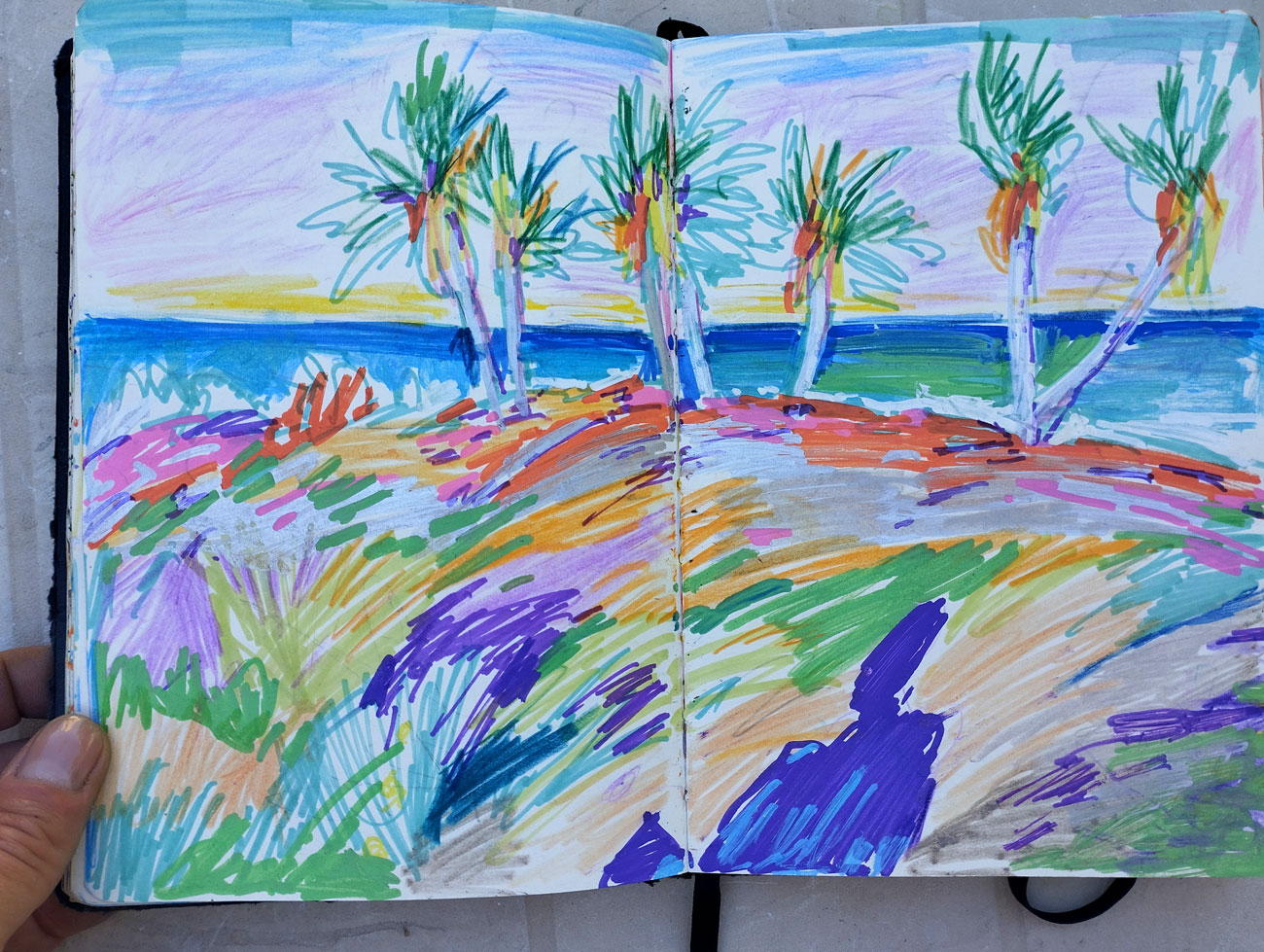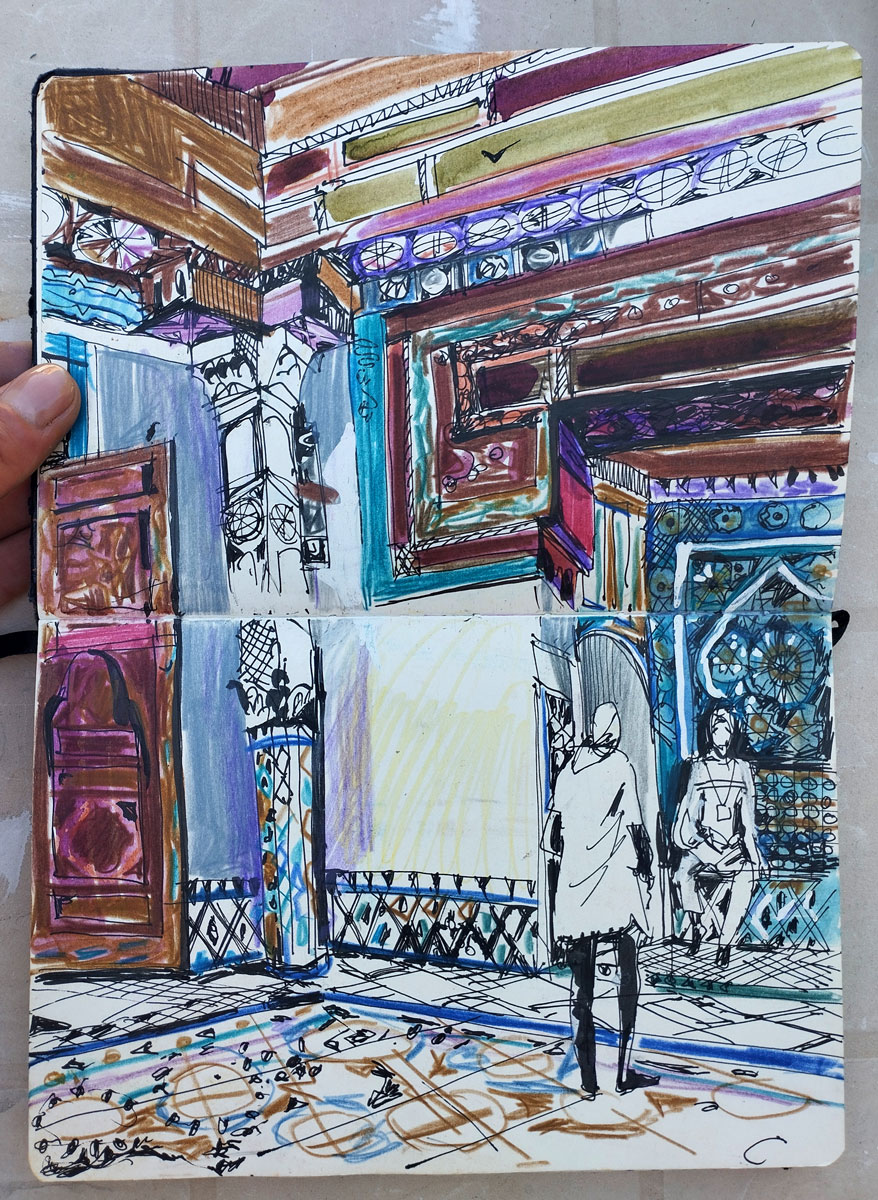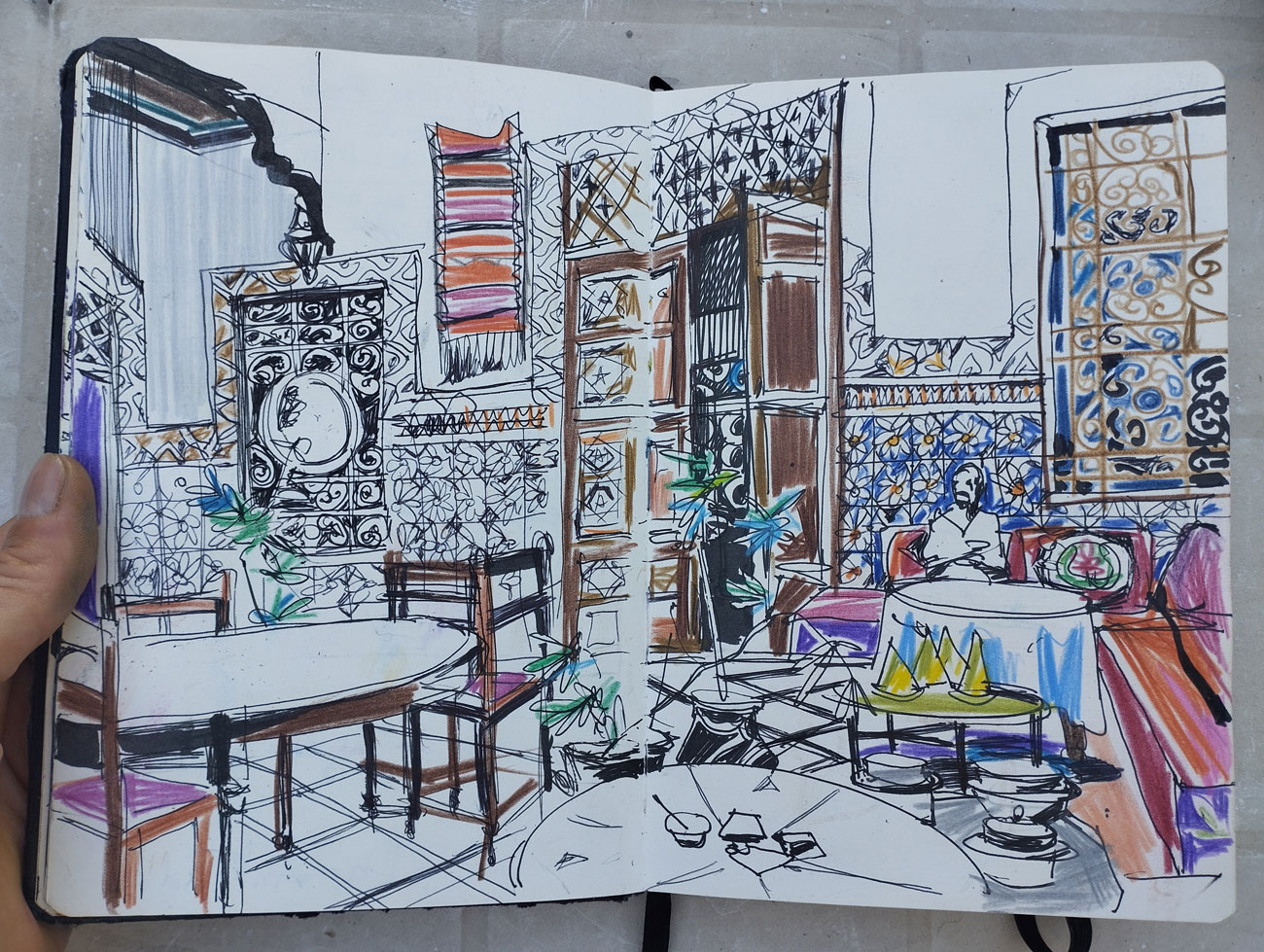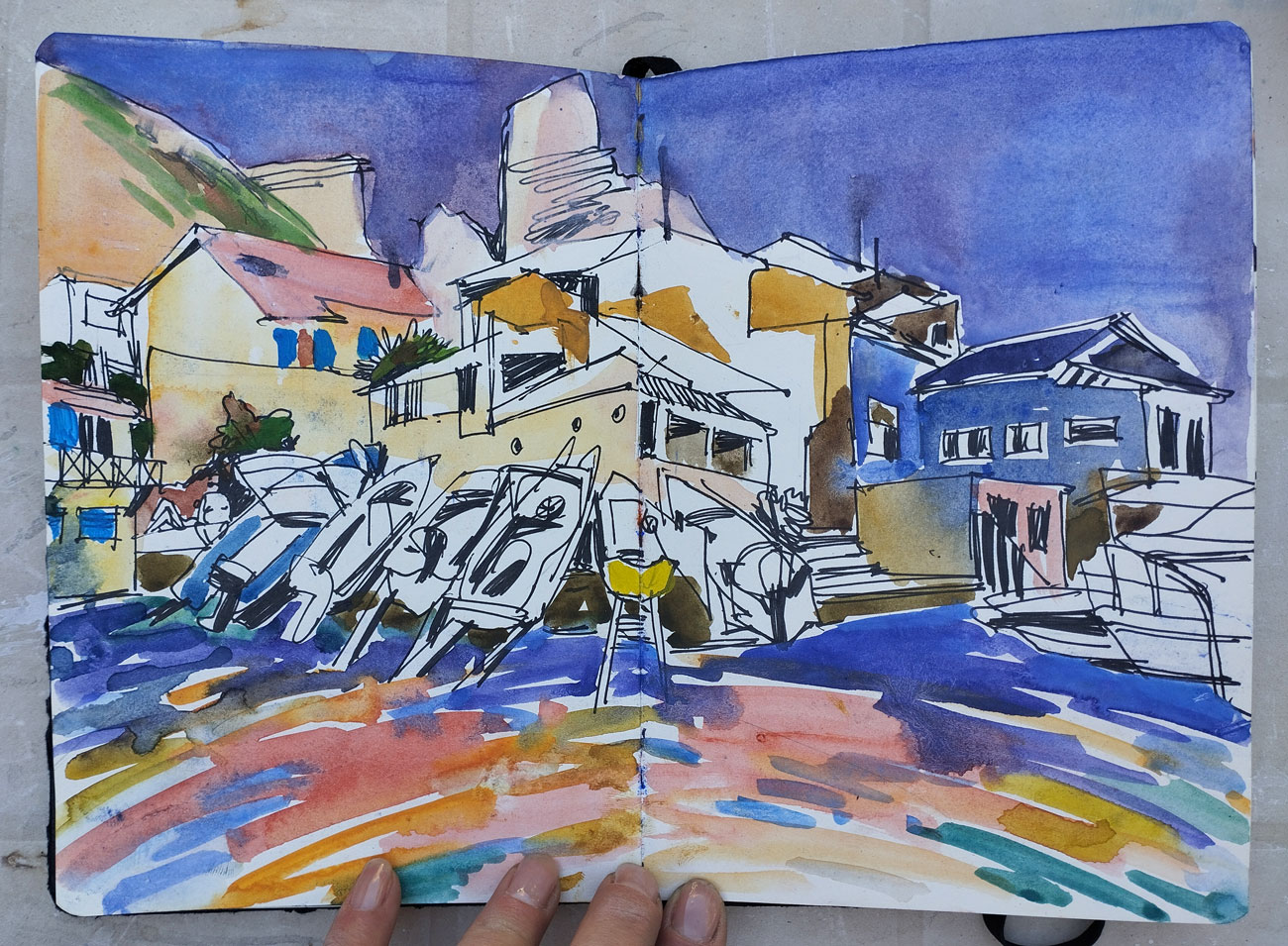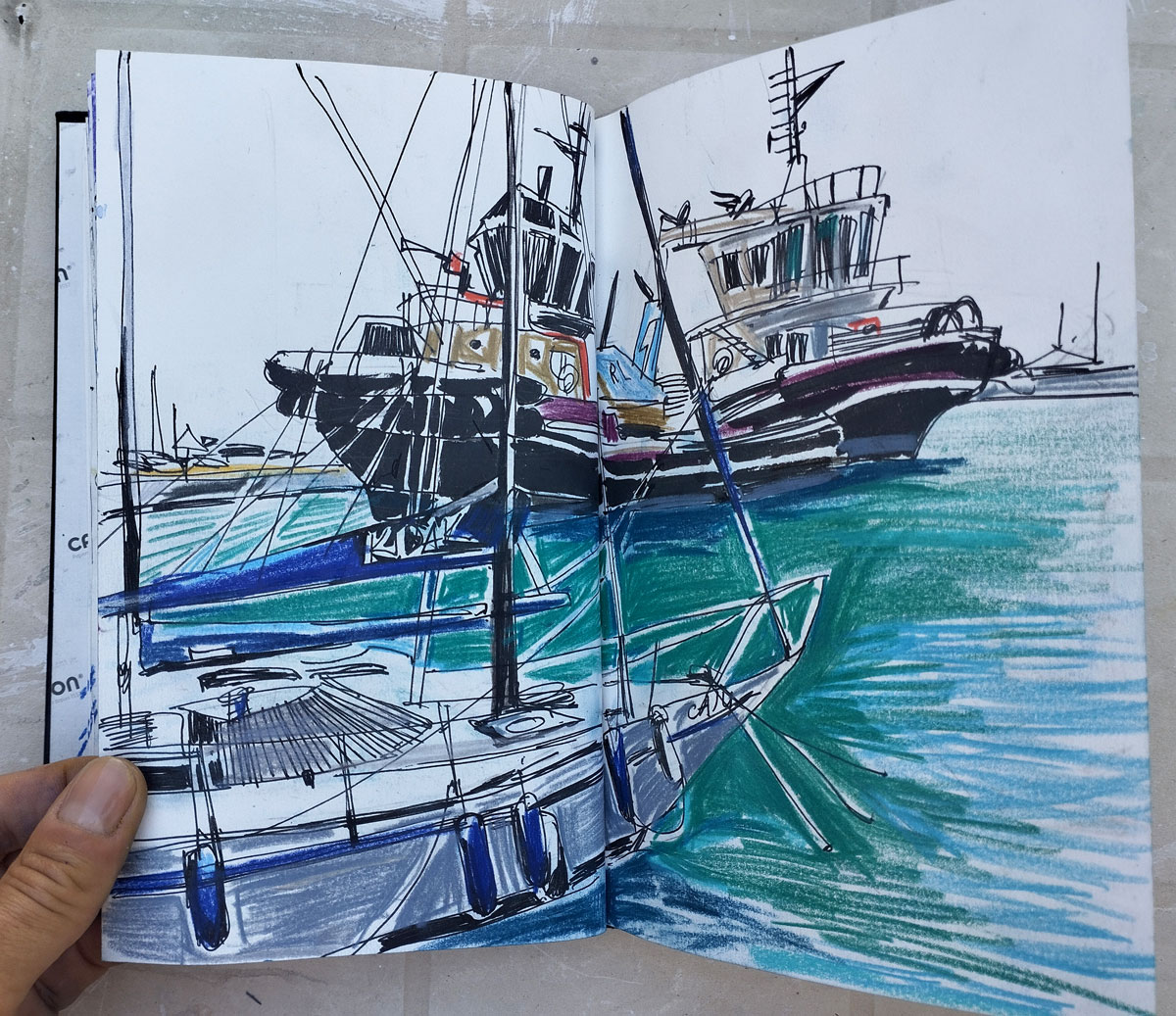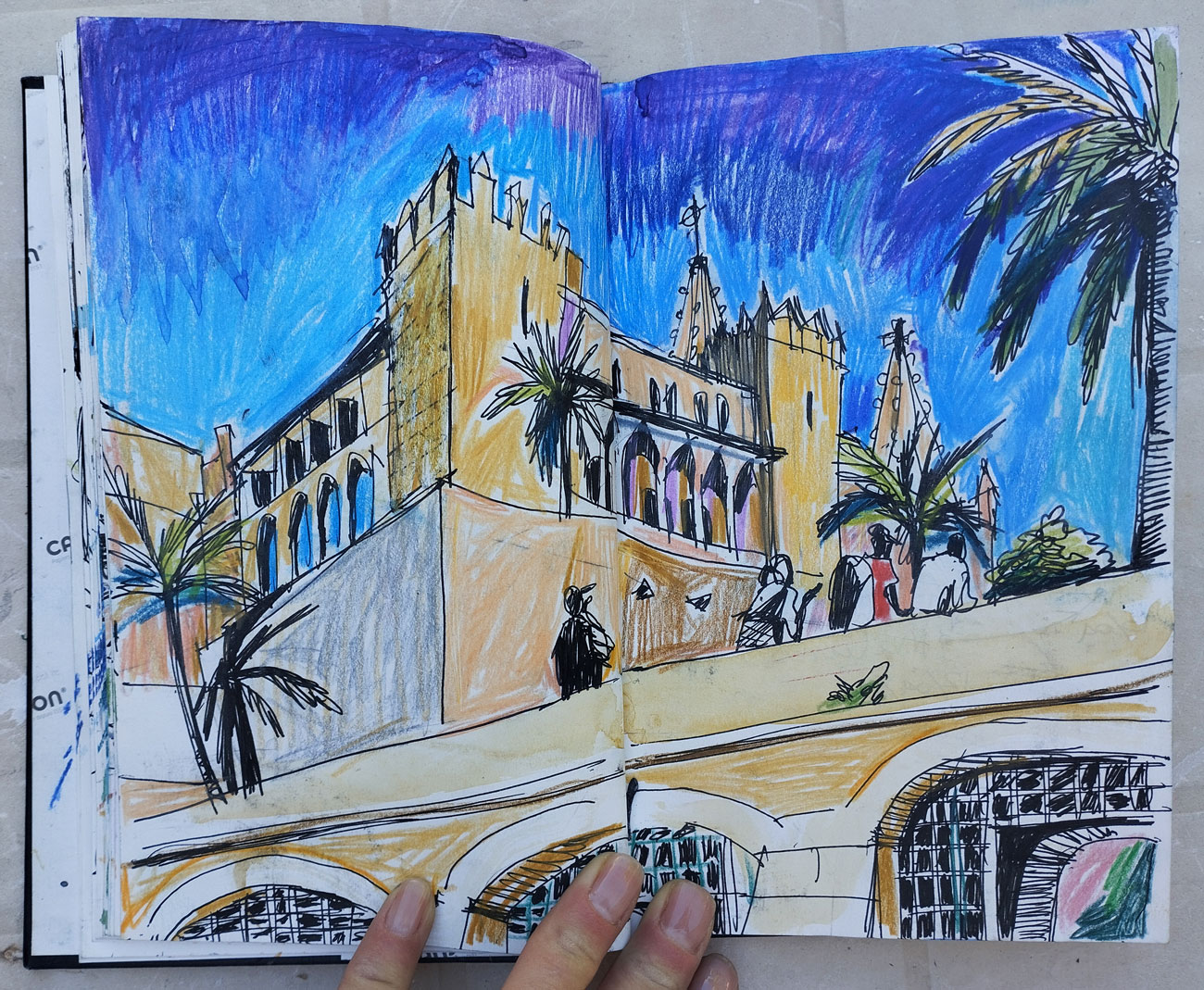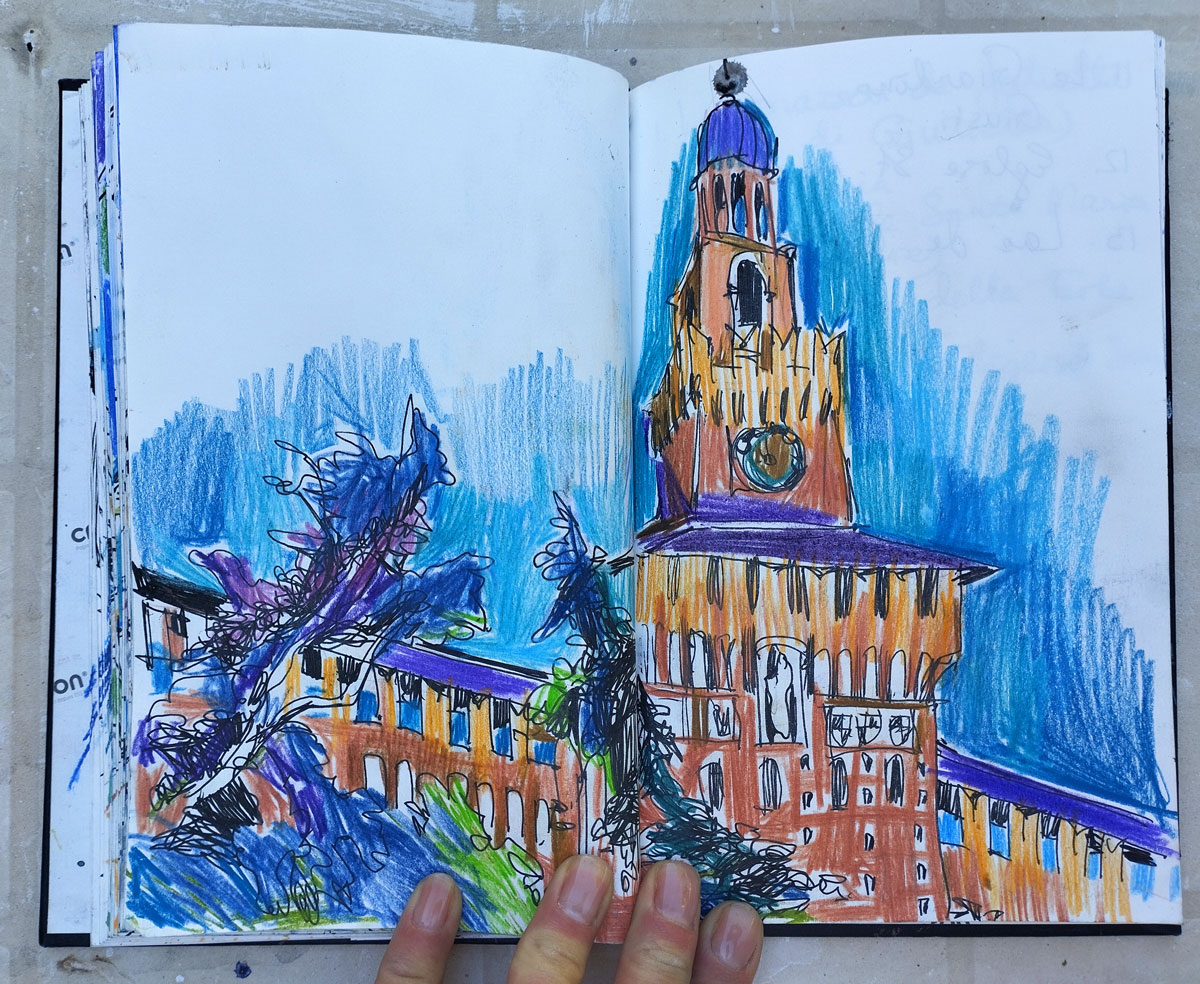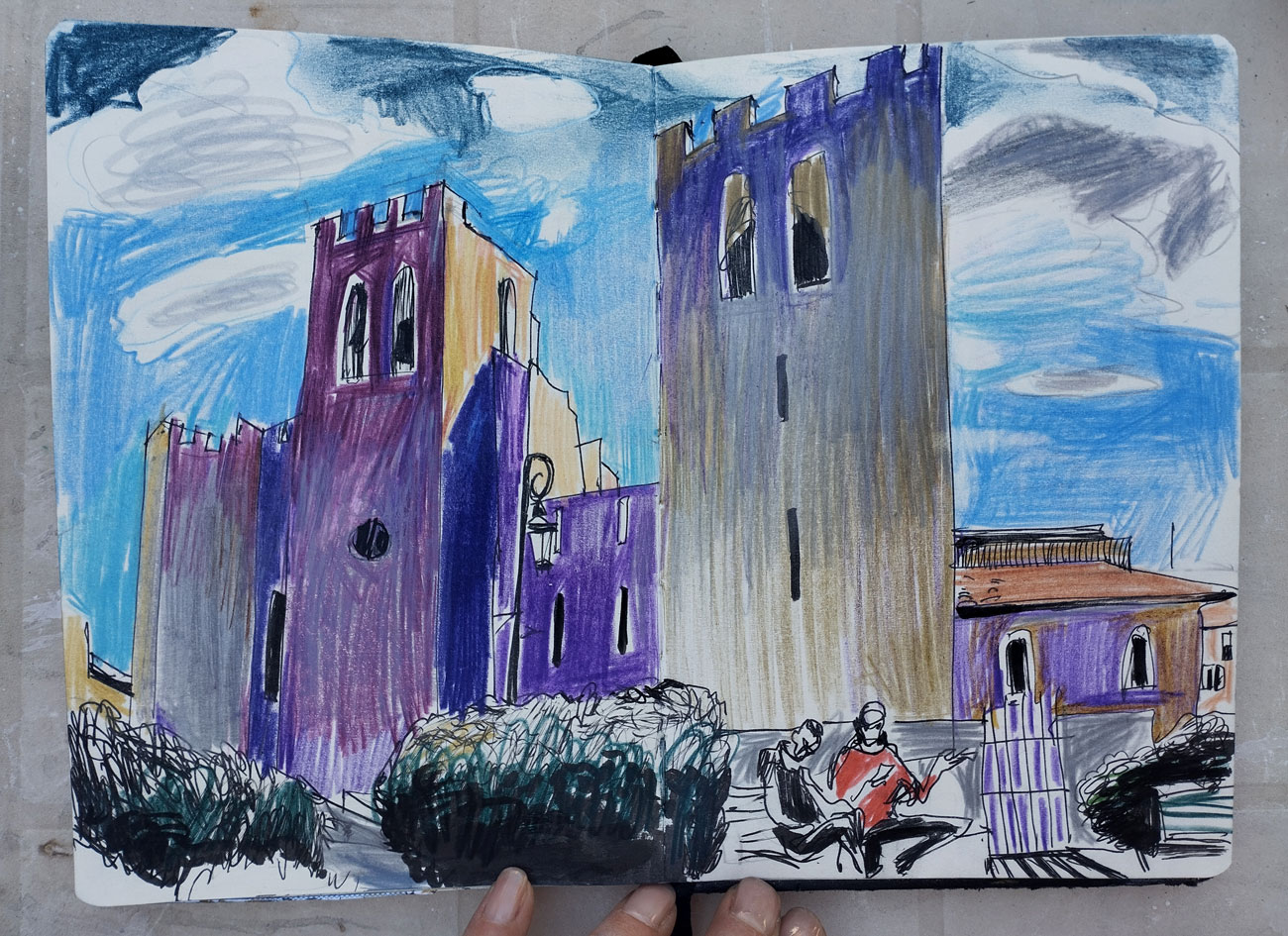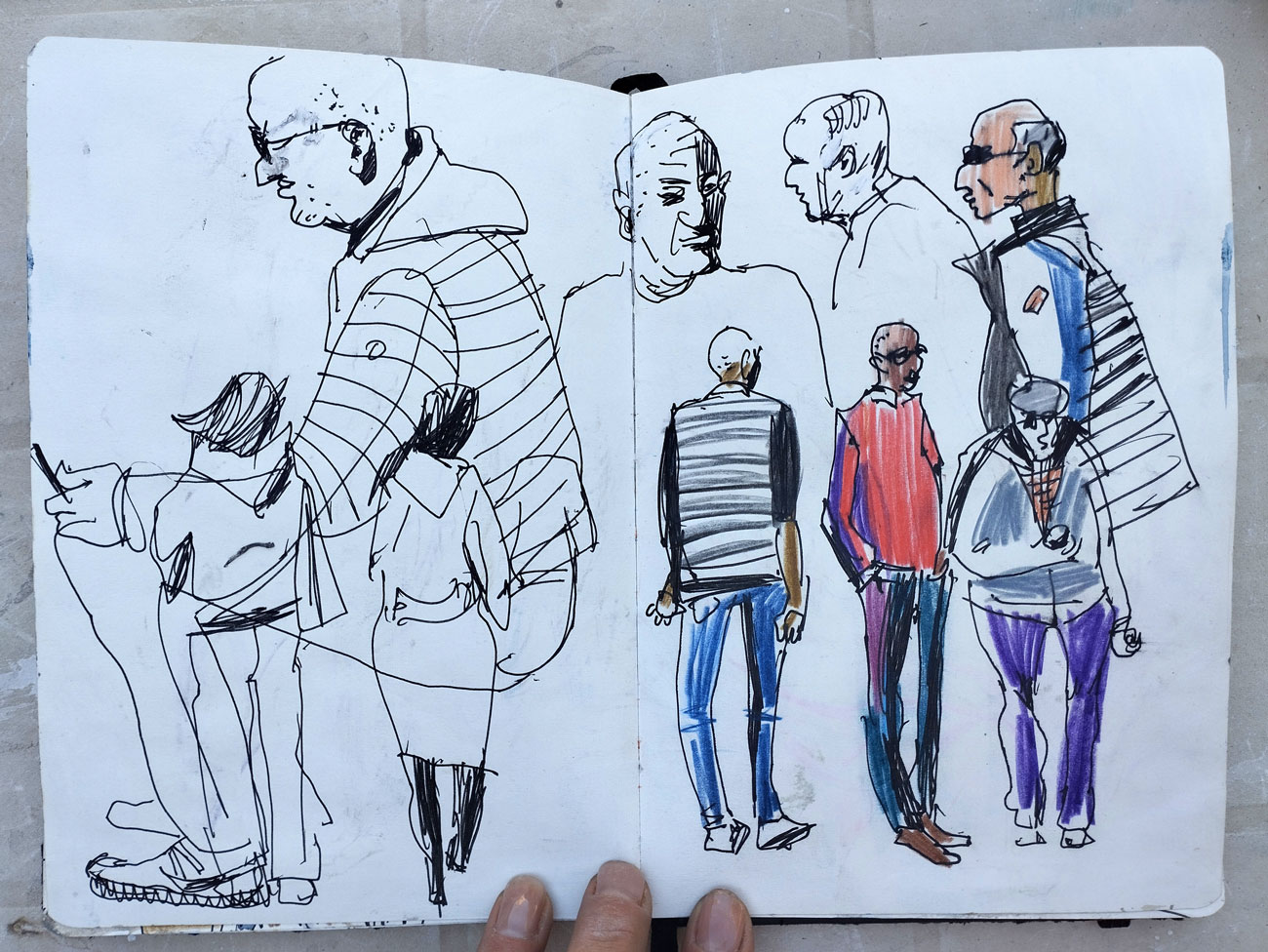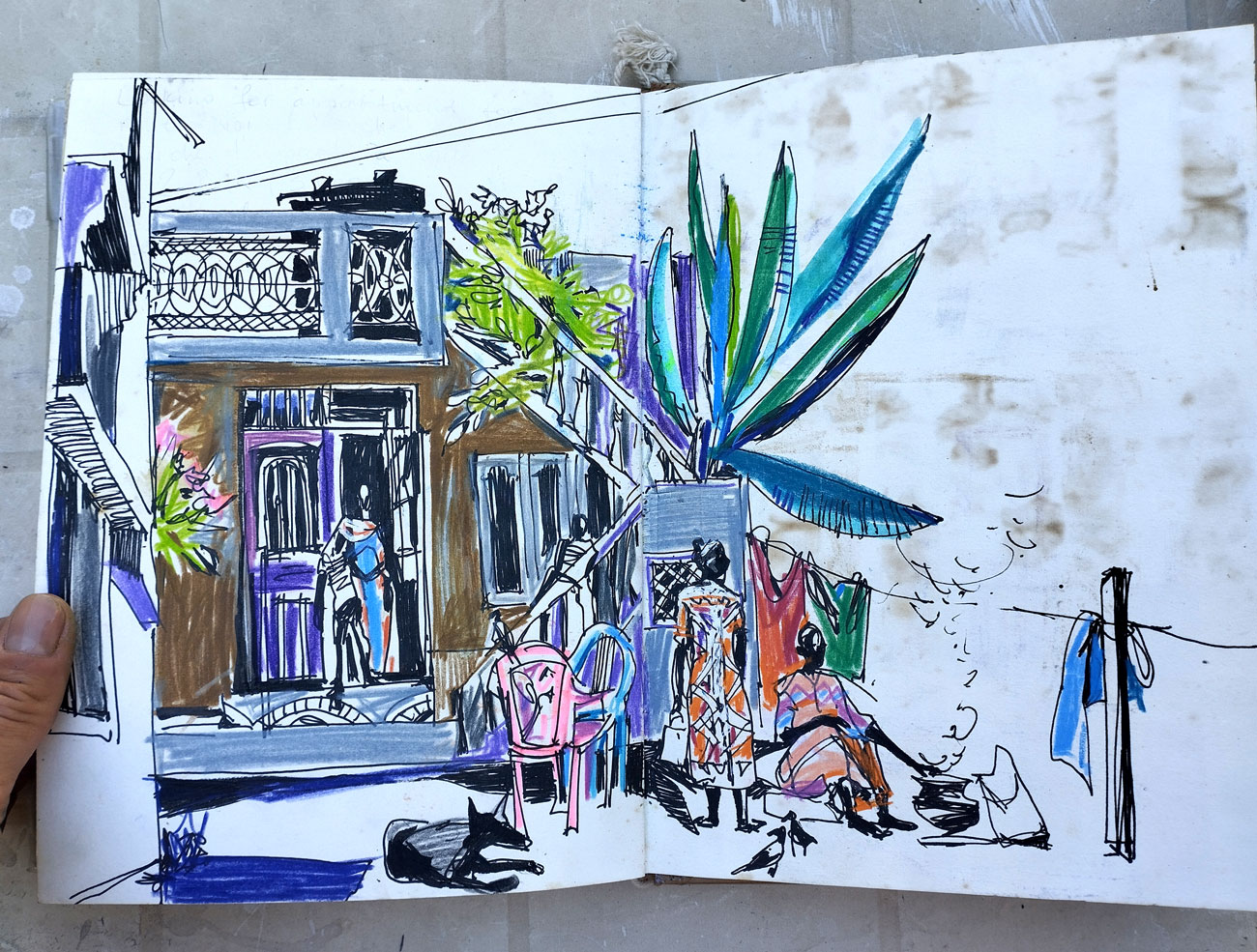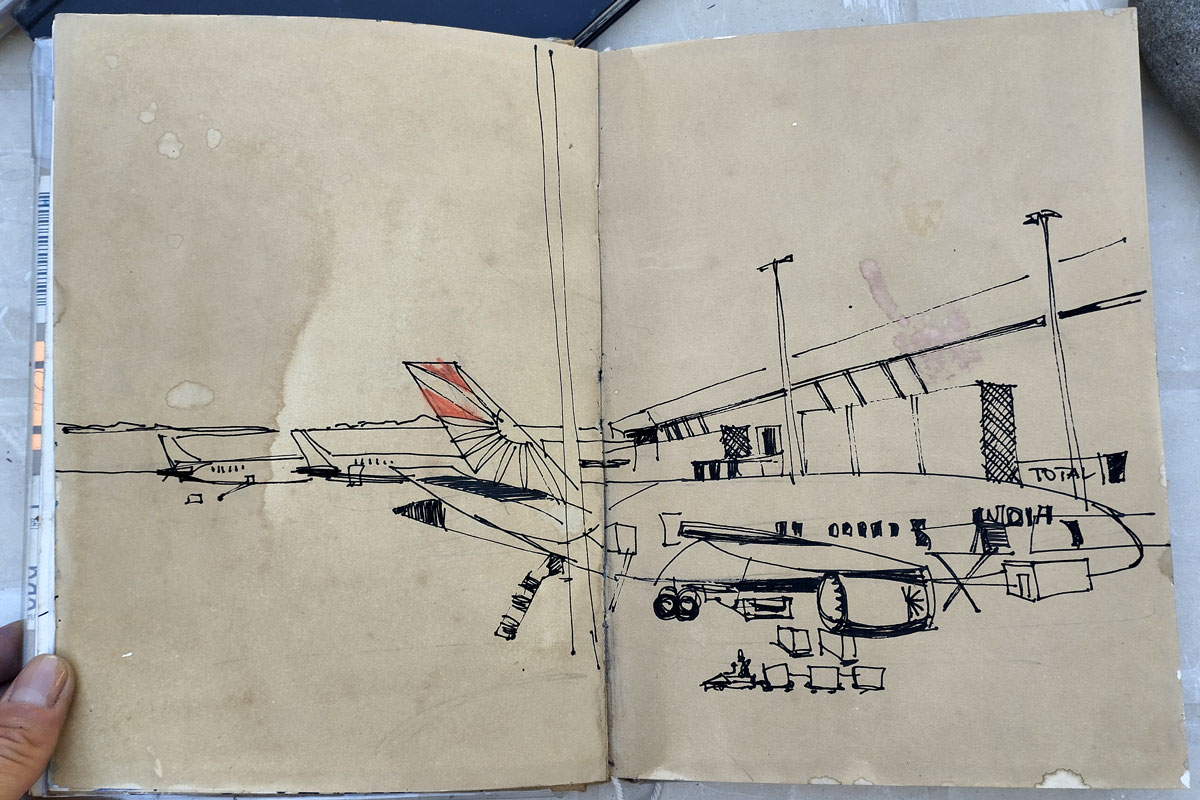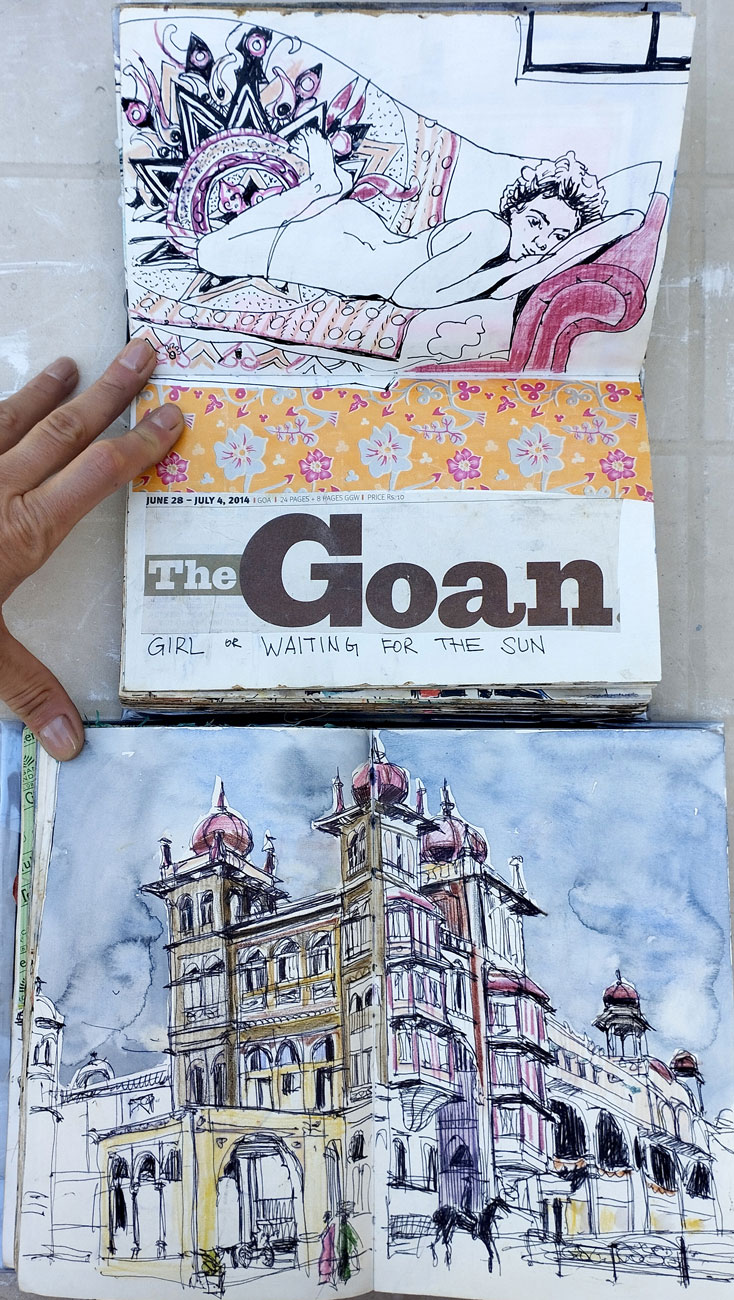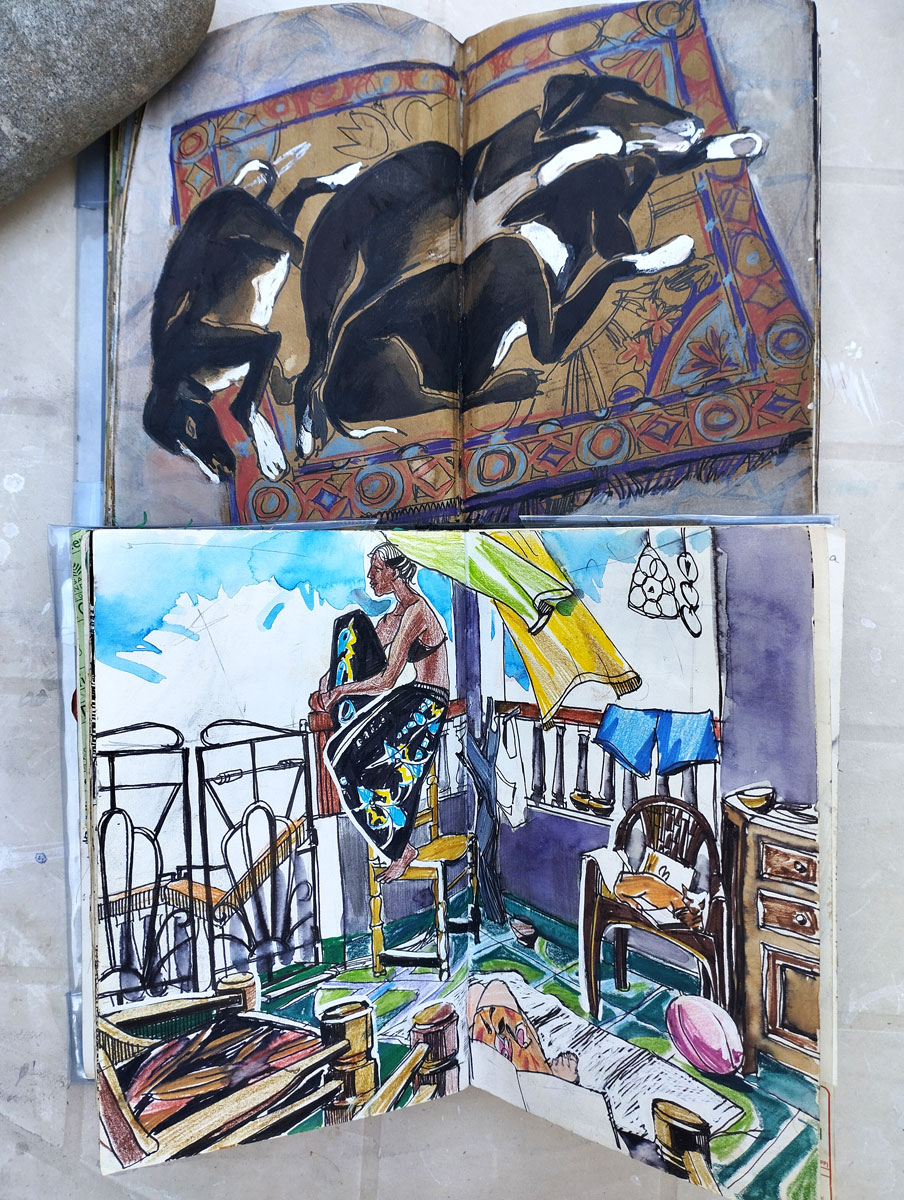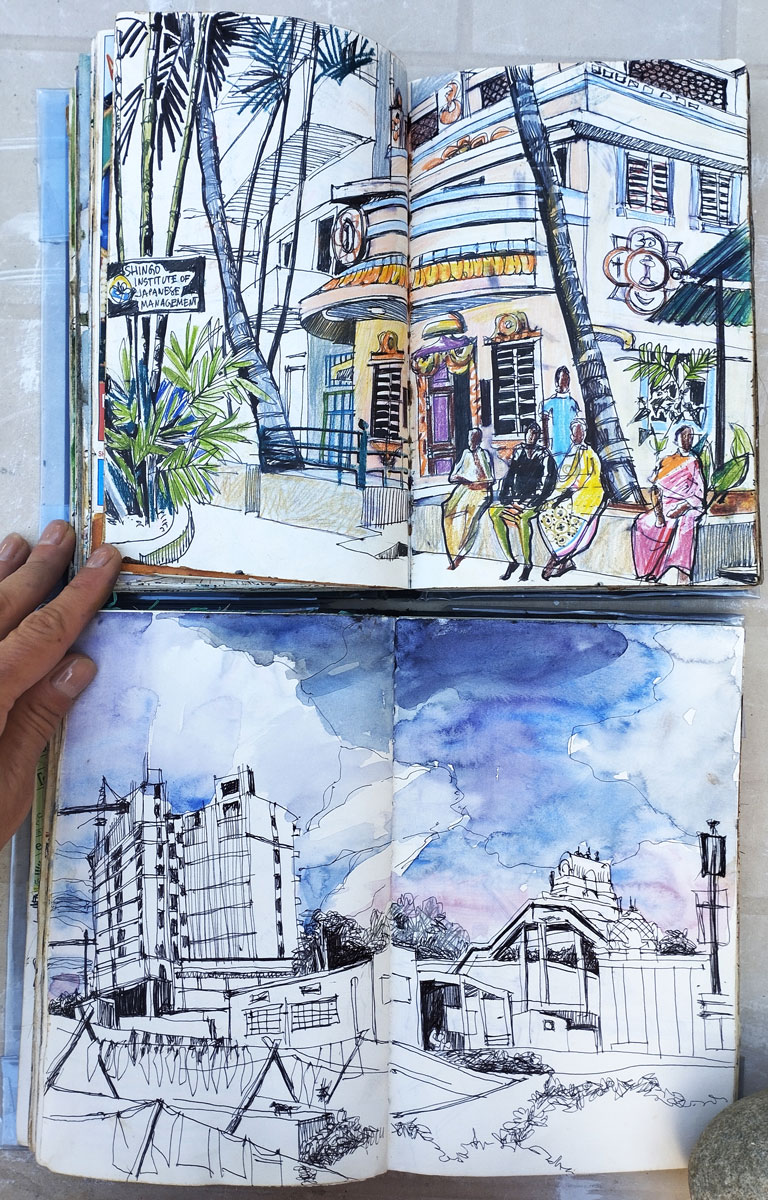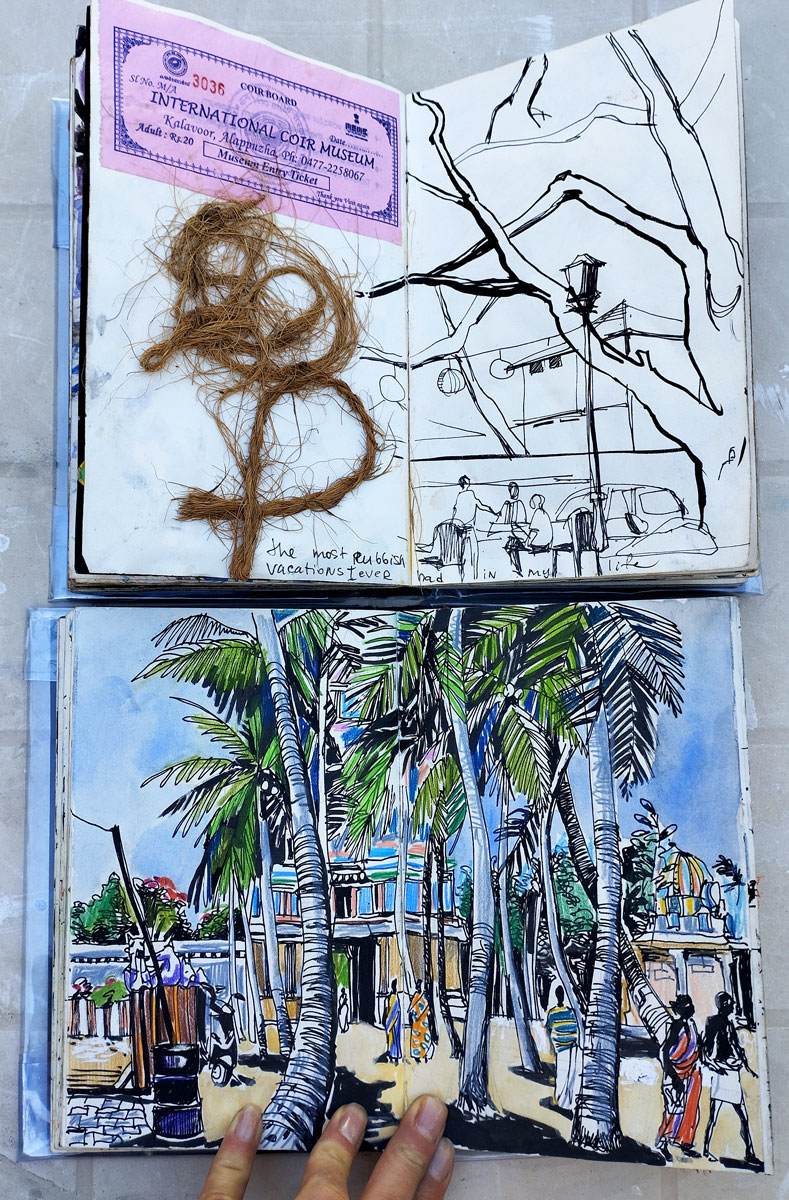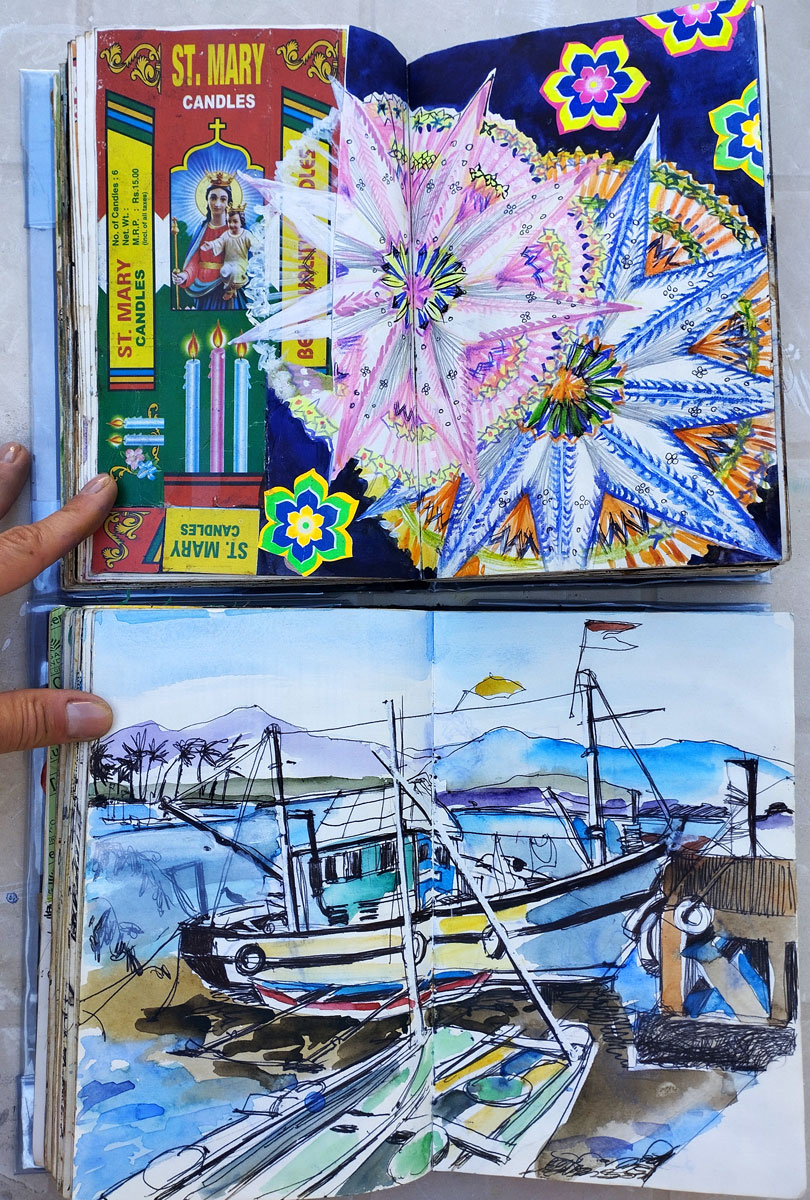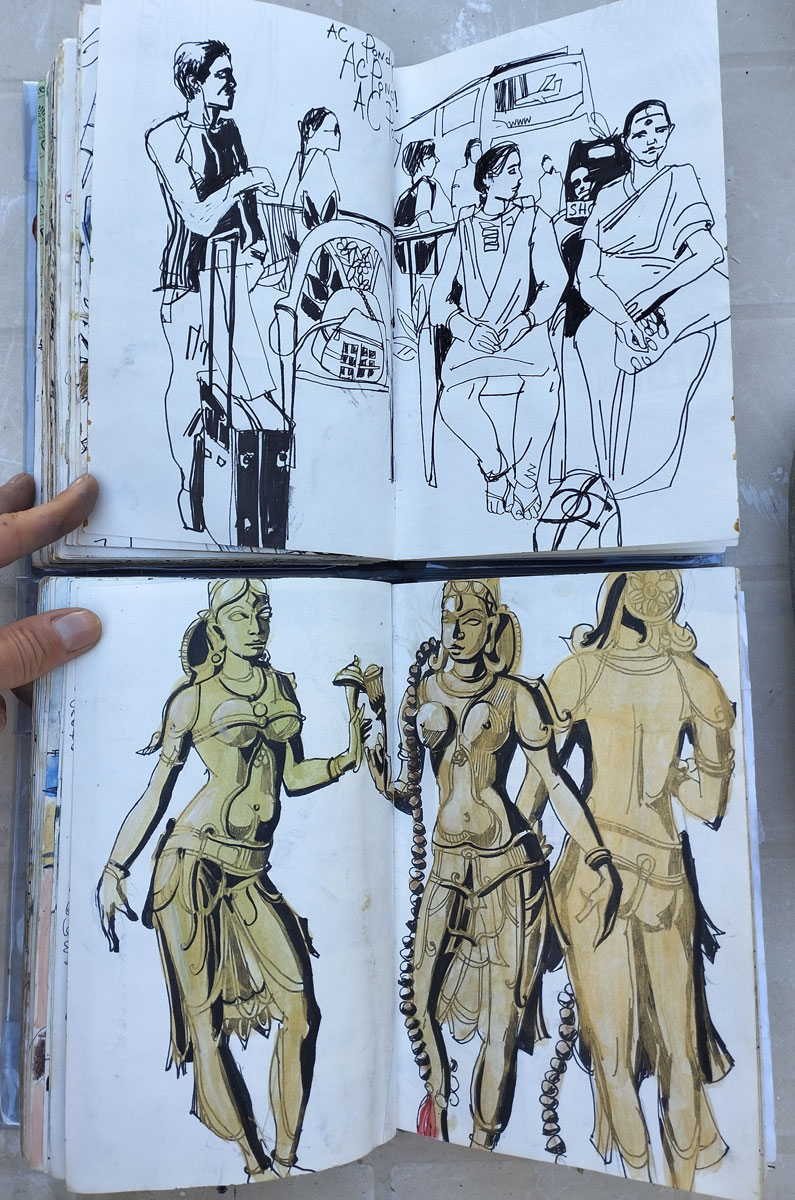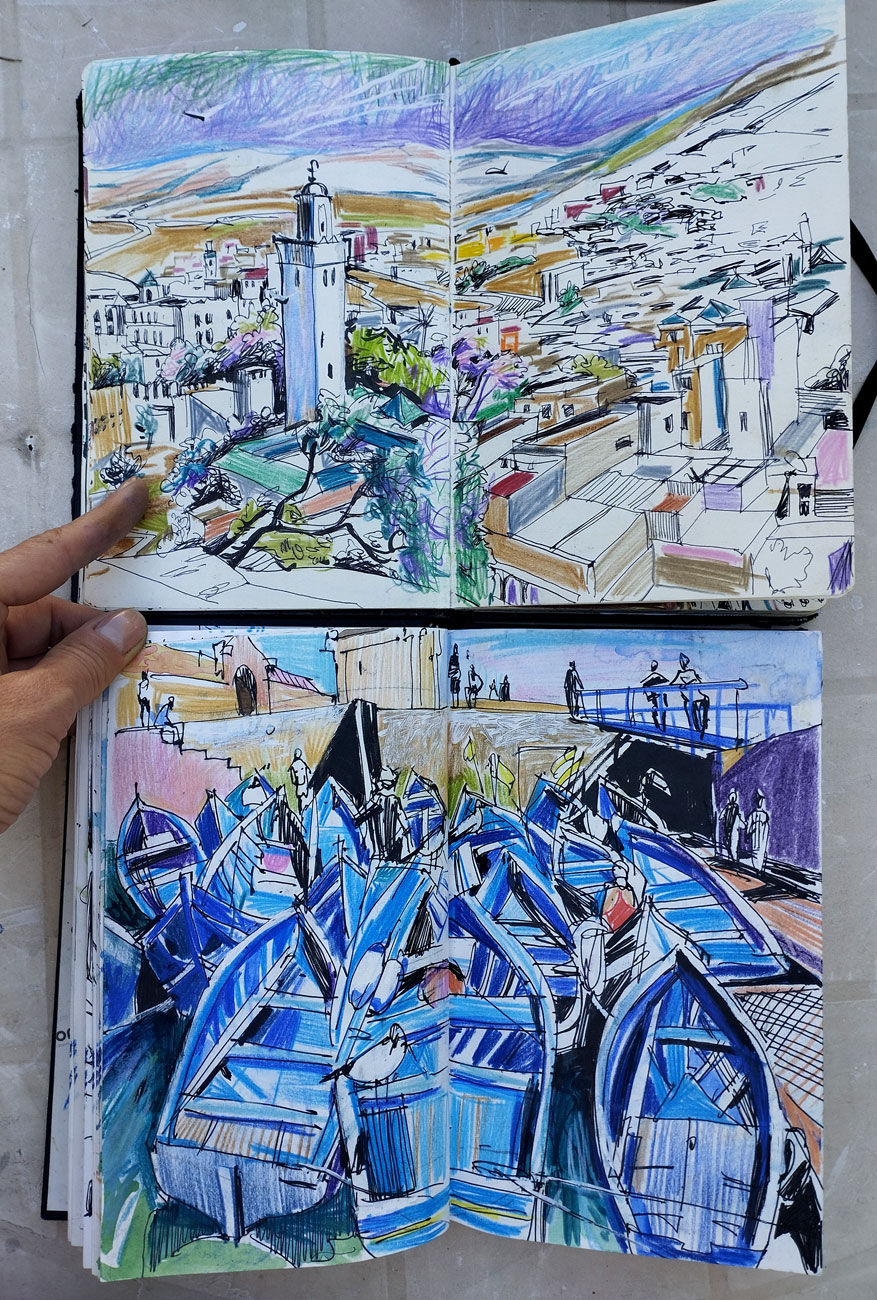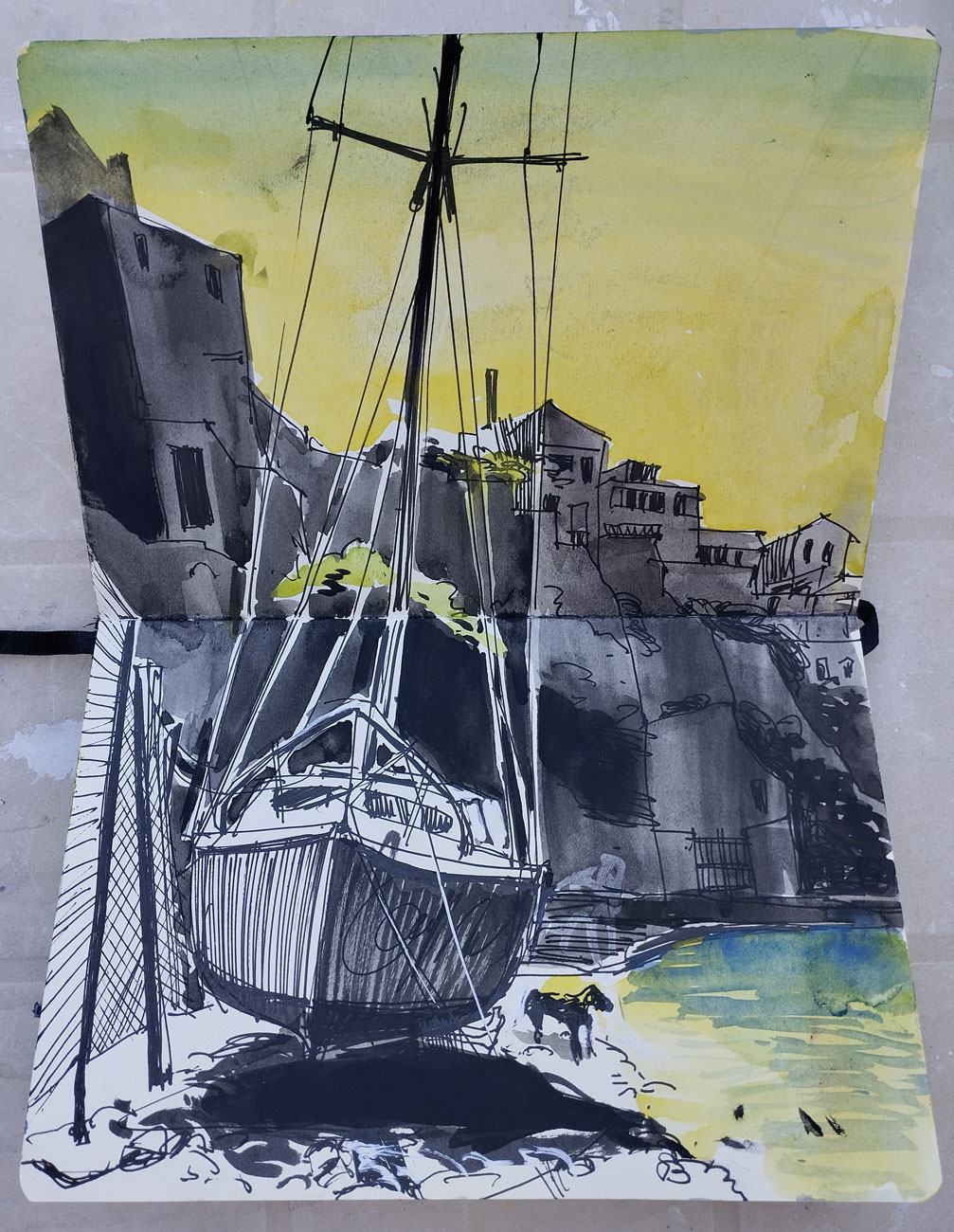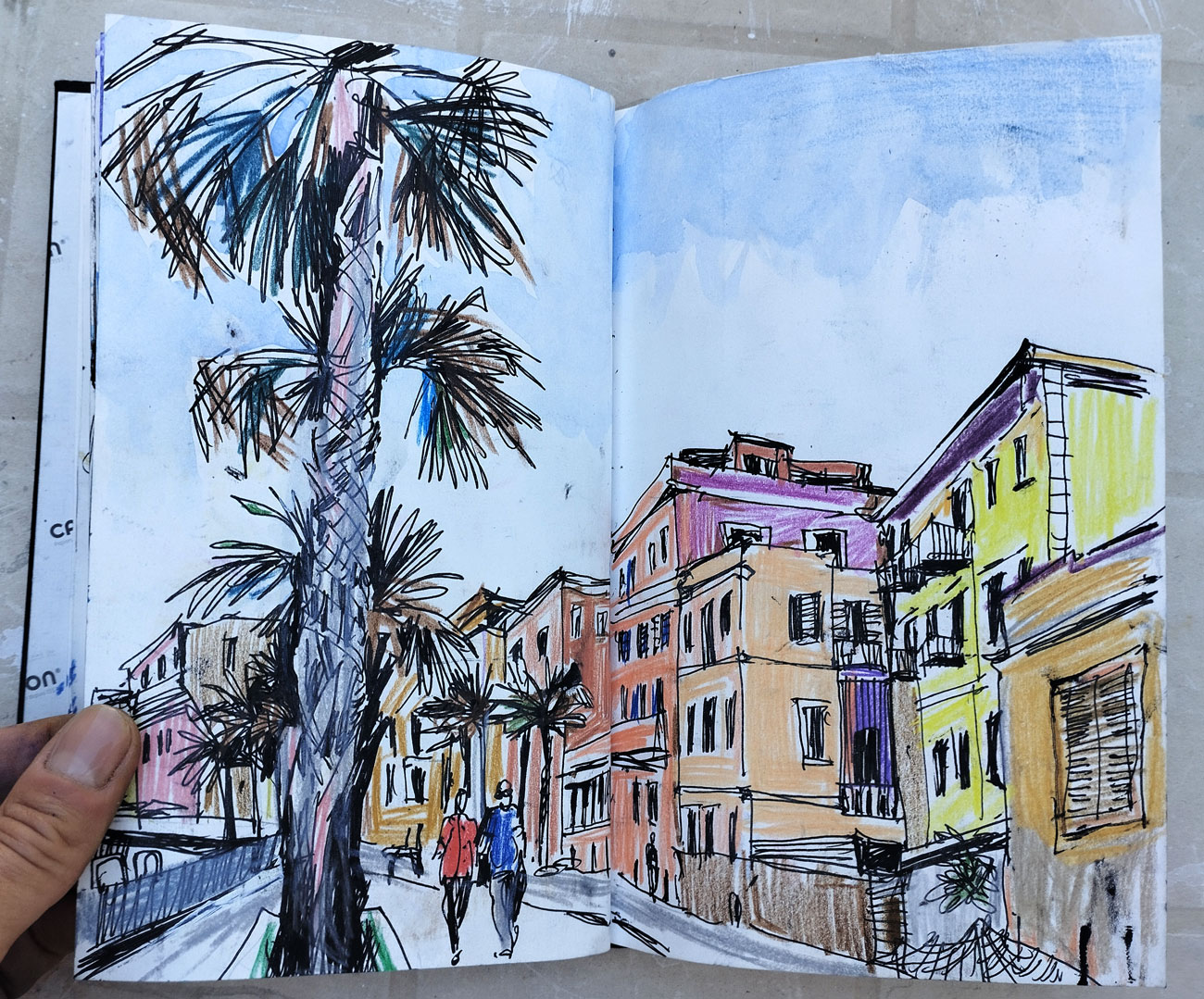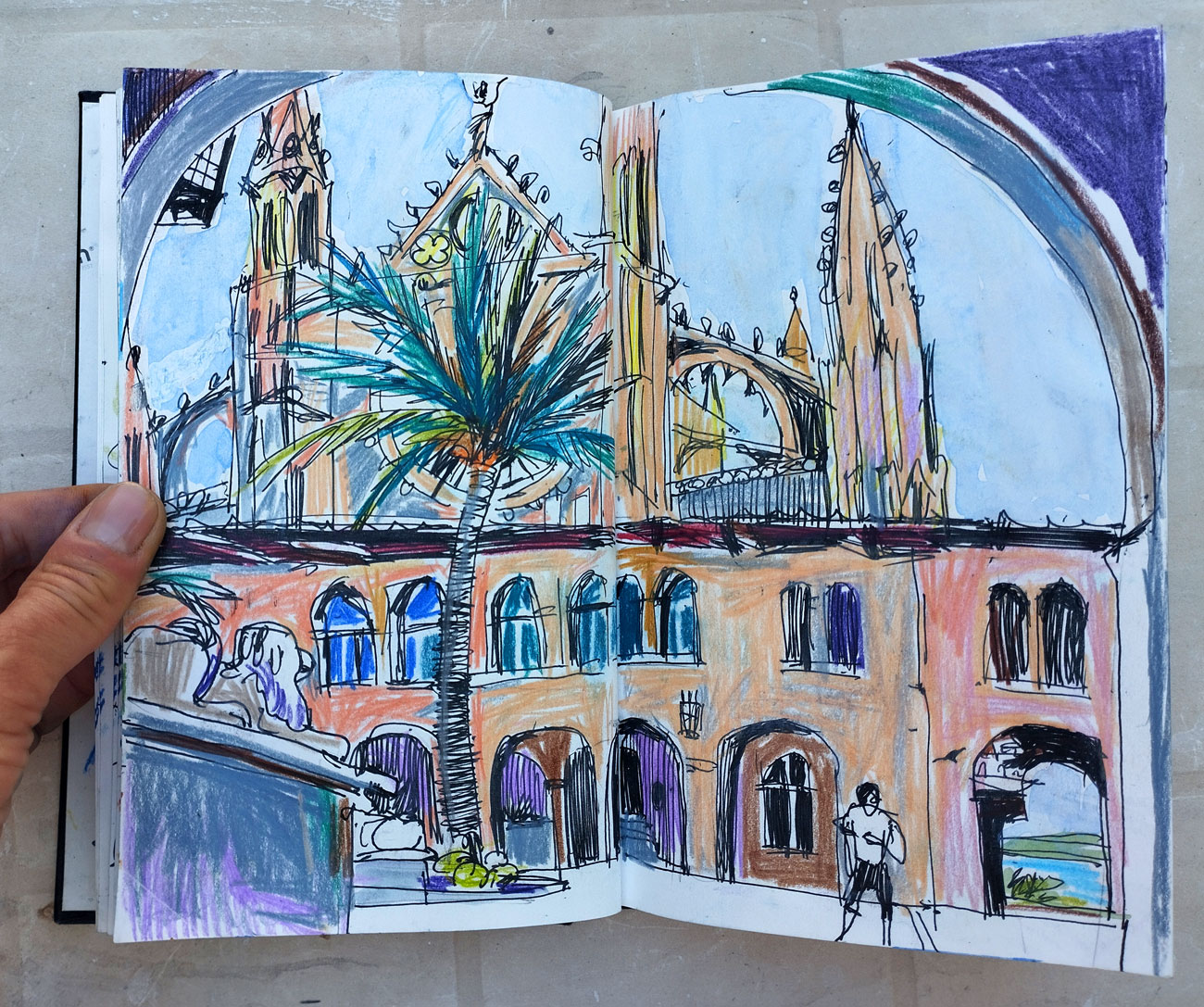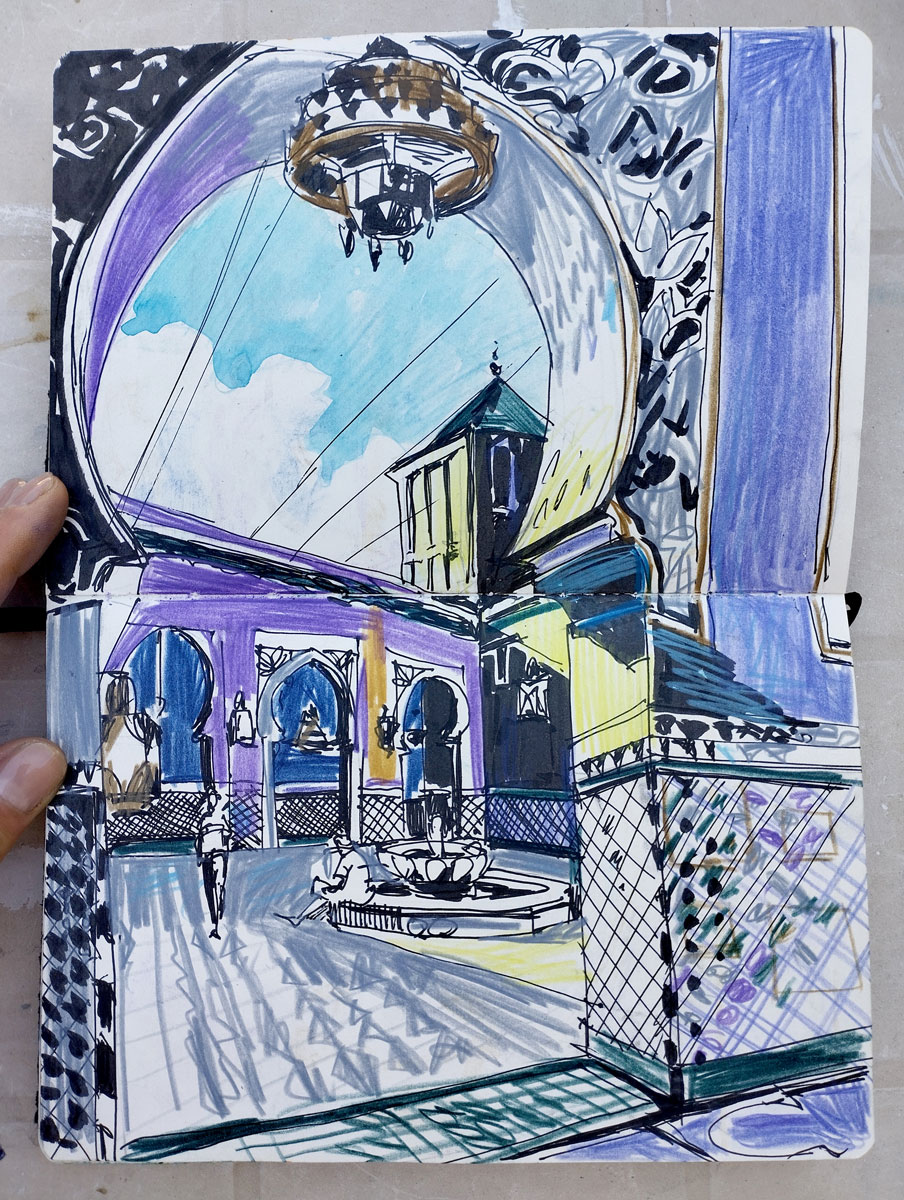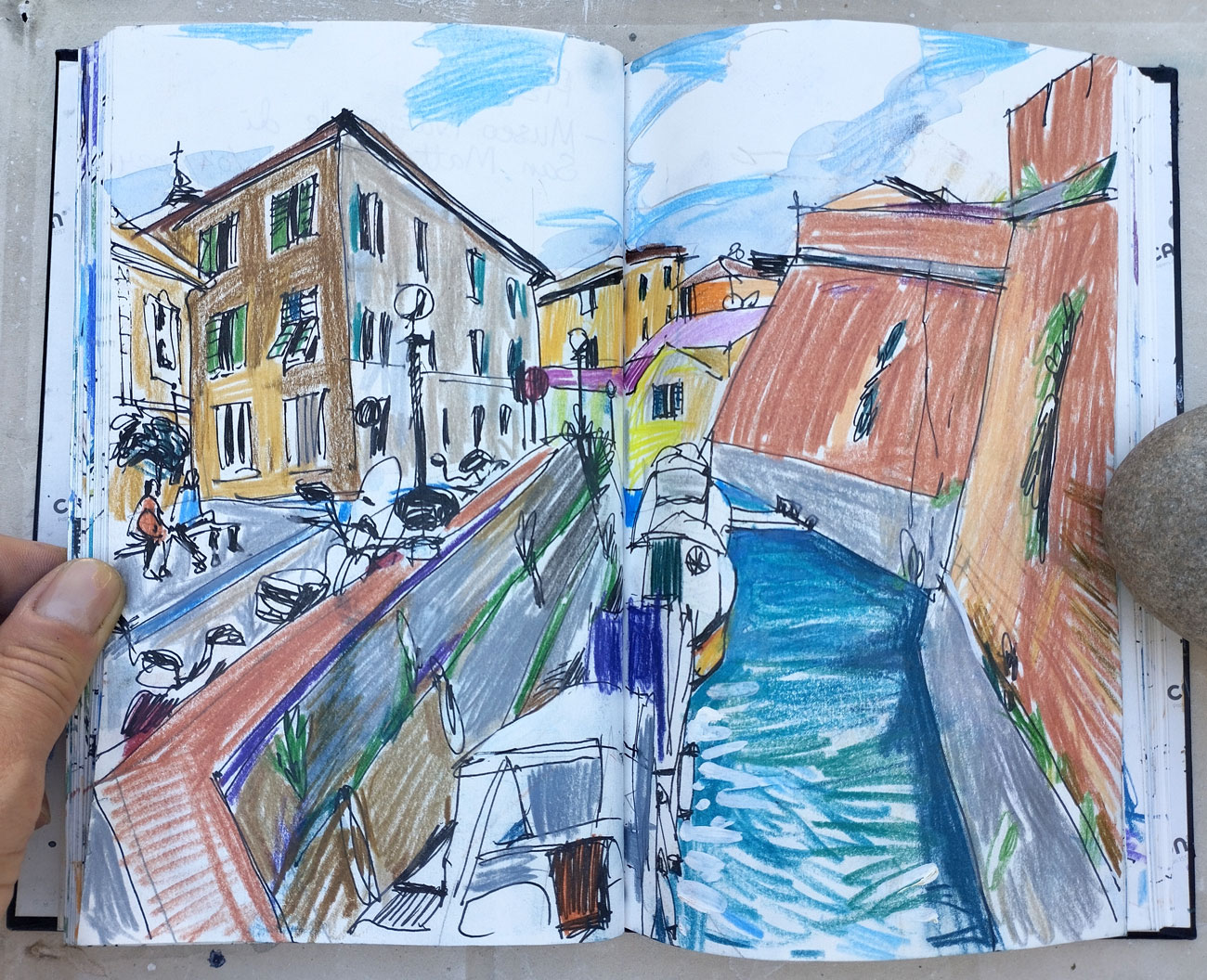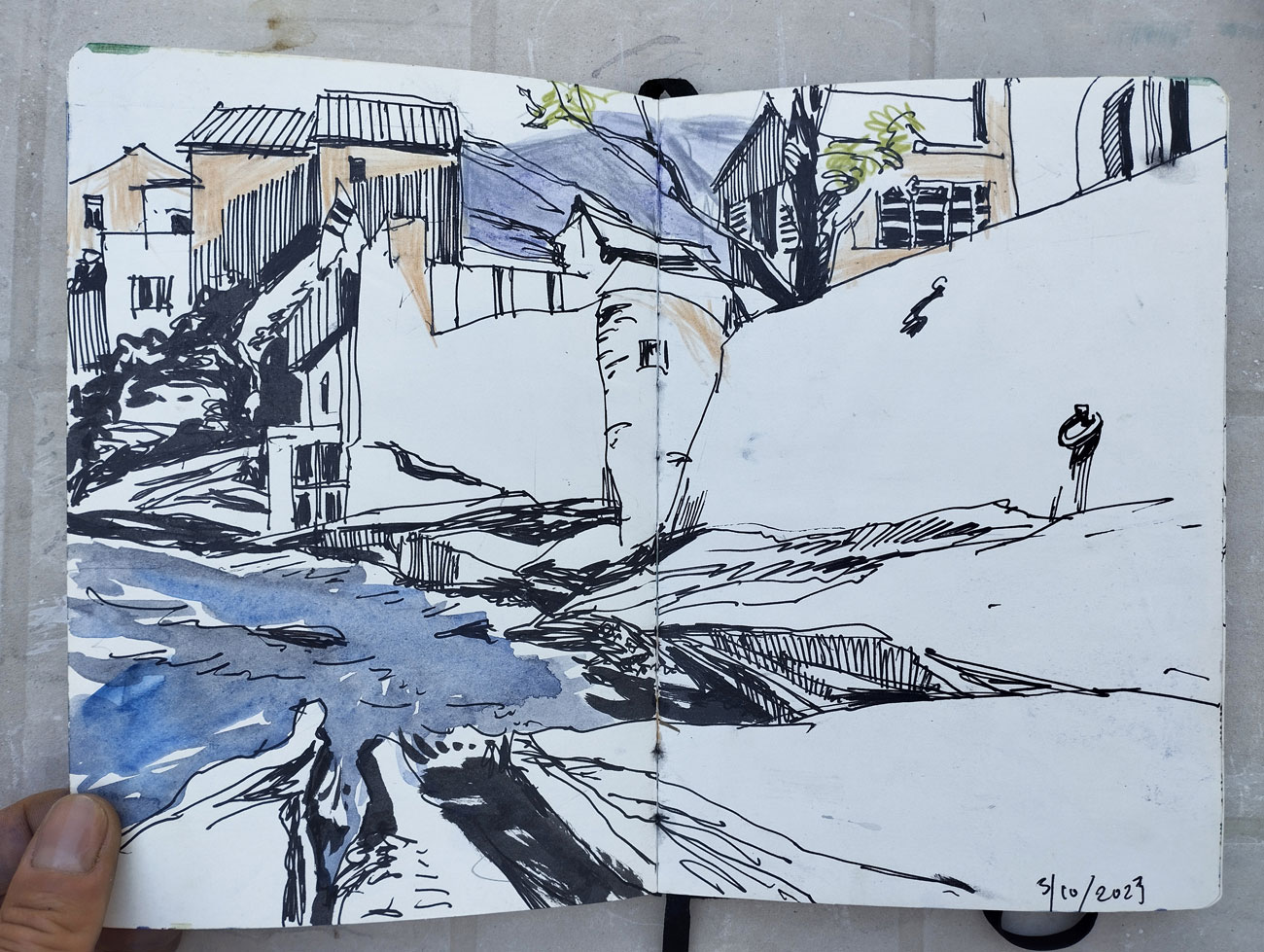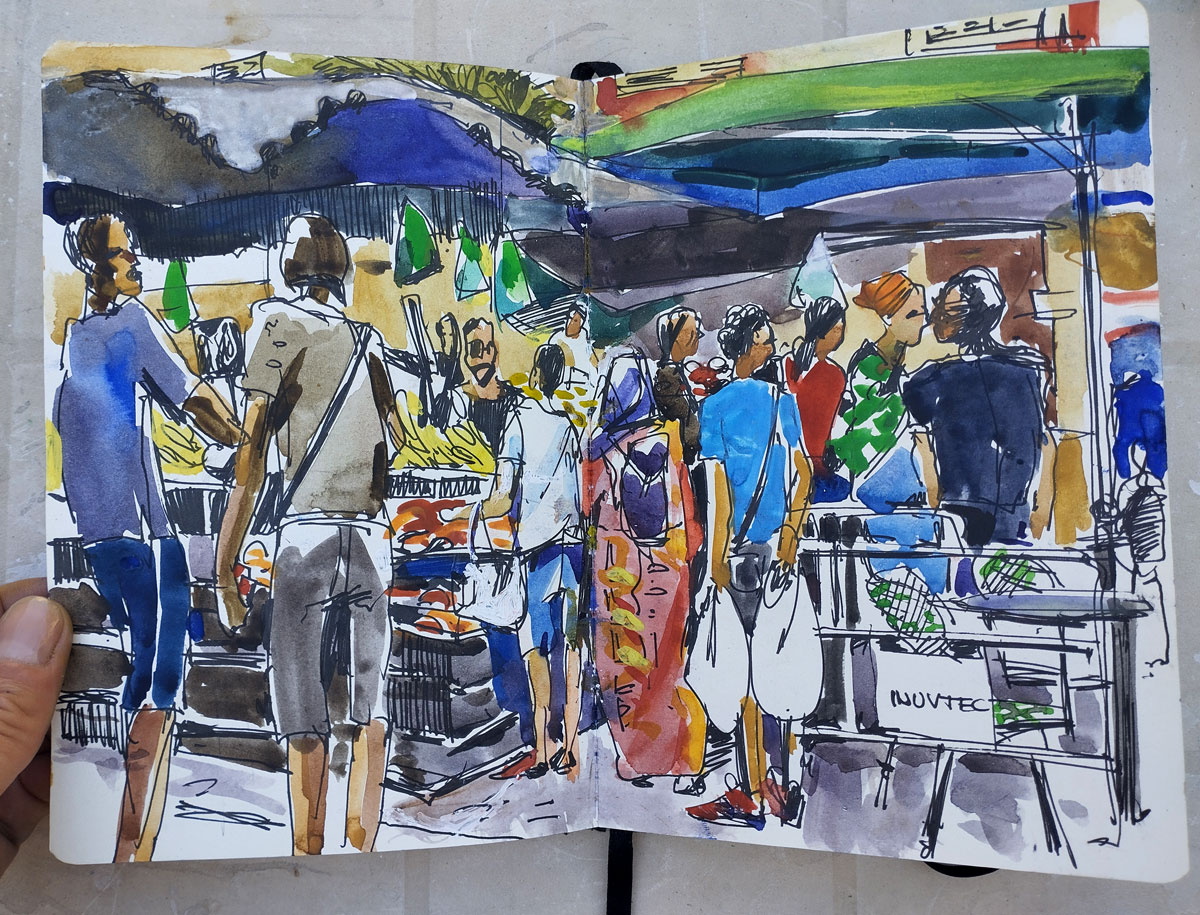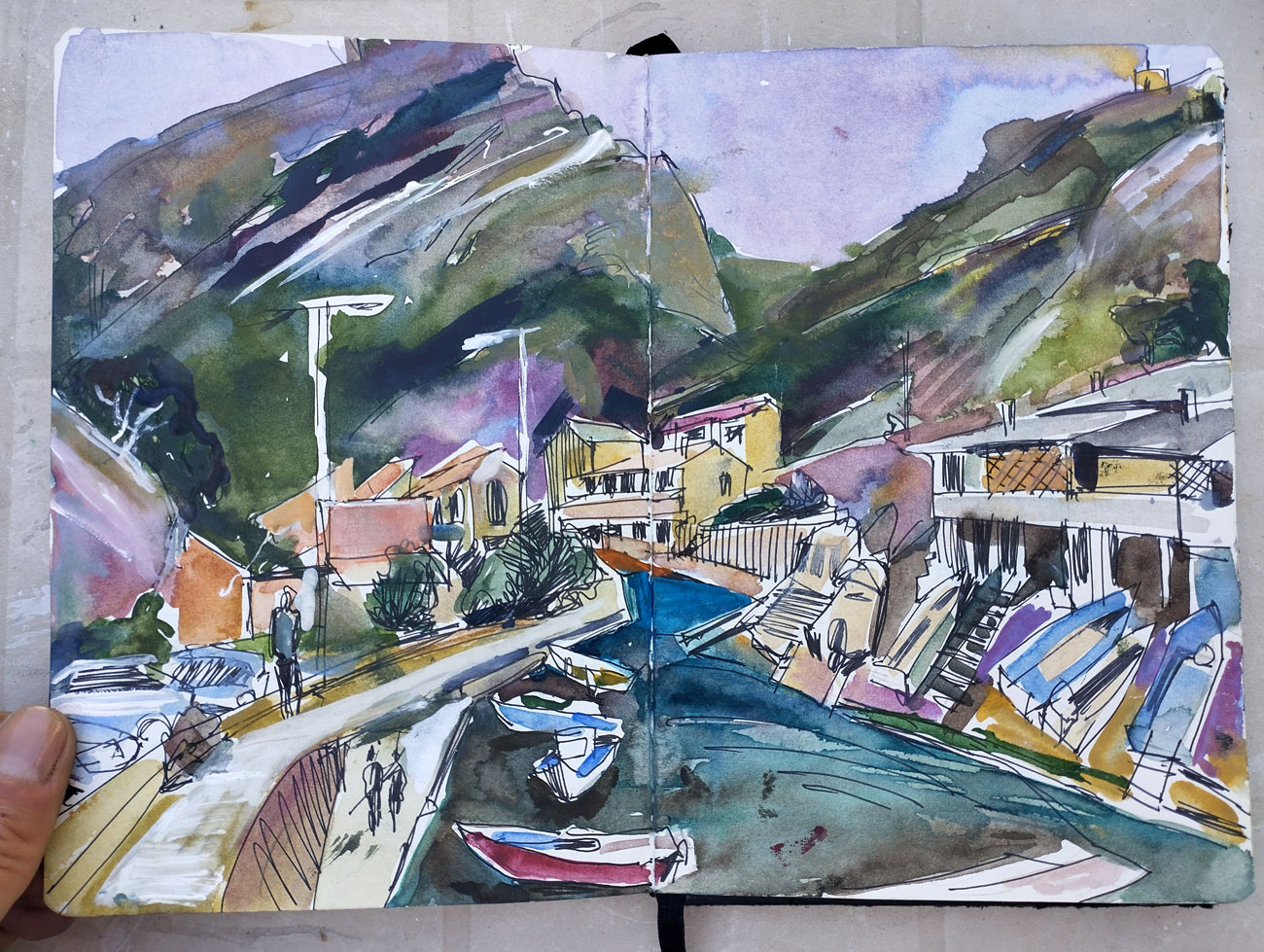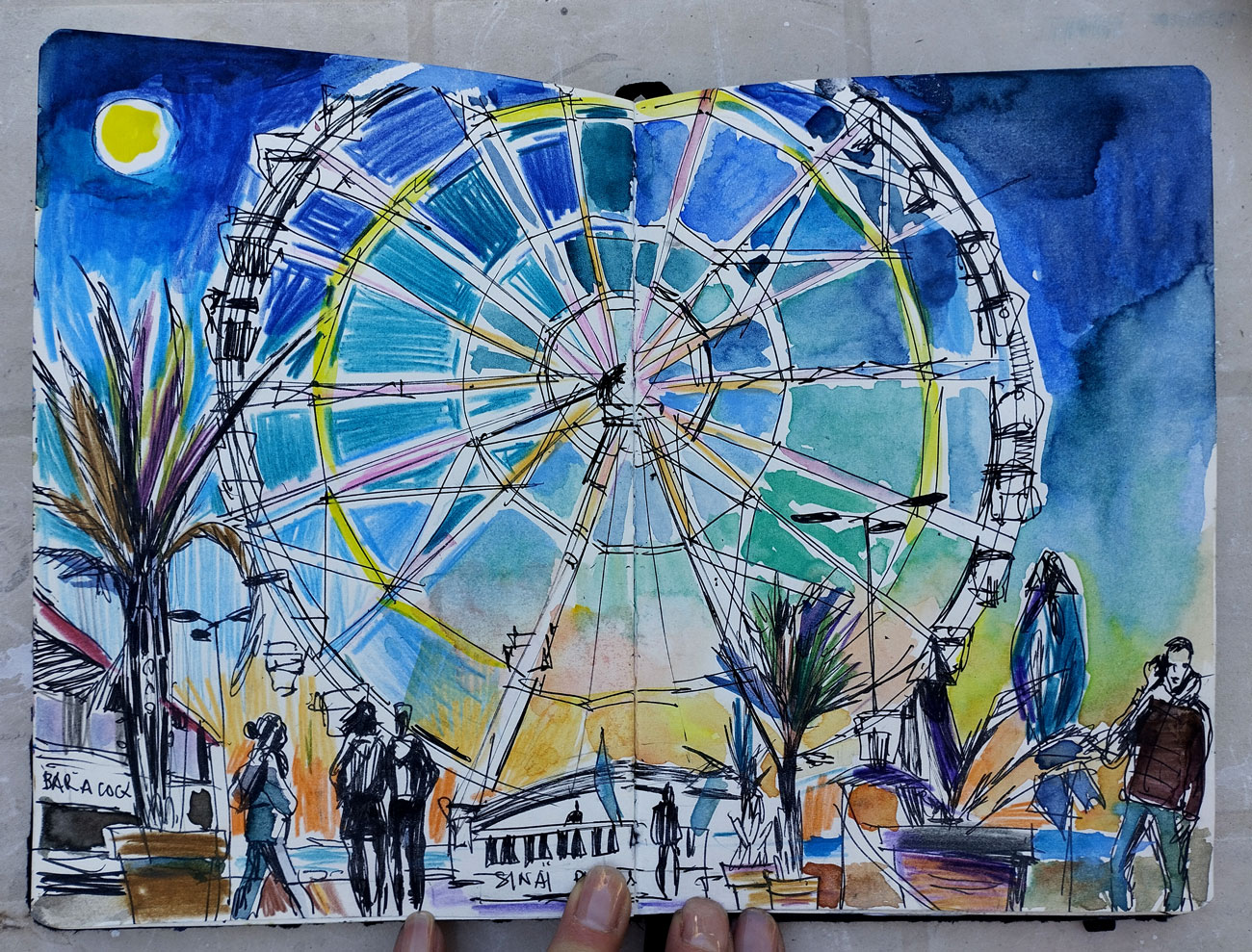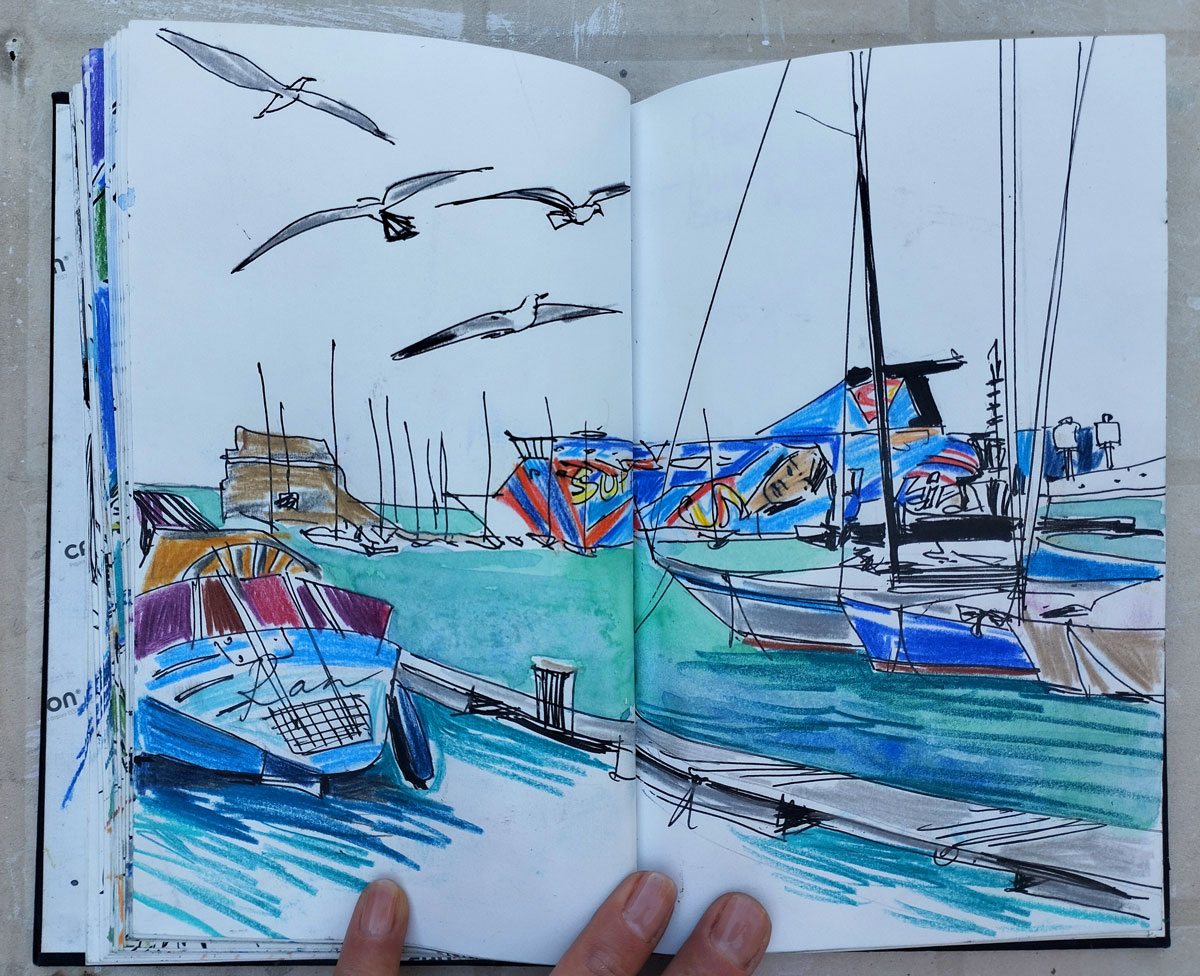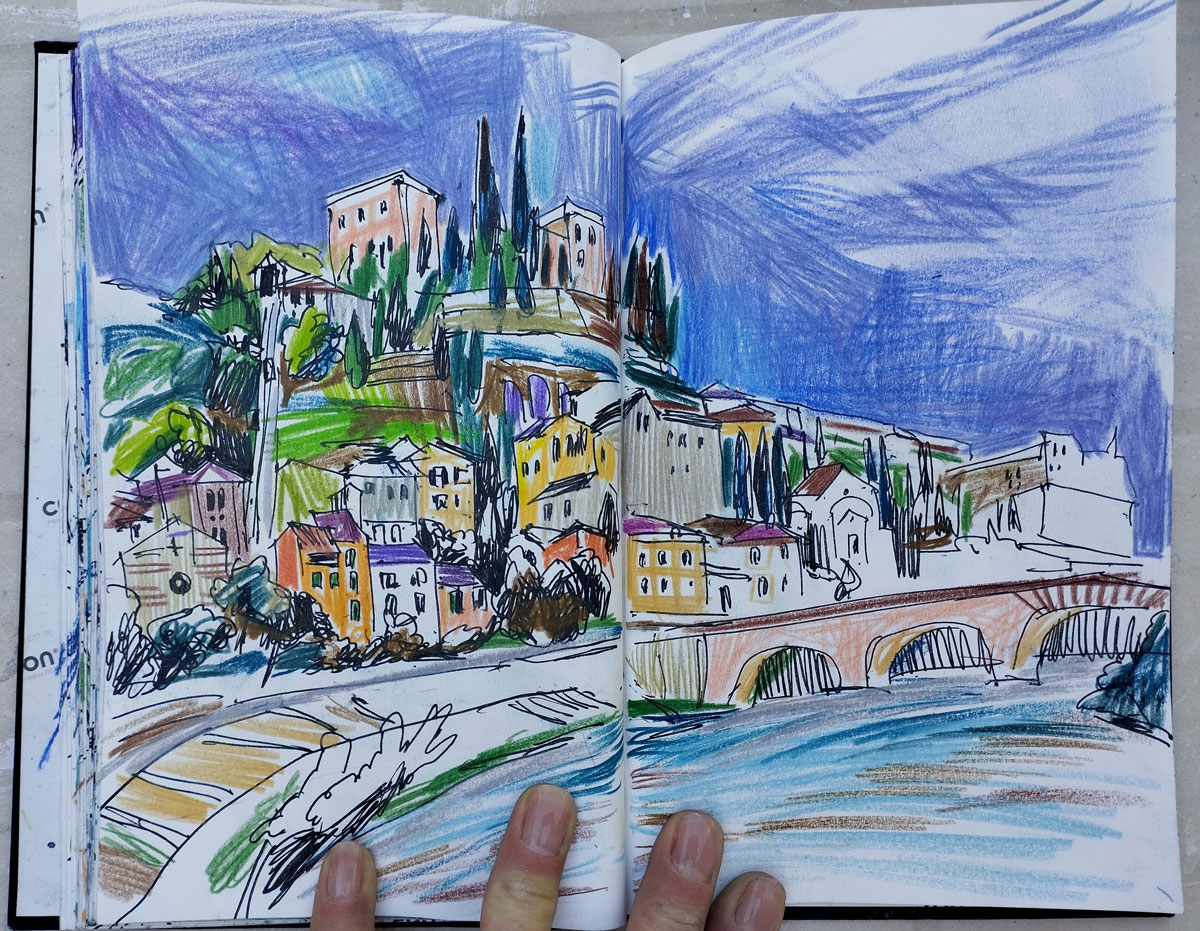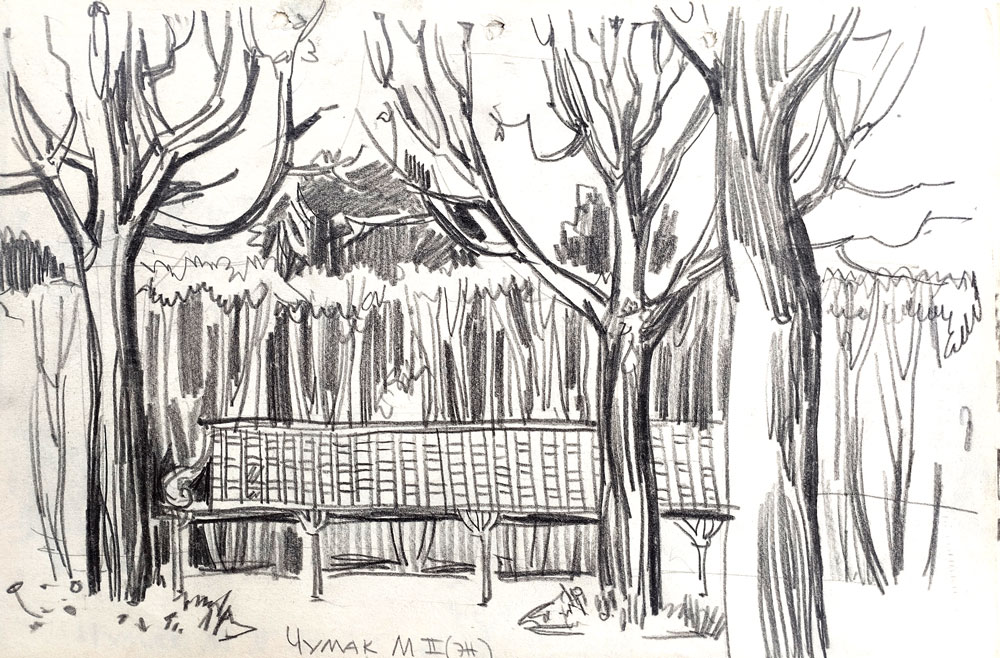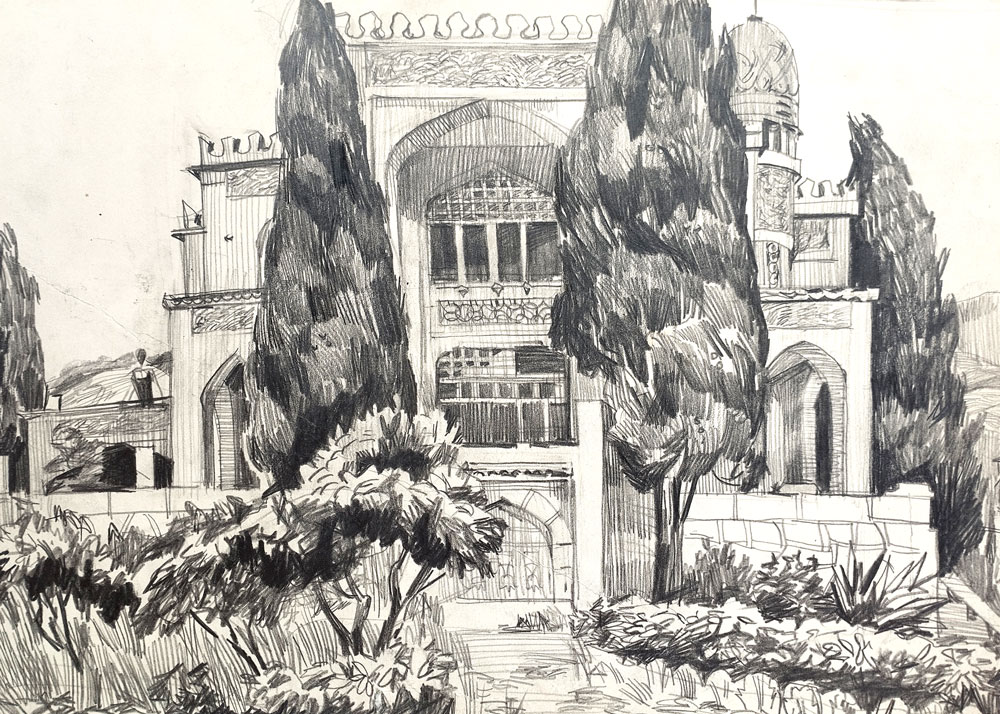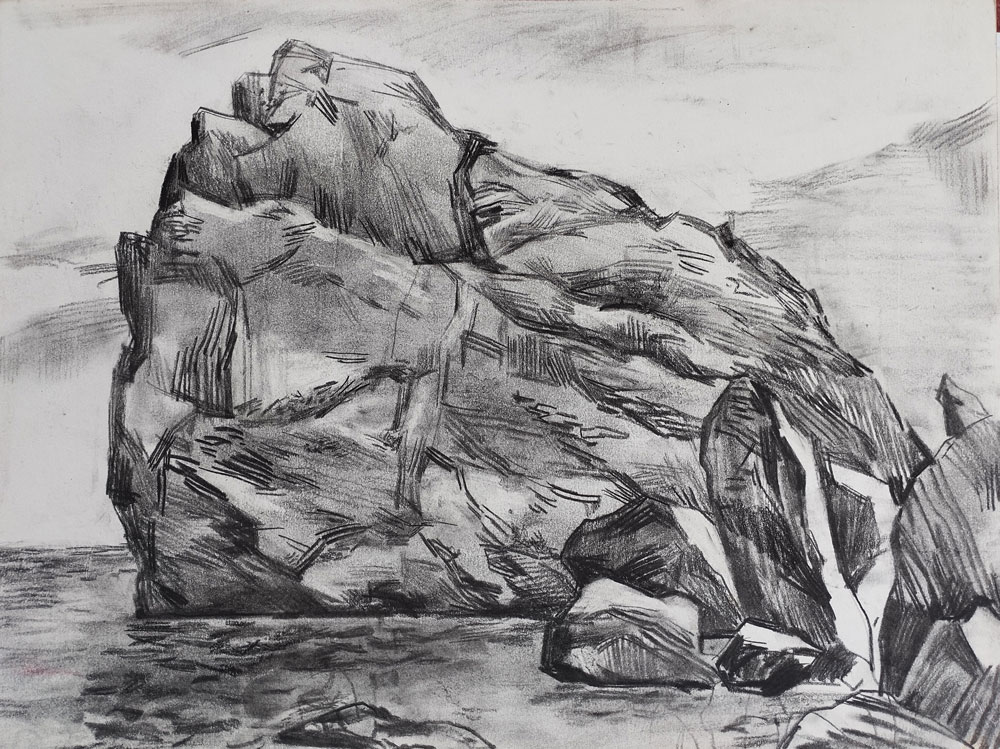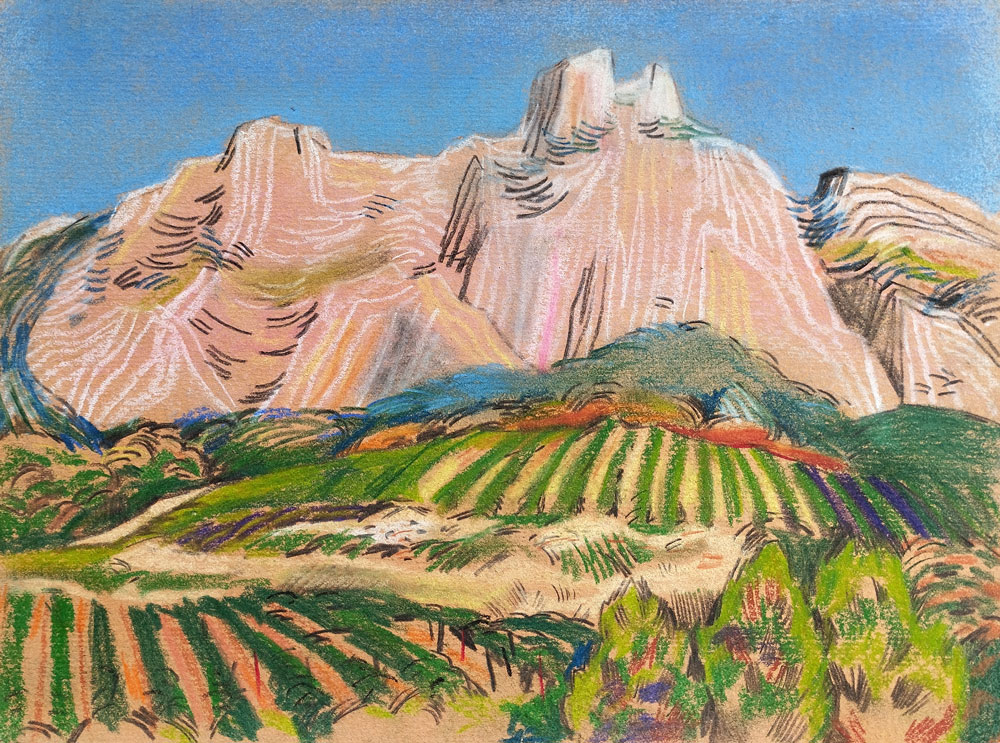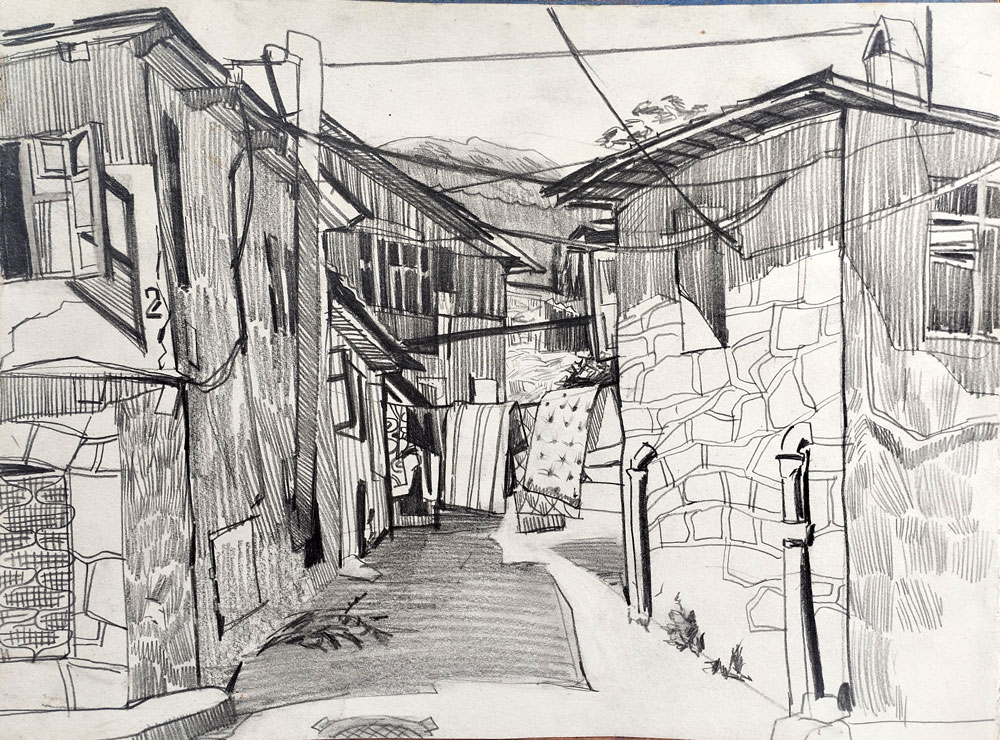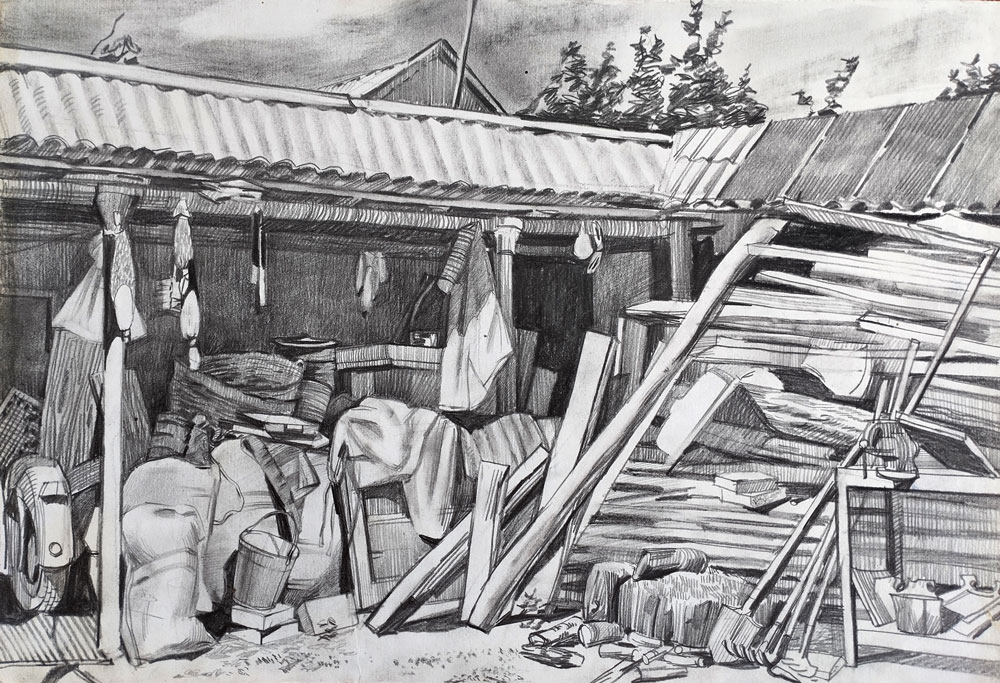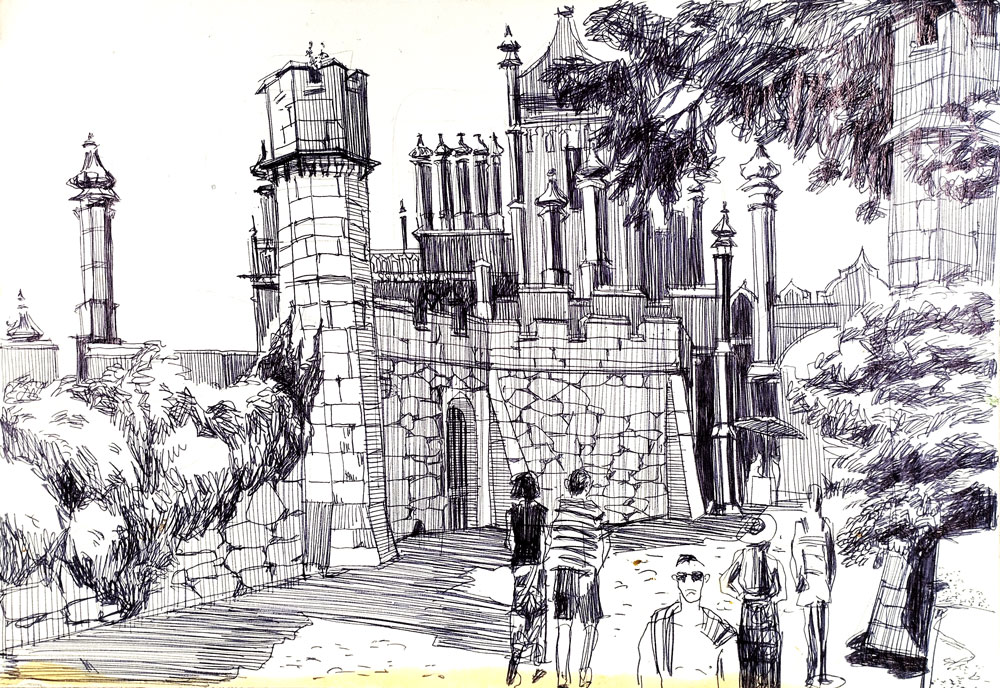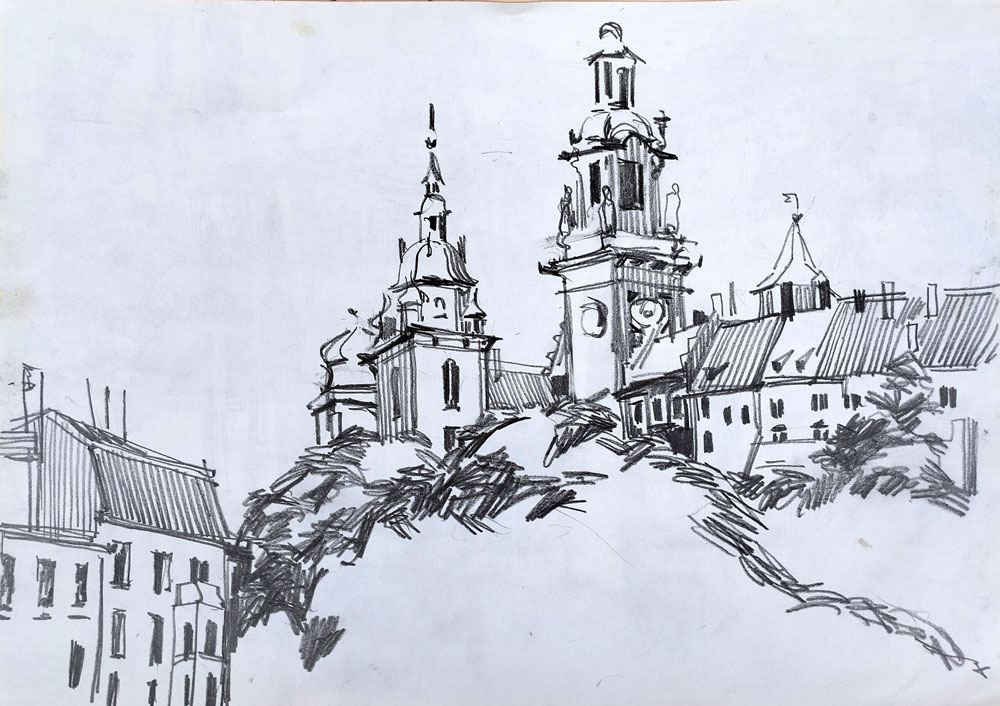
Travel sketches hold a particular place in my creative journey. For many artists throughout history, such as Leonardo, Rembrandt, Delacroix, Van Gogh, and Gauguin, they serve a research laboratory for exploring new ideas and experimenting with creative projects.
I began my creative journaling at a young age, sometimes I revisit my teenage sketchbooks, discovering old/new ideas and interpreting the past. Opening a new page is like starting a fresh canvas—excitement of the new and with the swift change come-in with collage, sketch pens, color pencils, and more. Sketching outdoors compels one to deeply observe and almost meditate on the surroundings, becoming part of the present moment. Unlike photography, which captures moments instantaneously, sketching allows me to grasp the essence of a place—the movement of people, animals, changing light and shadows under shifting skies, boats arriving and departing—the selection of the artist is a personal experience .
Teaching field sketching is crucial for students as it supports data collection and reflective practice. It records the constant research work of a future artist's or designer's. A field sketchbook, like a or travel notebook, can be a repository of everything that crosses one's mind. Some are intriguing due to their brevity and simplicity, while others are layered with captivating details. However, what makes a field journal truly fascinating isn't just its conceptual nature but also the depth of observation and interpretation it captures.
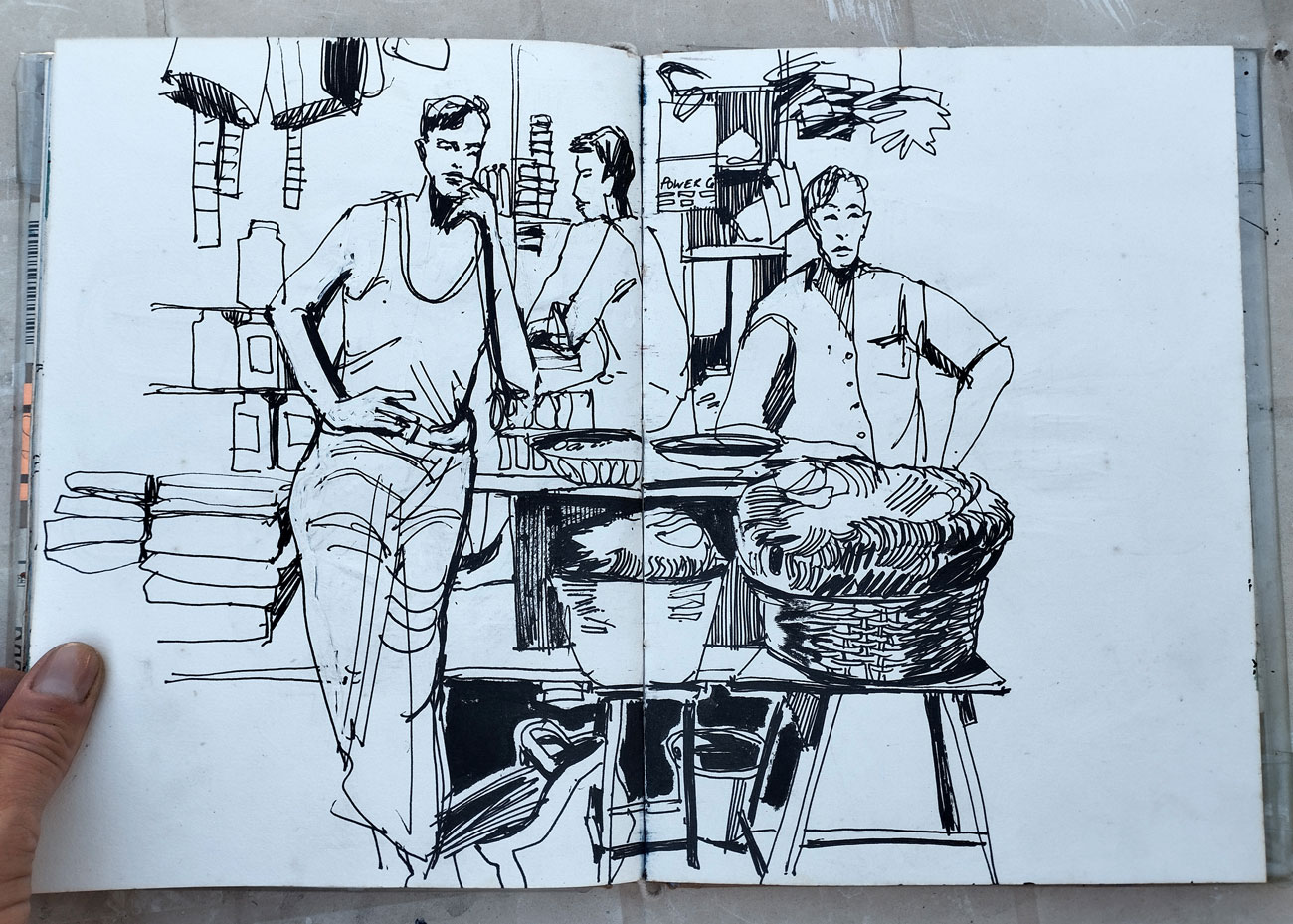
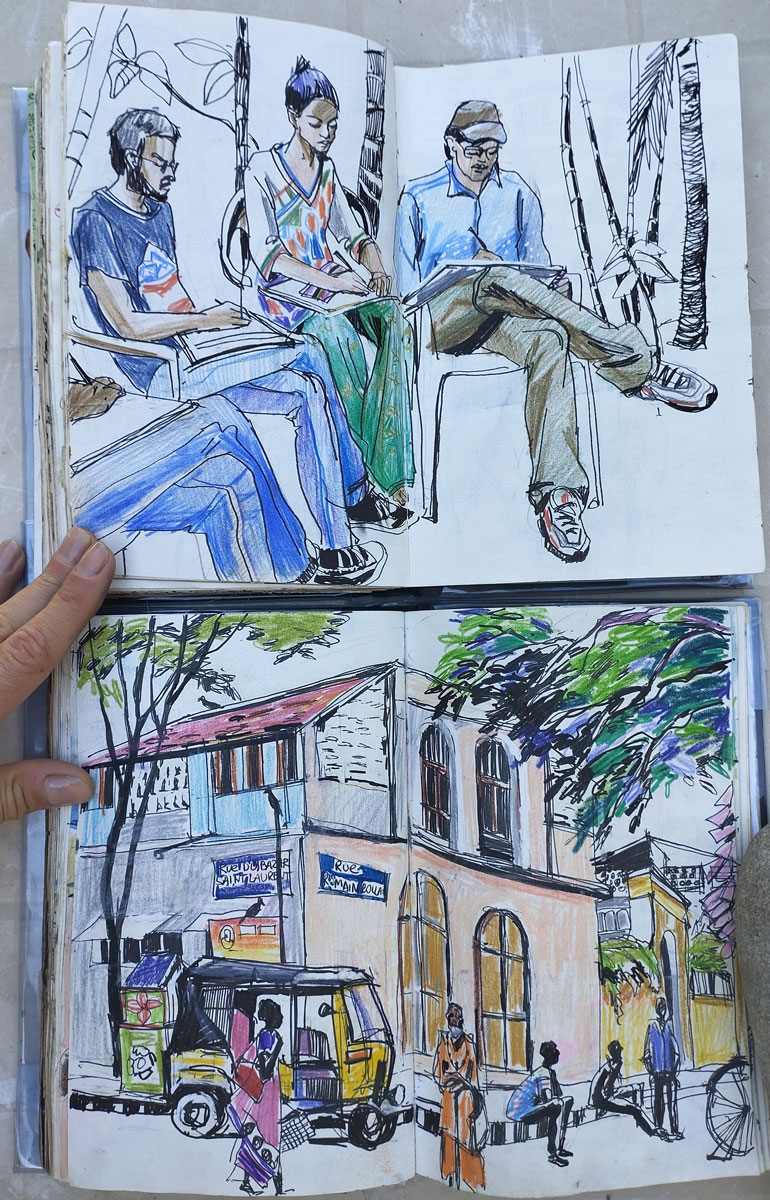
Ponchicherry market vendors
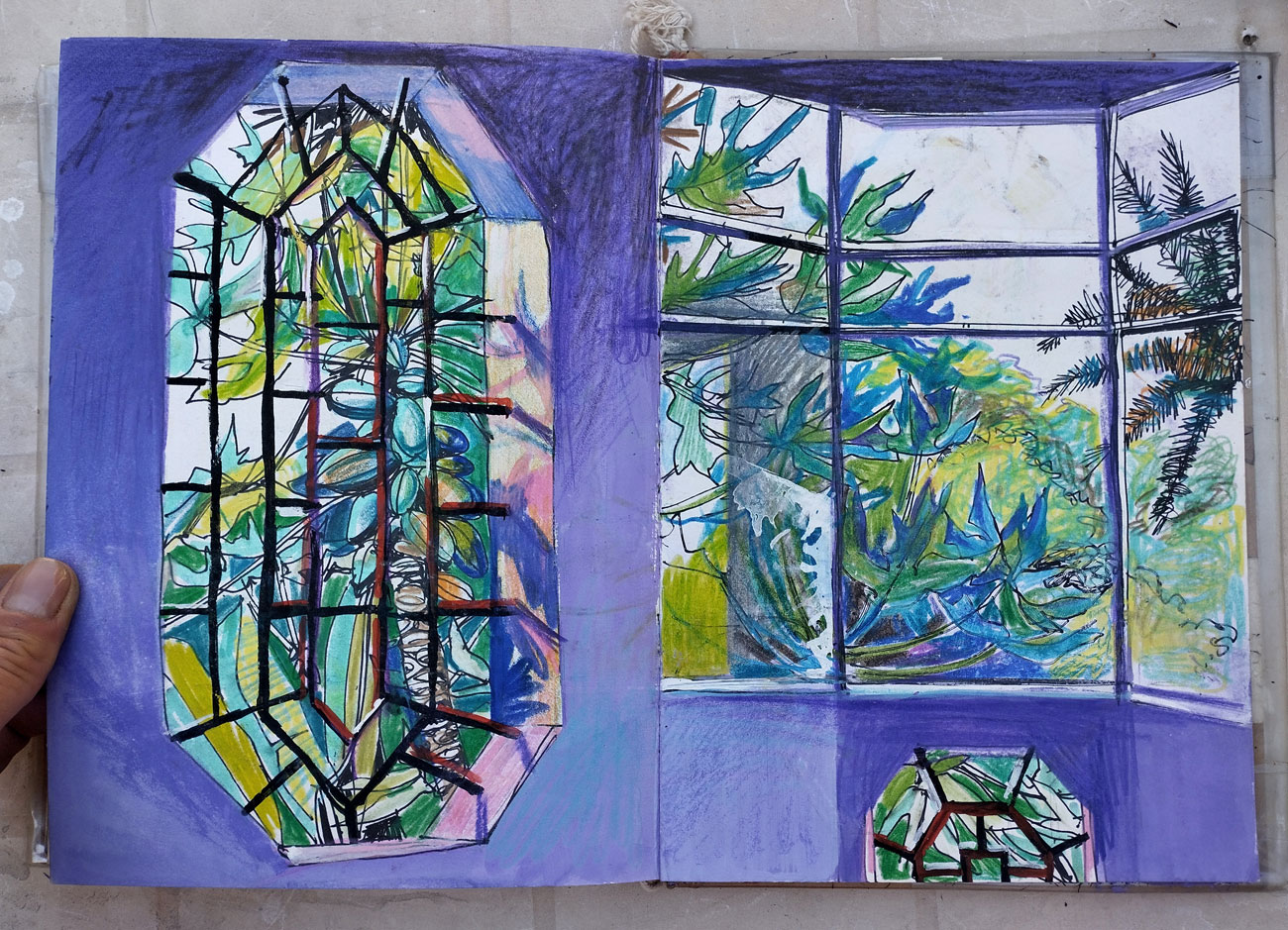
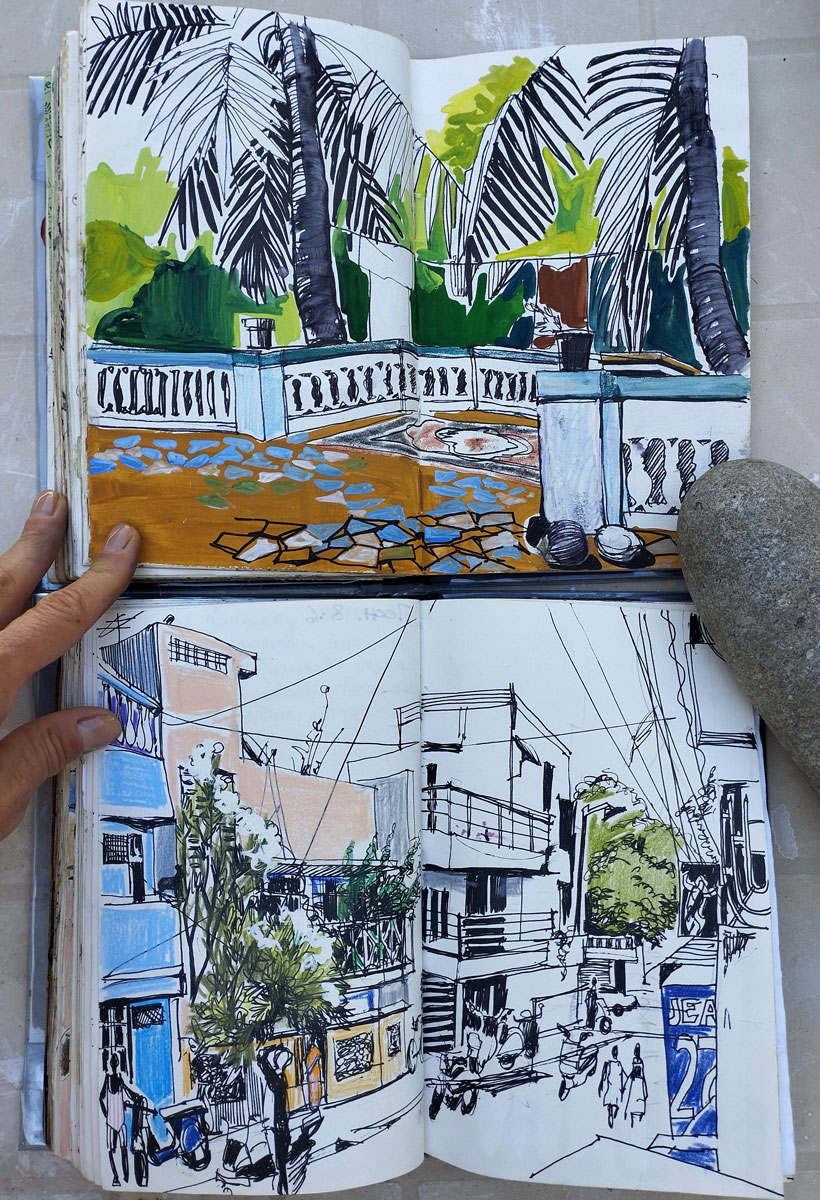
Terrace view in Pondicherry
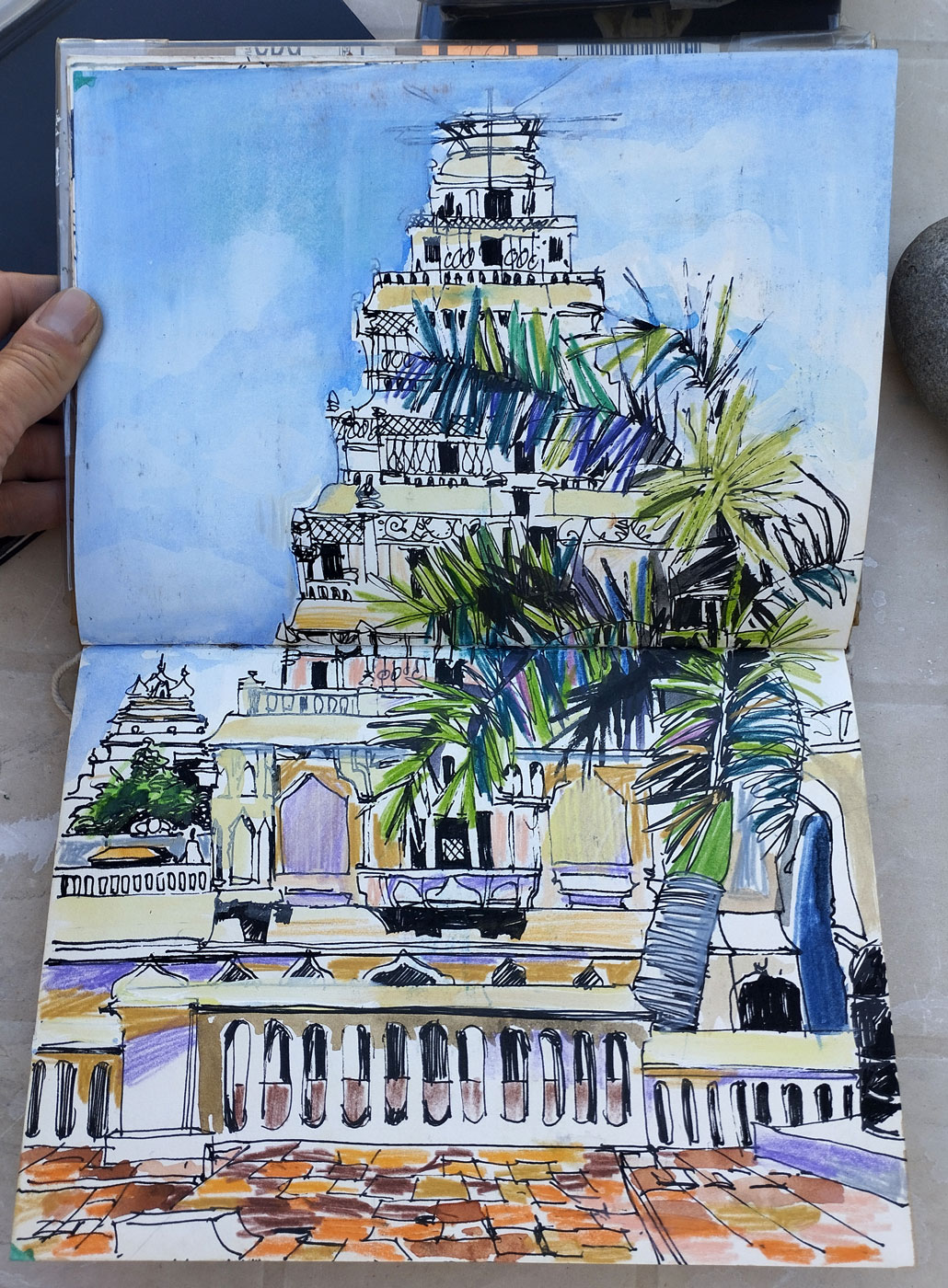
Shri Mariamman Kovil Punnainallur near Thanjavur (Tamil Nadu)
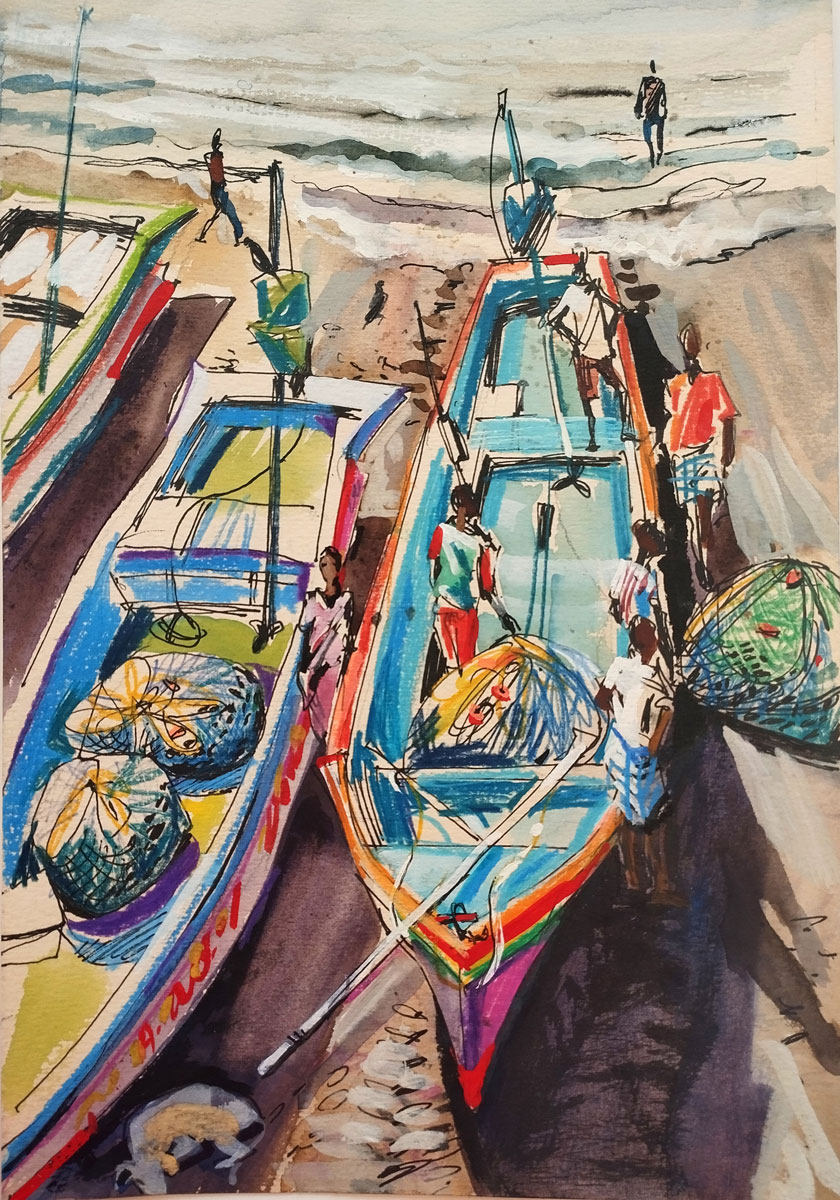

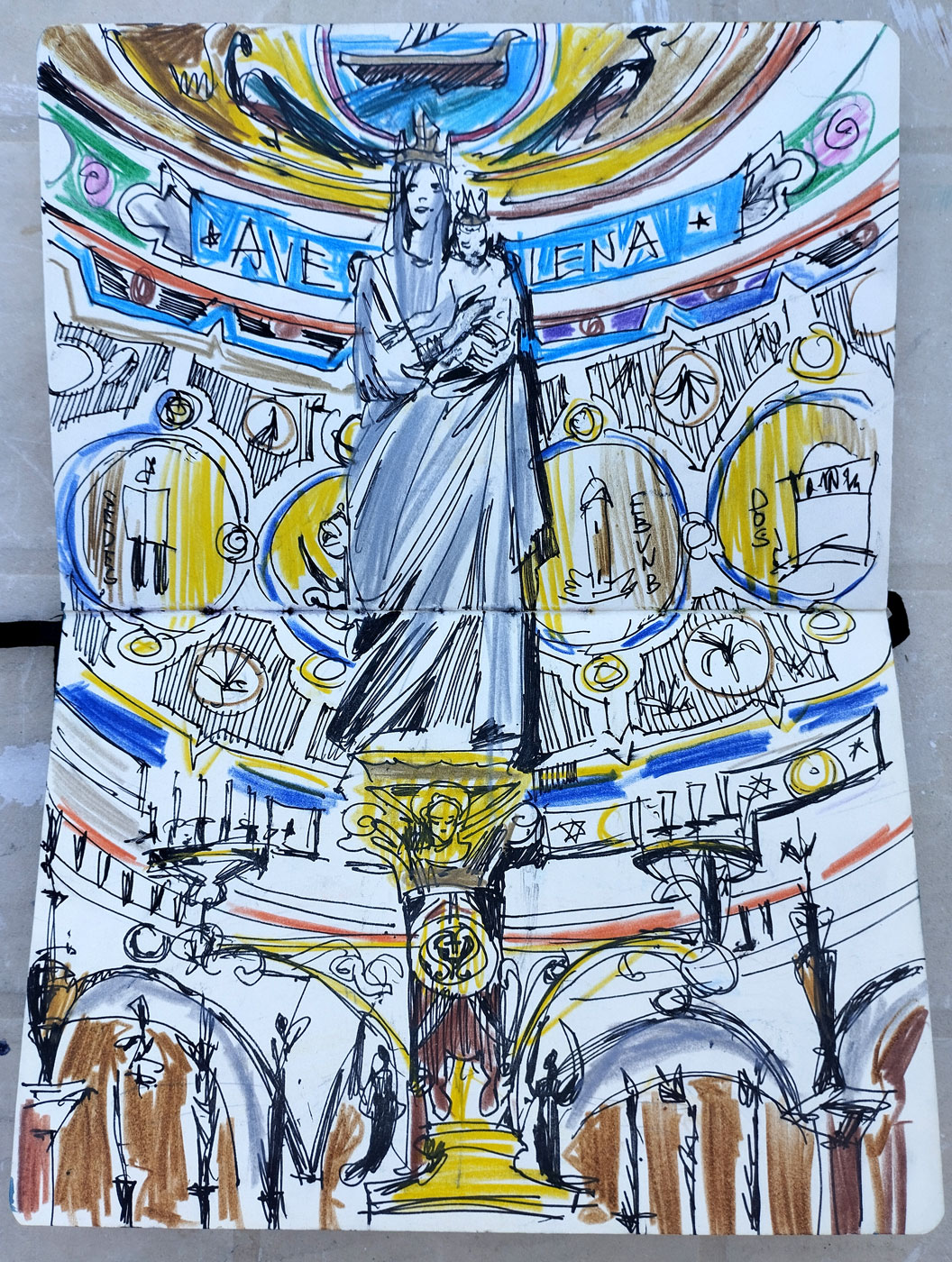
Big cathedral in Velankanni
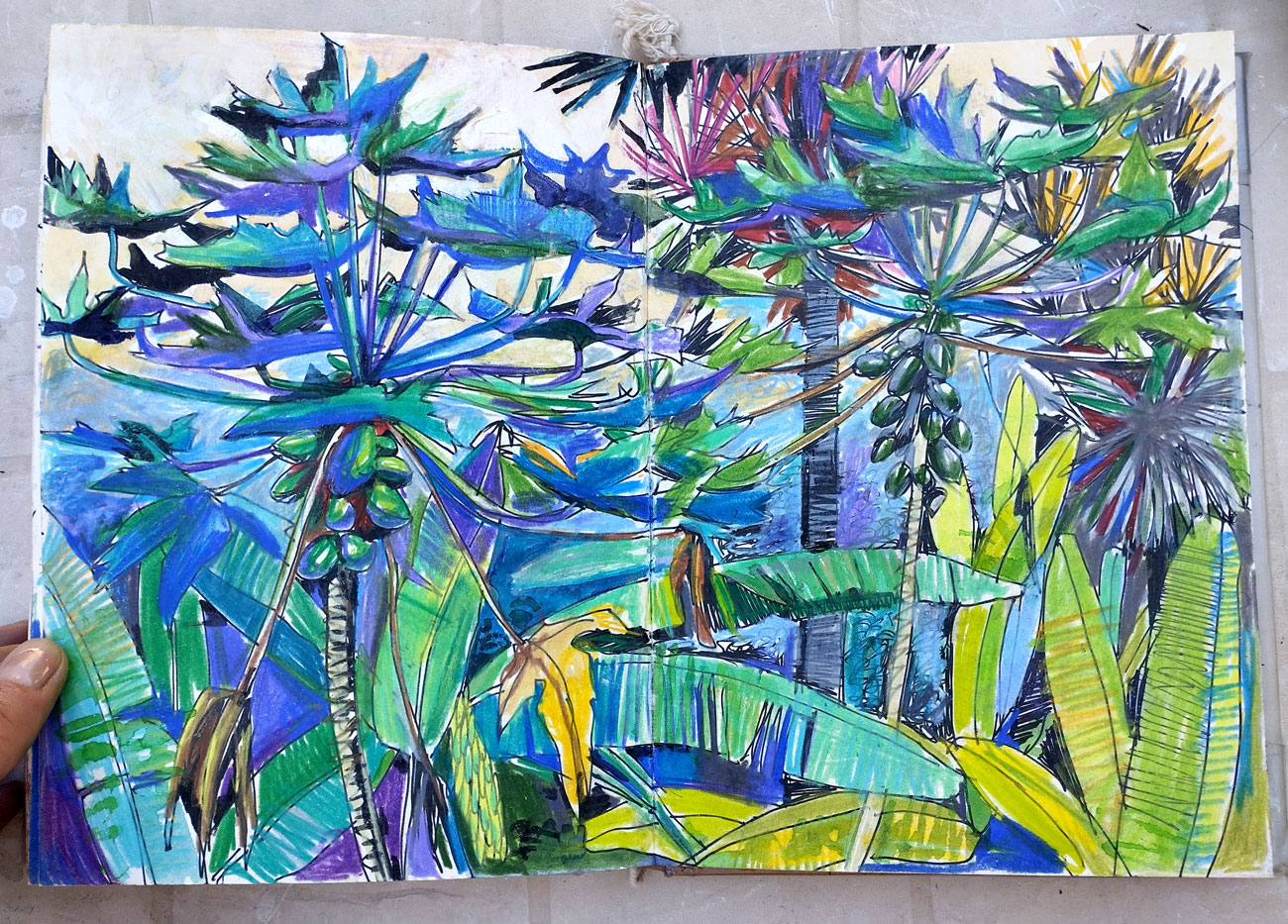
The view from my balcony in Pondicherry
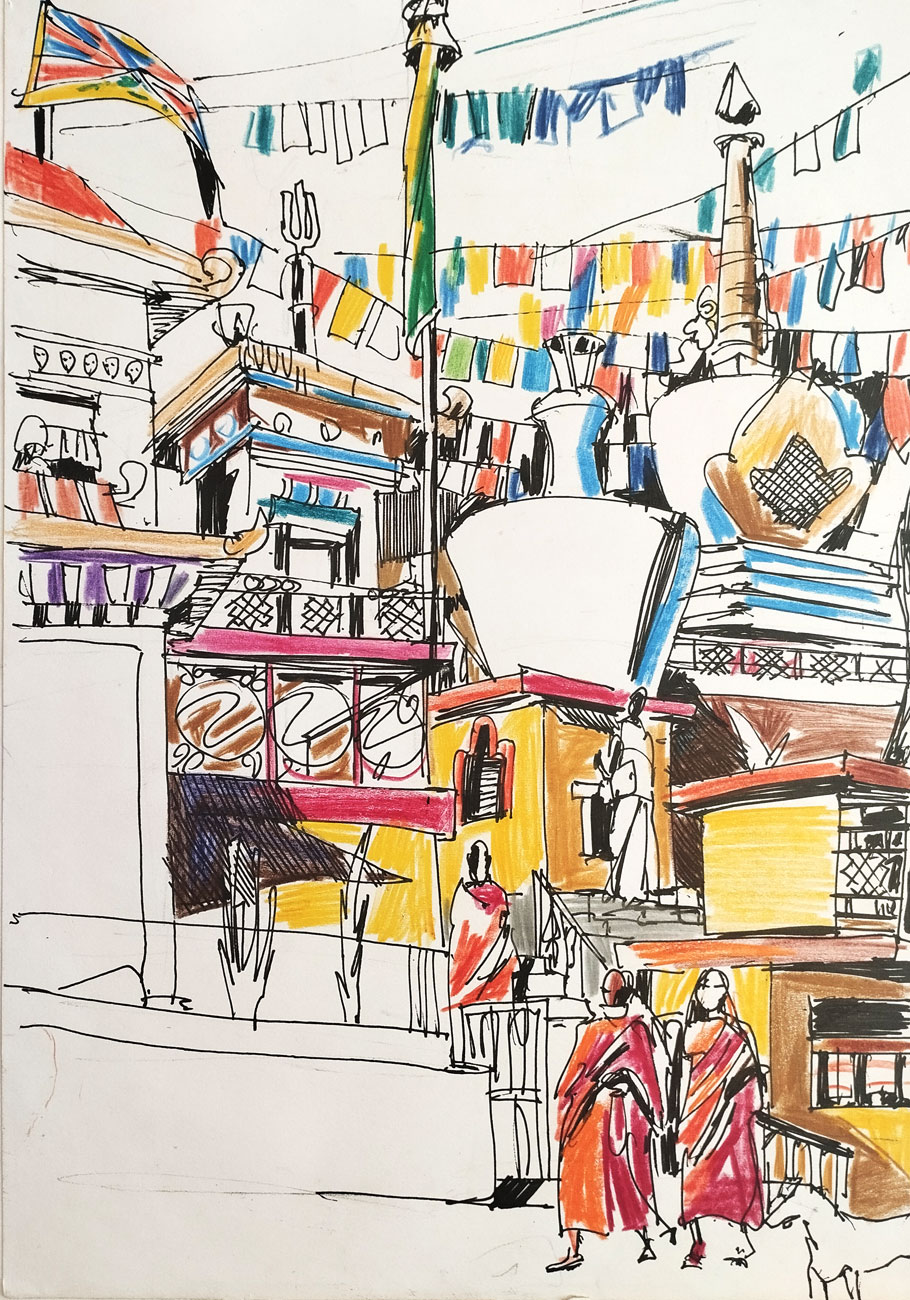
Buddist monks in Dharamsala (Himachal Pradesh)